Serve underhand, honor the two-bounce rule, avoid the kitchen, and score on serve.
If you want a friendly, expert guide on pickleball how to play, you’re in the right place. I’ve coached new players, logged hours in rec play, and learned the hard lessons. This guide breaks down the rules, gear, shots, drills, and smart strategy so you can start strong and enjoy every rally.

Pickleball How to Play: The Basics That Matter
Pickleball blends tennis, badminton, and ping-pong. You play on a small court with a paddle and a plastic ball. The net is lower than tennis, and points are quick.
Here is the heart of pickleball how to play:
- Serve underhand with one foot behind the baseline.
- Let the ball bounce once on each side before volleys.
- Do not volley while standing in the non-volley zone.
- Only the serving team scores in standard play.
Games often go to 11 points and you must win by 2. Most rec games are doubles, but singles is popular too. These basics will anchor your early wins.

Court, Gear, and Setup
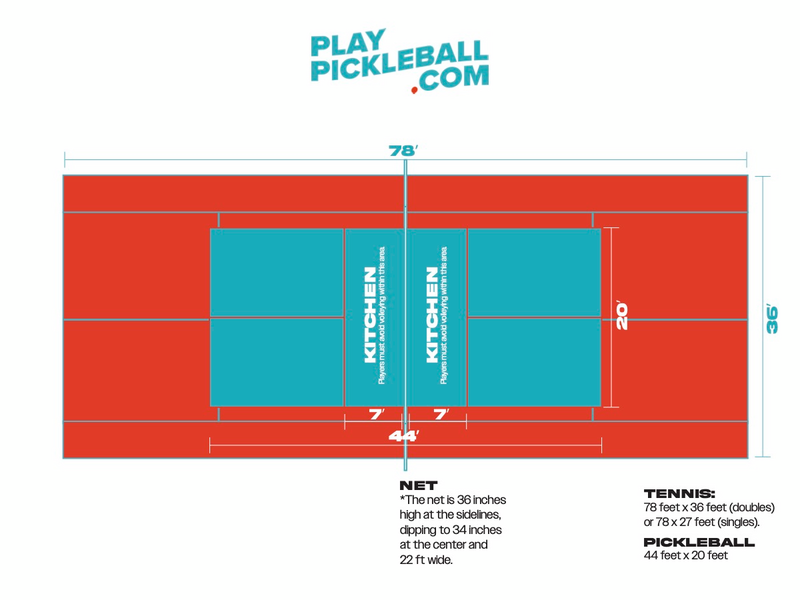
Court size is 20 by 44 feet. The non-volley zone, or kitchen, is 7 feet from the net on both sides. Net height is 36 inches at the posts and 34 inches in the center.
What you need:
- Paddle: Composite or graphite paddles give a good balance of control and power.
- Ball: Outdoor balls have smaller holes and fly faster. Indoor balls are softer and have larger holes.
- Shoes: Court shoes with good grip and lateral support prevent slips.
- Optional: Overgrip for sweat control, hat or visor for sun, and a water bottle.
Set up is simple. Check the net height, review court lines, and warm up. If you ask “pickleball how to play” in a crowded park, start with the right gear and a quick court check.
Pickleball How to Play: Rules in Plain English
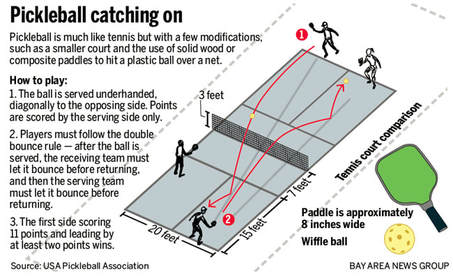
- Serve underhand. Contact must be at or below your waist.
- Hit the serve diagonally to the opposite service court.
- One serve attempt, except for a let (ball clips net and lands in).
Two-bounce rule:
- The return must bounce.
- The next shot must also bounce.
- After that, you may volley, but not from the kitchen.
Non-volley zone (kitchen):
- Do not volley while touching the kitchen or its line.
- You may step in to hit a ball that bounces, then step out to volley later.
- Only the serving team scores in traditional play to 11, win by 2.
- In doubles, both players on a team serve before a side-out, except at game start.
- Announce the score in doubles as server’s score, receiver’s score, server number (1 or 2).
These rules come from the official standards used in rec and tournament play. If you learn pickleball how to play with these rules, you’ll fit right into any court.

Step-by-Step: Your First Game
Follow this simple path to get rolling fast:
- Warm up for five minutes. Light jog, side shuffles, and gentle swings help.
- Check the court. Note lines and the kitchen area.
- Serve cross-court from the right. Aim deep and safe.
- Return deep to the middle. Buy time to reach the kitchen line.
- Honor the two-bounce rule. Stay patient early in points.
- Move with your partner. Both of you aim to reach the kitchen line together.
- Keep rallies simple. Hit 70 percent of balls cross-court.
- Call the score before each serve. Speak clearly to avoid confusion.
- Play to 11, win by 2. Rotate sides after each game.
If you keep these steps in mind, “pickleball how to play” goes from theory to muscle memory very fast.

Essential Shots and Techniques
Start with these core shots:
- Dink: A soft shot that lands in the kitchen. Keep it low. Think calm hands.
- Drive: A firm groundstroke aimed at the body or hip. Use it to pressure.
- Drop: A soft third-shot from the baseline that lands near the kitchen. This helps you move forward.
- Volley: A ball struck in the air. Keep your elbows in and your paddle out front.
- Serve: Aim deep, target the backhand, and keep it consistent.
- Return: Deep and slow works well. Give yourself time to reach the line.
- Overhead: Step, point, and strike through. Avoid swinging from the shoulder only.
One tip I learned early: aim 80 percent of dinks to the opponent’s backhand. It is the safest way to control pace. If you are working on pickleball how to play with control, master the dink and the drop.

Strategy for Doubles and Singles
Doubles:
- Get to the kitchen line and stay balanced with your partner.
- Hit middle balls unless you have a clear target.
- Use a third-shot drop to advance. Mix in drives if returns are weak.
- Stack if needed to keep your best player on the left or right.
Singles:
- Serve deep, return deep. Control court space.
- Approach behind a drop or a strong drive.
- Aim to the open court or at the backhand.
- Fitness matters. Short bursts and quick recovery are key.
Smart players win with position, not power. If you study pickleball how to play at higher levels, you will see steady feet and patient hands.

Common Mistakes and How to Fix Them
- Standing back: Get to the kitchen line after the return. It shrinks the court for your foes.
- Swinging big on volleys: Use short, firm blocks. Let the opponent’s pace work for you.
- Hitting to the forehand: Target the backhand and the middle more often.
- Overcooking the drop: Aim higher over the net with more arc, less speed.
- Feet in the kitchen on volleys: Stop first, then hit. Check your toes.
I used to float drops too low and got punished. My fix was to add two feet of arc and hit 10 slow practice drops before every game. For anyone asking pickleball how to play with fewer errors, start with higher net clearance.
Drills to Improve Fast
Solo or partner drills:
- Soft hands: Stand at the kitchen and dink cross-court for two minutes each side.
- Third-shot ladder: Hit 10 drops from the baseline, step in, and repeat.
- Block volley wall: Stand 8 feet from a wall. Light taps for 50 reps.
- Serve targets: Place two cones near the corners. Hit 20 safe serves.
- Footwork squares: Shuffle around a four-cone box for 30 seconds, rest, repeat.
Drill at 60 percent speed first. Then add pace. If you want clear results in pickleball how to play, train simple skills every week.

Safety, Etiquette, and Mindset
Stay safe:
- Warm up, hydrate, and wear court shoes.
- Call “ball on” if a stray ball rolls in.
- Stop play when unsure about safety.
Play fair:
- Call lines you can see. If unsure, the ball is in.
- Announce the score before serving.
- Tap paddles or say “good game” after.
Mindset:
- Breathe between points. Reset your plan.
- Praise your partner. Keep energy calm.
- Focus on one goal per game, like deeper returns.
This is the human side of pickleball how to play. It builds trust and keeps games fun.
Gear Upgrades and Maintenance
Paddles:
- Control-first paddles help new players keep the ball in.
- Power paddles suit drivers and heavy hitters.
- Check the sweet spot and grip size; add overgrip if needed.
Balls:
- Outdoor balls last longer but can crack in cold weather.
- Indoor balls feel softer and fly higher. Adjust your swing.
Care:
- Wipe your paddle face to keep spin alive.
- Replace grips when slick.
- Store balls out of the sun.
Smart gear choices support strong habits. If you care about pickleball how to play with less effort, choose gear that fits your style.
How to Practice Off-Court and At Home
- Shadow swings: Practice 20 slow dinks, drops, and volleys in your living room.
- Balance work: Stand on one foot and toss a ball. Switch sides.
- Band pulls: Light resistance bands build shoulder strength.
- Visualization: Picture serves, returns, and a calm split step.
Ten minutes a day is enough. This is the secret edge in pickleball how to play for busy people.
Frequently Asked Questions of pickleball how to play
What is the two-bounce rule?
The serve return must bounce, and the next shot must bounce. After that, you may volley if you are not in the kitchen.
How do you keep score in doubles?
Only the serving team scores. Call server’s score, receiver’s score, and server number before serving.
Can you step in the kitchen?
Yes, but only to hit a ball that bounces. You cannot volley while standing in the kitchen or on its line.
What is the best beginner serve?
A simple, deep, underhand serve to the backhand side. Keep it safe and consistent rather than fast.
How is singles different from doubles?
Singles has more court to cover and rewards fitness and depth. Doubles is about teamwork, kitchen control, and smart placement.
Conclusion
You now know how to serve, score, and win points with calm, smart play. Start with simple shots, honor the rules, and build daily habits that make you steady under pressure. If you stay patient with the dink and the drop, the rest will come fast.
Grab a paddle, invite a friend, and test one tip from this guide today. Want more help on pickleball how to play and new drills each week? Subscribe for updates, ask a question, or share your first win in the comments.