
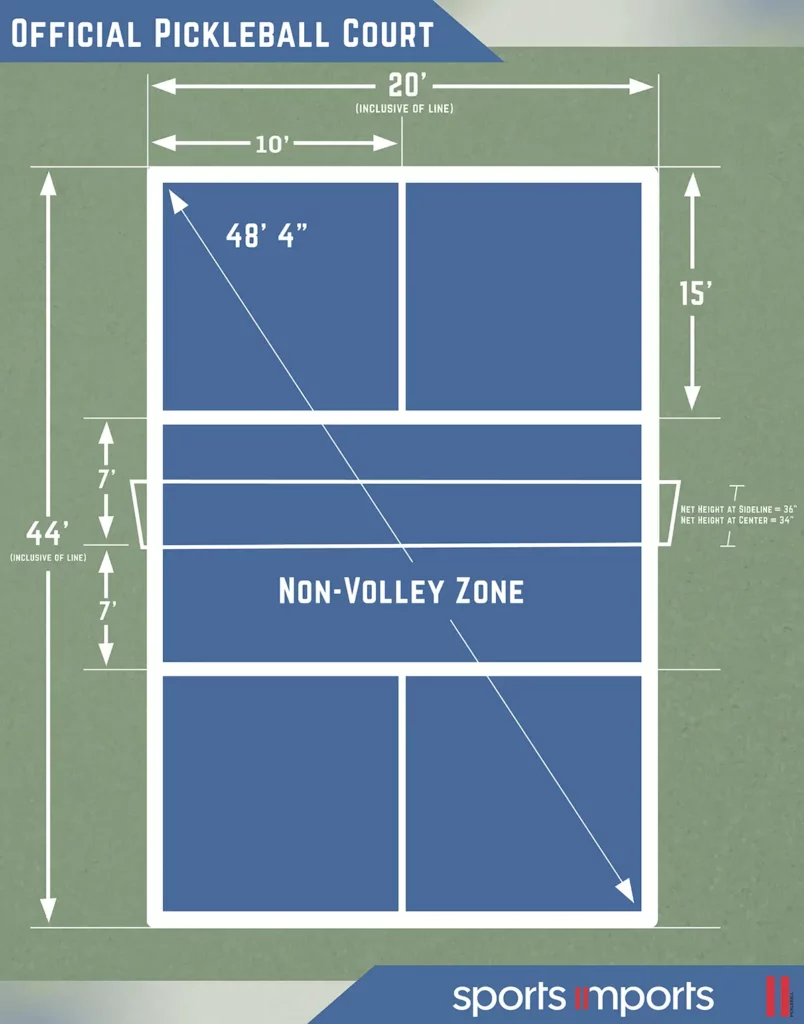
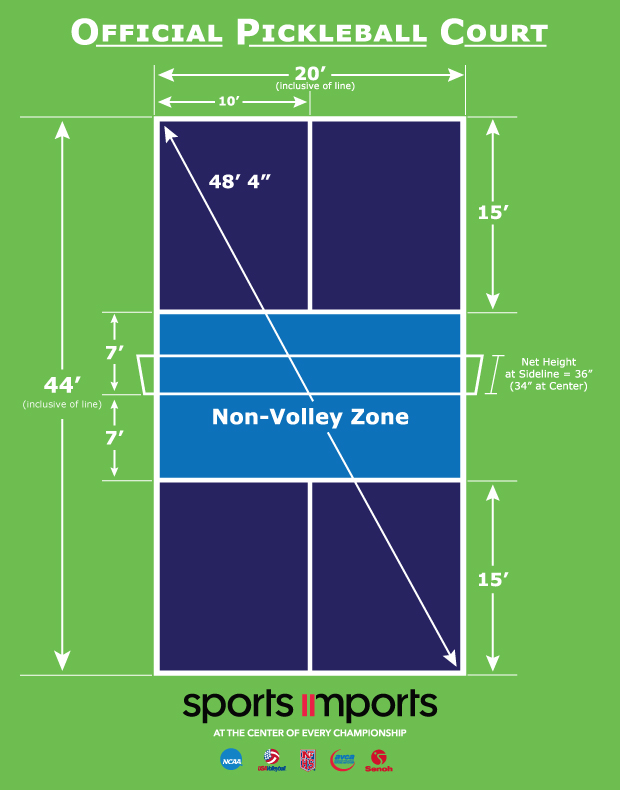
A standard pickleball court is 20 feet by 44 feet with 7-foot kitchens.
If you’ve wondered what are the measurements of a pickleball court, you’re in the right place. I’ve lined and played on dozens of courts, from driveways to club facilities. In this guide, I’ll walk you through every dimension, why it matters, and how to set it up right. You’ll get clear steps, pro tips, and common mistakes to avoid so your court plays true and feels great.
Official court measurements, explained
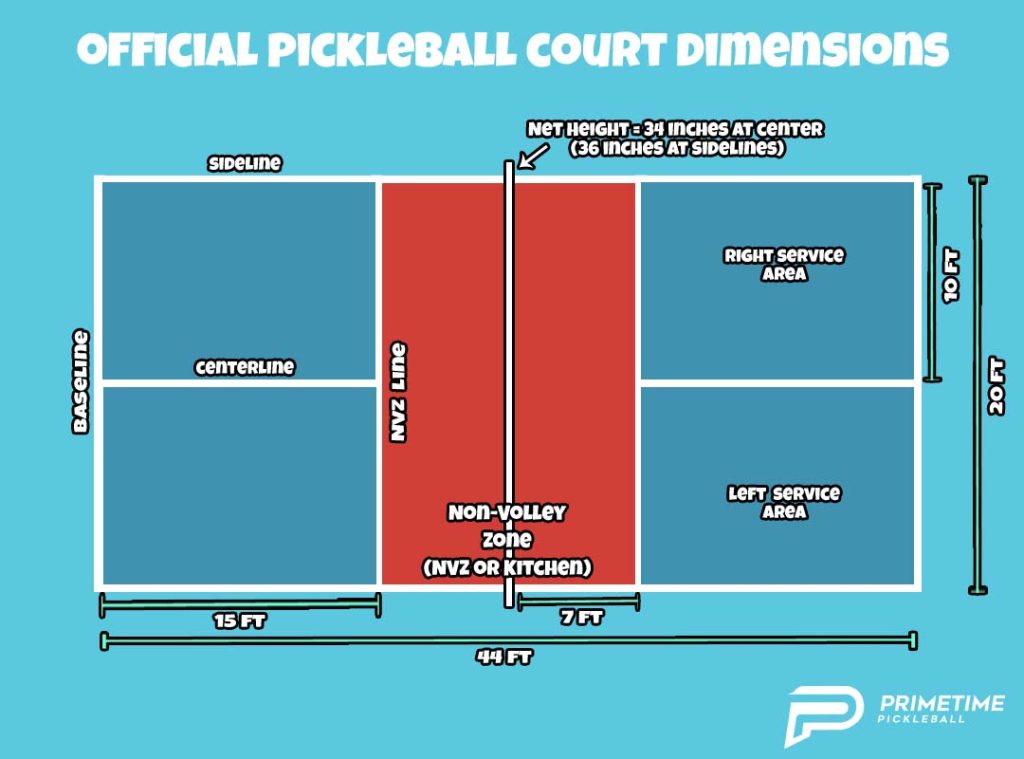
- Playing area: 20 feet wide by 44 feet long (6.10 m by 13.41 m). Singles and doubles use the same size.
- Non-volley zone (the kitchen): 7 feet deep on each side of the net (2.13 m). The NVZ line is part of the NVZ.
- Service boxes: Each side has two service courts, each 10 feet wide by 15 feet deep (3.05 m by 4.57 m).
- Net height: 36 inches at the sidelines and 34 inches at the center (0.914 m and 0.864 m).
- Line width: 2 inches wide. All lines are in.
- Diagonals: Corner to corner is about 48 feet 4 inches. Matching diagonals help square the court.
- Net length and posts: Posts are 22 feet apart. Portable nets are usually 22 feet wide, so they extend just beyond the sidelines.
- Orientation: If outdoors, aim the long axis north–south to reduce sun glare.
If you came here asking what are the measurements of a pickleball court, those are the official specs that make every court feel consistent and fair.
Anatomy of the court: what each line does
- Baselines: The back lines. You serve from behind these. They are 22 feet from the net.
- Sidelines: The side boundaries. They run the full 44 feet.
- Centerline: Splits the left and right service courts. It runs from the NVZ line to the baseline.
- NVZ line: Drawn 7 feet from the net. You cannot volley while standing on or inside it.
- Service courts: Four rectangles formed by the centerline and NVZ line. Serves must land cross-court in these boxes.
From a playability view, the kitchen is where strategy starts. It controls dinks, resets, and speed-ups. When players ask, what are the measurements of a pickleball court, they often mean “How big is the kitchen and where do I stand?” Nail the NVZ depth and you’ll feel the difference on day one.

Space you need beyond the lines
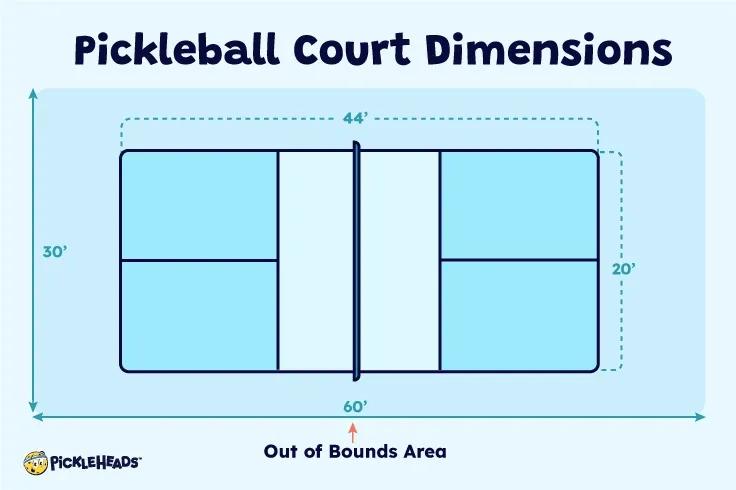
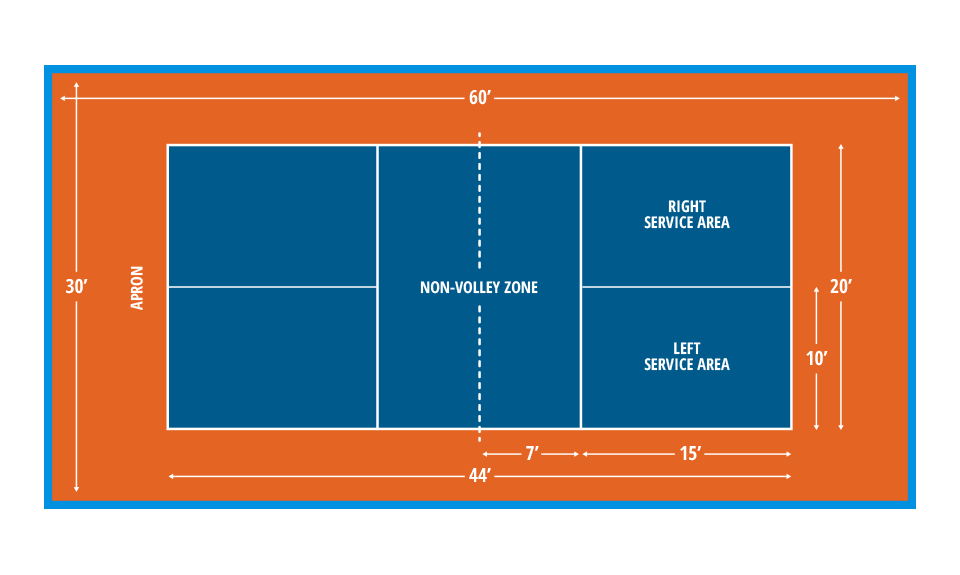
- Minimum recommended total area: 30 feet by 60 feet.
- Preferred total area: 34 feet by 64 feet. This gives safer run-off and room for refs or benches.
- Ceiling height: For indoor play, 18 to 20 feet clears most lobs. More is better.
- Fencing: 10 feet high is common outdoors. Windscreens help with visibility and ball control.
If your yard is tight, you can still play with a 20 by 44 footprint, but give yourself as much buffer as you can. When friends ask me what are the measurements of a pickleball court for a backyard, I tell them to aim for at least 5 feet of run-off behind baselines and 3 to 5 feet on the sides.

Step-by-step: measure and mark your own court
Tools you’ll want:
- 100-foot tape measure, chalk or painter’s tape, and stakes or cones
- String line, square, and a helper
- Rubber measuring wheel if the ground is rough
Steps:
-
Snap the long axis. Mark two points 44 feet apart for one sideline. Stake a string between them.
-
Square the second sideline. Measure 20 feet over at each end to place the second sideline. Check the diagonals. They should both read about 48 feet 4 inches. Adjust until both match.
-
Mark the baselines. Connect the ends across the 20-foot width. You now have a 20 by 44 rectangle.
-
Find the net line. Mark the halfway point at 22 feet from either baseline. This is where the net will go.
-
Lay out the kitchen. From the net line, measure 7 feet toward each side. Snap that NVZ line across the width. Remember: the 2-inch line is part of the kitchen.
-
Add centerlines. From the midpoint of each baseline, snap a line to the midpoint of the NVZ line on that end. That divides left and right service boxes.
-
Tape or paint lines. Use 2-inch marking tape or a striping machine. Apply two thin coats of outdoor paint on clean surfaces for durability.
-
Final check. Re-measure the key marks: 20 feet width, 44 feet length, 7-foot NVZ, and matching diagonals.
Pro tip from my first DIY court: I once measured the 7 feet to the near edge of the NVZ line, which made the kitchen too small. Measure to the outside of the 2-inch line so the line counts inside the kitchen. That tiny difference changes how legal volleys feel.
Net setup and tension
- Height: 36 inches at sidelines, 34 inches at center. The slight dip is by design.
- Center strap: Not required, but it keeps a consistent 34 inches.
- Net bottom: Should touch the court or be close. Do not allow big gaps.
- Tension: Firm, not guitar-string tight. Over-tension can pull posts inward and change height.
Portable nets are usually spot-on out of the box. If you’re building permanent posts, set them 22 feet apart and just outside the sidelines. People often ask what are the measurements of a pickleball court for a net only. Focus on the 36/34-inch heights and a 22-foot span, and you will be within spec.

Common mistakes and quick fixes
- Kitchen too shallow. Fix by re-measuring 7 feet to the outside of the 2-inch NVZ line.
- Crooked court. Check both diagonals and reset your corners until the numbers match.
- Net too high or low. Use a tape at center for 34 inches and at each sideline for 36 inches.
- Lines too wide. Keep them at 2 inches. Wider lines change bounce calls and look odd.
- Slippery paint. Use textured coating or add grit to paint. Smooth paint is a fall hazard.
- Bad orientation. Rotate the court north–south if glare is an issue at sunrise or sunset.
These are the fixes I use when I get called to “rescue” a court. Small corrections make a big difference in play.

Variations and conversions (tennis, driveways, gyms)
- On a tennis court: You can fit up to four pickleball courts on one tennis court with careful spacing. Use temporary nets and tape. Mind the run-off between side-by-side courts.
- In a gym: Most basketball courts can host two or three pickleball courts. Use soft tape that won’t damage floors.
- In a driveway: Flat, crack-free areas work best. Mind slope and drainage. A mini practice strip with a 7-foot kitchen and a short service box is great for dinks and volleys.
People ask what are the measurements of a pickleball court when converting space. The final lines should still be 20 by 44 with a 7-foot kitchen and correct net height. The buffer around it is what usually changes.
Frequently Asked Questions of what are the measurements of a pickleball court
What are the measurements of a pickleball court in feet and meters?
The court is 20 by 44 feet (6.10 by 13.41 meters). The kitchen is 7 feet deep on each side, and the net is 36 inches at the sidelines, 34 at center.
Are singles and doubles the same size?
Yes. What are the measurements of a pickleball court for singles and doubles is identical: 20 by 44 feet. Only player count and tactics change.
How deep is the kitchen and does the line count?
The kitchen is 7 feet from the net, measured to the outside edge of the NVZ line. The NVZ line counts as part of the kitchen.
How high is the pickleball net?
It is 36 inches at both sidelines and 34 inches at the center. That dip helps with rallies and passing shots.
What total space do I need for a safe layout?
Aim for 34 by 64 feet if possible. The minimum is 30 by 60 feet, but more buffer is safer.
How big are the service boxes?
Each service box is 10 feet wide and 15 feet deep. That comes from the 20-foot width split in half and 22 feet minus the 7-foot kitchen.
What are the measurements of a pickleball court on a tennis court overlay?
The core lines remain 20 by 44 with a 7-foot kitchen. You can fit up to four courts on one tennis court with proper spacing.
How long is the diagonal across the court?
The corner-to-corner diagonal is about 48 feet 4 inches. Use matching diagonals to square your layout.
What are the measurements of a pickleball court for backyard builds?
Keep the lines at 20 by 44 with the standard 7-foot kitchen. Then add as much run-off as you can, ideally to 34 by 64 feet total area.
Do line widths matter?
Yes. Use 2-inch lines, and remember lines are in. Wider lines can cause bad calls and odd bounces.
Conclusion
You now know the full picture: a 20 by 44 playing area, 7-foot kitchens, 2-inch lines, and a 36/34-inch net. Those building blocks create fair rallies, clean serves, and the lively play we all love. If you remember nothing else, remember this: measure twice, match the diagonals, and treat the NVZ line as part of the kitchen.
Ready to build or refresh your setup? Use this guide to mark your space, check your net, and share it with a friend who asks what are the measurements of a pickleball court. Want more how-tos and gear tests? Subscribe, leave a question, or tell me what you’re planning to build next.