The basic rules of pickleball cover serving, scoring to 11, and staying out of the kitchen unless the ball bounces.
If you want a clear, friendly guide to what are the rules for pickleball, you’re in the right place. I’ve coached beginners, played league nights, and taught new players the “why” behind every call. Below, I explain what are the rules for pickleball in plain English, with real examples, so you can walk onto any court with confidence and have more fun.
Pickleball Basics: Court, Gear, and Setup
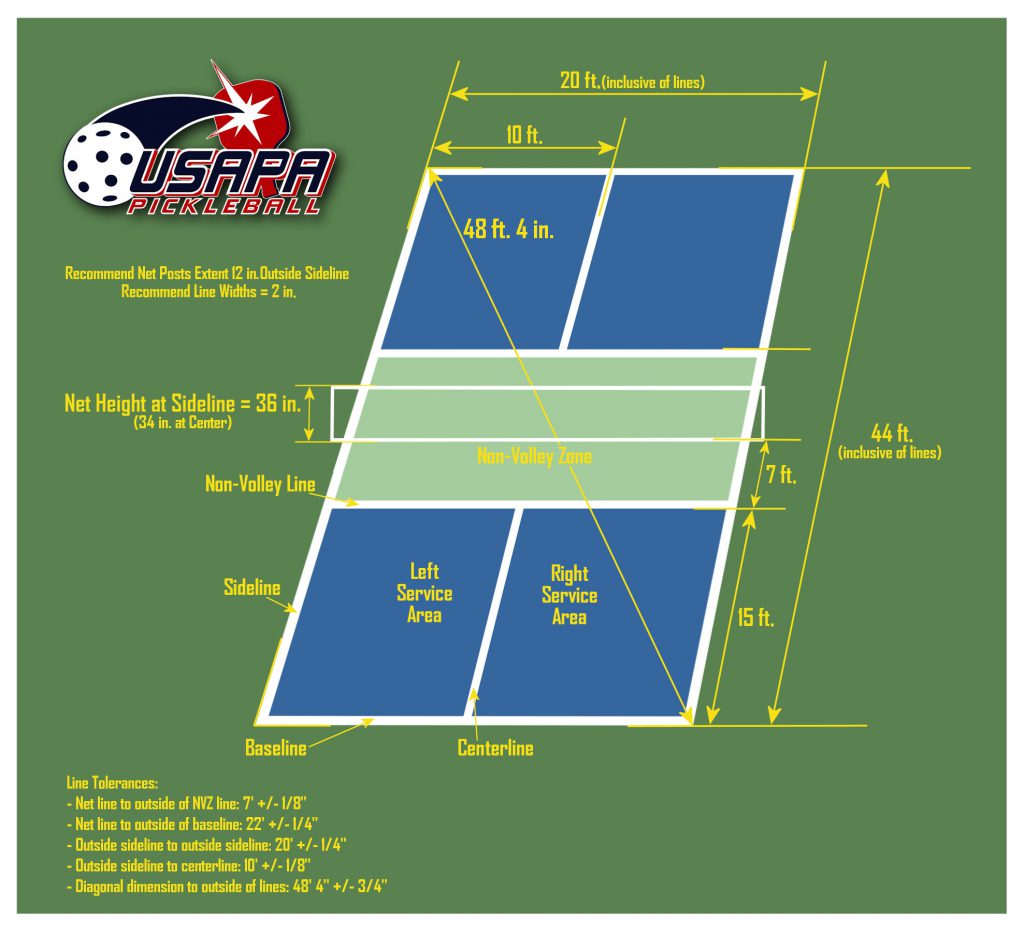
If you’re new, it helps to see the court first. When people ask what are the rules for pickleball, I start with the layout. It explains so many calls and helps you place your feet with purpose.
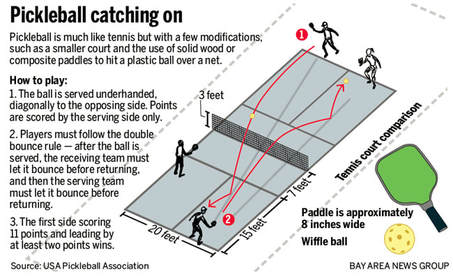
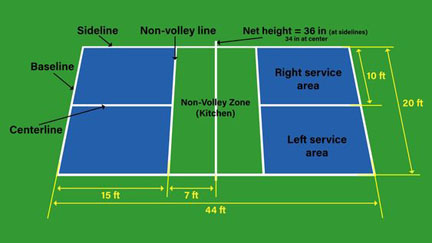
- Court size is 20 feet by 44 feet. The net is 36 inches high at the posts and 34 inches in the center.
- The non-volley zone, called the kitchen, is 7 feet from the net on both sides.
- Lines are in. If the ball touches any part of a line, it is good.
- You use a solid paddle and a plastic ball with holes. Indoor and outdoor balls differ in weight and bounce.
Pro tip from the sidelines: grab shoes with good grip and a light paddle. In my first round robin, a heavy paddle made my wrist sore and slowed my swing.

Serving Rules and Rotation
A big part of what are the rules for pickleball is the serve. Serves start each rally and set the tone of play.
- Serve must be hit underhand with the paddle below your waist at contact.
- Contact should be made with an upward motion. You can use a drop serve, where you drop the ball and hit it after it bounces.
- Serve cross-court into the opposite service box. The ball must land past the kitchen line.
- Only one serve attempt is allowed, except in a let. A let is when the serve touches the net but lands in. Play continues in current rule sets, as many groups no longer replay lets.
- In doubles, both players on a team serve before a side-out, except at the start of each game. The first serving team gets only one server to begin.
Rotation tip: In doubles, the server stays on the right when their team’s score is even and on the left when odd. Say “server number” and score out loud. It keeps the team in sync.

Scoring Made Simple
When friends ask what are the rules for pickleball, scoring is the piece that feels tricky at first. It gets easy fast.
- Games are usually to 11, win by 2. Some events go to 15 or 21.
- Only the serving team can score points.
- In doubles, you call three numbers: server’s score, receiver’s score, and the server number, either 1 or 2. For example, “6-4-1.”
- In singles, call two numbers: server’s score first, then receiver’s.
I teach beginners to track serving side with a small ritual. Tap your paddle on your hip before the serve. If you forget where to stand, check the score. Even score? Serve from the right.
The Double-Bounce Rule and the Kitchen
Two core parts of what are the rules for pickleball are the double-bounce rule and the kitchen. These keep play fair and fun.
Double-bounce rule:
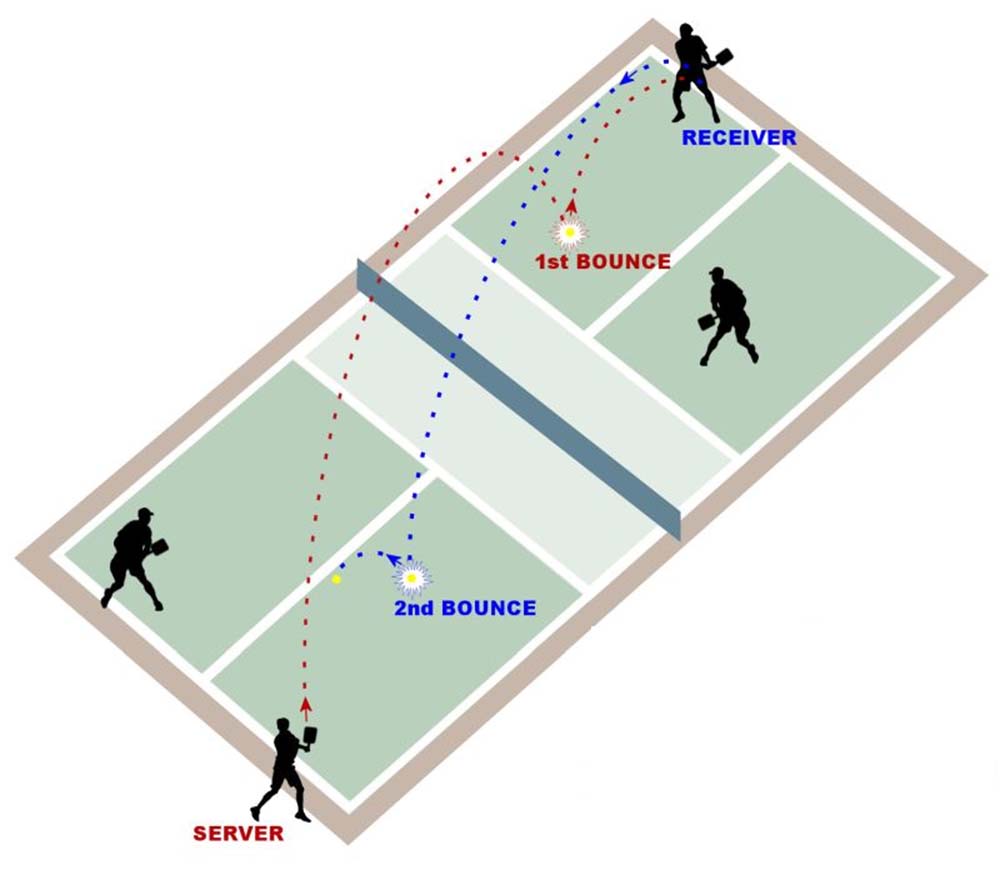
- The serve must bounce once before the receiver returns it.
- The return must also bounce once on the server’s side.
- After that, either team can volley or let it bounce.
Kitchen (non-volley zone) rule:
- You cannot volley while standing in the kitchen or touching the kitchen line.
- You can enter the kitchen to hit a ball that has bounced. Exit when you can to avoid foot faults.
- Momentum rules apply. If you volley and your follow-through carries you into the kitchen, it is a fault.
I learned this the hard way. I hit a perfect put-away, then stumbled into the kitchen. Point lost. Control your body after the volley. Think “swing, hold, and freeze.”

Faults, Lets, and Dead Balls
Another way to answer what are the rules for pickleball is to list the common faults. A fault stops play and, depending on who served, gives a point or a side-out.
Common faults:
- Serve lands short or in the kitchen.
- Ball hit out of bounds or into the net.
- Volleying while in the kitchen or touching the kitchen line.
- Missing the double-bounce sequence.
- Striking the ball before it crosses the net.
- Carrying the ball or a double hit that is not a single continuous motion.
Let and dead ball notes:
- Many clubs now play through net-cord serves. Confirm with your group.
- A ball interruption from another court stops play. Call let, then replay.
- If the ball cracks mid-rally, stop play and replay the point.
Stay vocal. Clear calls prevent arguments. In my leagues, we agree on let rules before the first serve to avoid mid-match debates.

Singles vs Doubles Differences
People often ask what are the rules for pickleball when switching between singles and doubles. The core rules stay the same, but a few details change.
- Scoring call: Singles uses two numbers. Doubles uses three.
- Positioning: In singles, you serve from the right when your score is even and from the left when odd.
- Strategy: Singles rewards deep serves, deep returns, and patient footwork. Doubles rewards soft hands, dinks, and smart angles.
Try both formats. Singles sharpens your movement. Doubles builds your hands at the net and your teamwork.
Timeouts, Pace of Play, and Sportsmanship
Understanding pace is part of what are the rules for pickleball that new players miss. Good flow helps everyone enjoy the game.
- Timeouts: Most games allow two timeouts per team to 11. Use them to reset, hydrate, and slow a run.
- Between points: Do not stall. Serve at a steady pace once both sides are ready.
- Line calls: If you are not sure, the ball is in. Give the benefit of the doubt to your opponent.
- Disputes: Replay the point if needed. A friendly court is a better court.
I carry water and a small towel. A 30-second reset after a long rally can save your legs and your focus.

Real-World Scenarios and Pro Tips
Let’s put what are the rules for pickleball into real moments. These quick cases come up all the time.
- Your serve clips the net and lands in. Keep playing if your group uses play-through lets. Do not stop unless you agreed to replay lets before the match.
- You step on the kitchen line while volleying. That is a fault. If the ball bounced first, you are fine.
- You and your partner switch sides by mistake. Fix it at the end of the rally. If you served from the wrong side and won the rally, the point does not count. Correct positions and replay.
- A ball from the next court rolls in mid-point. Call a let right away and replay the point.
- You are unsure if the shot was in. If your team did not see it clearly out, call it in.
Pro tips I give my students:
- Announce the full score loud before each serve. It prevents wrong-position faults.
- Aim serves deep and to the backhand. You will get weaker returns.
- Keep toes out of the kitchen when you volley. Think “heels on the line, toes behind.”
- When in doubt about what are the rules for pickleball in your league, ask the organizer for the latest rule set before play.

Frequently Asked Questions of what are the rules for pickleball
What is a simple way to remember the double-bounce rule?
Let the serve bounce. Let the return bounce. After that, hit out of the air or off the bounce. It keeps both sides fair at the start.
How do I call the score in doubles?
Say server’s score, receiver’s score, then server number. For example, “7-5-2.” This helps both teams track who serves next.
Can I step into the kitchen to hit a ball?
Yes, if the ball bounces first. You cannot volley while in the kitchen or touching the line. Clear your feet fast after your shot.
Do we replay serves that hit the net?
Many groups now play through net-cord serves if they land in. Ask your group before the match to avoid confusion.
How do side-outs work in doubles?
Both players on a team serve until they fault, except at the start when only one player serves. After both servers fault, the other team gets the serve.
What happens if I serve from the wrong side?
Stop at the end of the rally and correct spots. If your team won the point while out of position, remove that point and replay from the right position.
Conclusion
You now know what are the rules for pickleball in clear, simple steps: serve underhand cross-court, let the first two shots bounce, score only on serve, and stay out of the kitchen on volleys. Add steady pace, fair line calls, and quick resets, and you will enjoy every match. Grab a paddle, review what are the rules for pickleball with your group, and play your first game this week. If this helped, share it with a friend, subscribe for more tips, or drop your own questions in the comments.