Pickleball rules cover scoring, serves, two-bounce play, and the kitchen.
If you’ve wondered what are the rules to pickleball, you’re in the right place. I teach new players every week, and I know how to turn dense rules into clear steps. This guide explains what are the rules to pickleball in plain English, with examples you can use on court today. Stick with me, and you’ll avoid rookie mistakes and play with confidence.
What Are the Rules to Pickleball: The Essentials
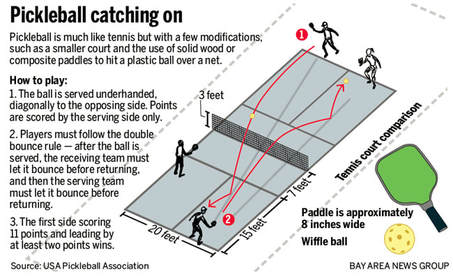
You can learn the game fast if you master a few core ideas. Serve underhand and diagonally. Let the ball bounce once on each side after the serve. Do not volley in the non-volley zone, also called the kitchen. Score only when your team is serving, and win by two.
When friends ask me what are the rules to pickleball, I share this short script: serve right, bounce twice, respect the kitchen, and call the score loud. It sounds simple, and it works. We’ll break each part down with examples below so you can play clean points from your first game.

Court, Lines, and Gear
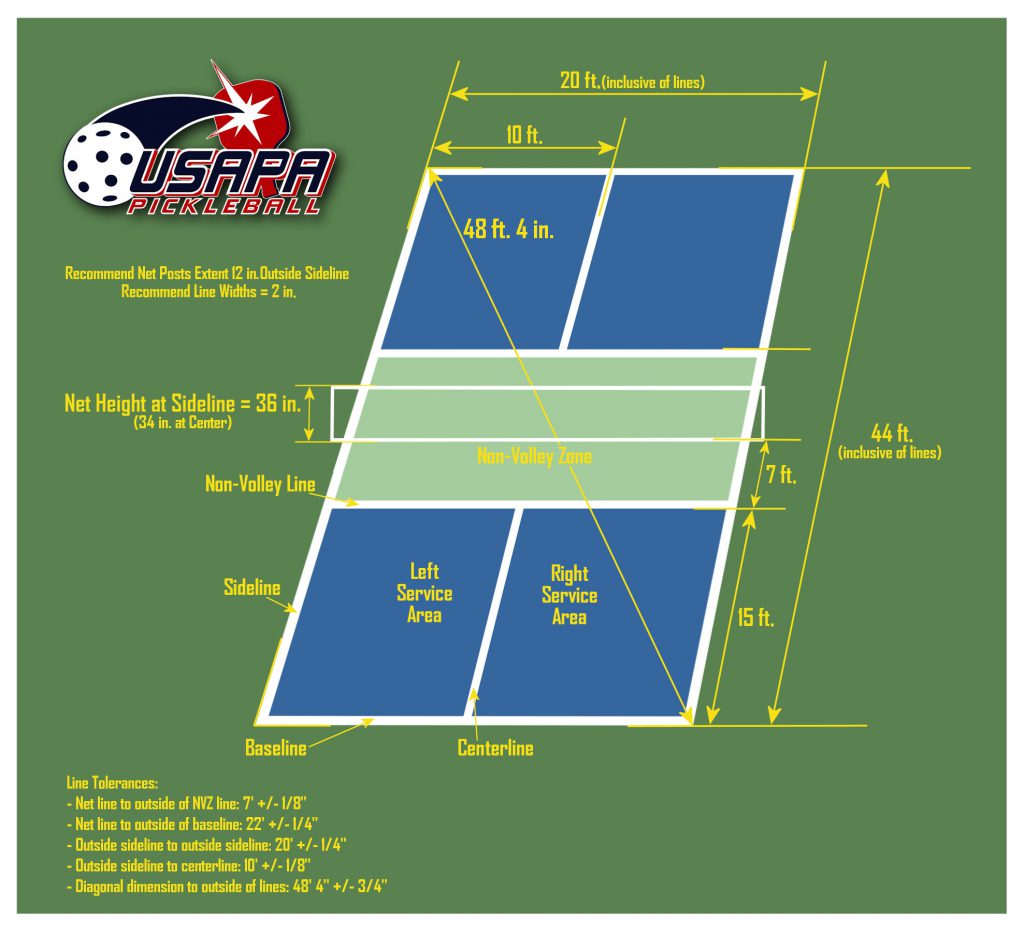
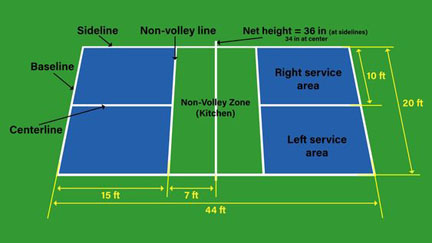
The court is 20 feet wide and 44 feet long. The kitchen is the 7-foot zone on both sides of the net. The service boxes are the right and left halves past the kitchen. Lines are in on rallies, except the kitchen line is short on a serve.
Use a regulation paddle and a plastic ball with holes. Outdoor and indoor balls are different in weight and hole count. Wear shoes with good grip. These basics matter when you ask what are the rules to pickleball because court lines and gear shape legal play.

Serving Rules Made Simple
You must serve underhand. Contact the ball below your waist with an upward motion. The paddle head must be below your wrist at contact on a volley serve. Hit the serve cross-court and beyond the kitchen line.
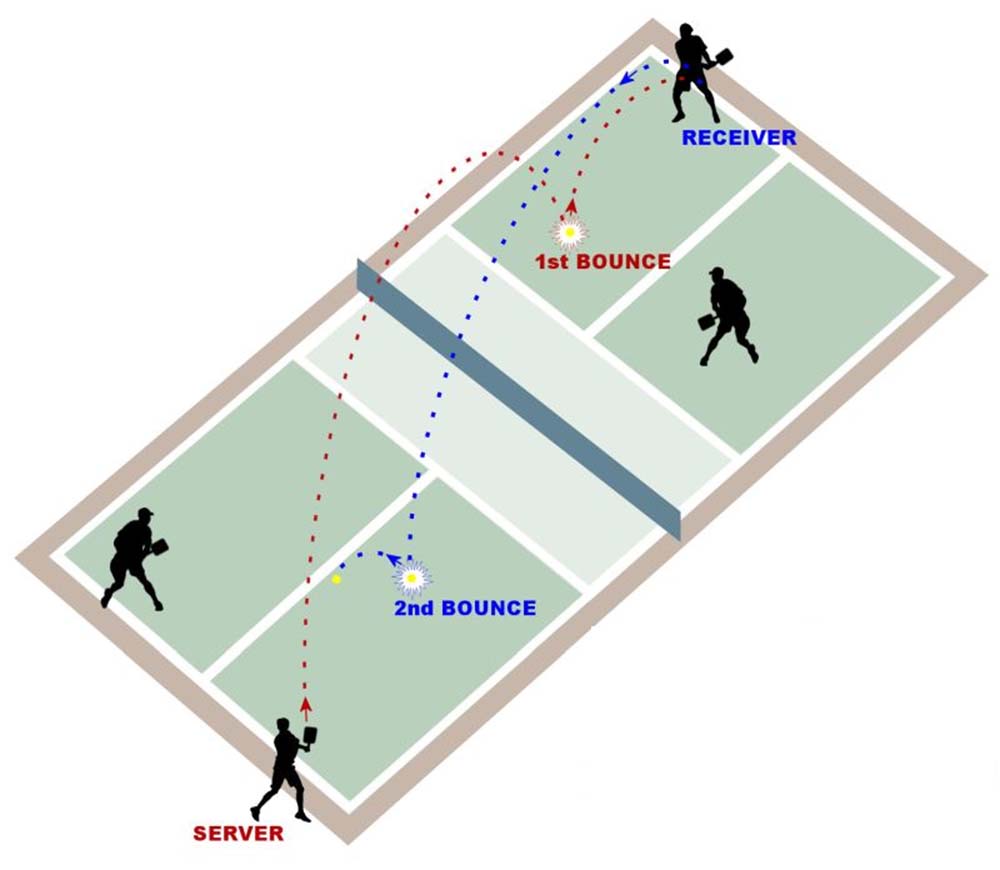
Keep at least one foot behind the baseline at contact. Do not step on the court or the line as you serve. There are two legal serves. A traditional volley serve where you hit the ball out of the air, and a drop serve where you drop the ball and hit it after it bounces.
You may not add spin with your fingers on a volley serve. On a drop serve, you can drop from any height and you may release with or without spin, but you may not toss it upward. There are no let serves. If your serve clips the net and lands in the correct box, the ball is live.
Call the score before you serve. In doubles, call server score, receiver score, and server number. At 0-0, the start call is 0-0-2 because only one server starts the game for the first team. Knowing this part of what are the rules to pickleball keeps games smooth and fair.

The Two-Bounce Rule Explained
After the serve, the return must bounce before the server hits it back. The server must also let the return bounce. That is two bounces, one on each side, before volleys are allowed. After those two bounces, you may hit out of the air or off the bounce.
Here is a quick tip I share with new players. After you serve, take a small split step and wait for the bounce. This habit cuts net rush faults and gives you time to set your paddle.
The Non-Volley Zone (Kitchen)
You cannot volley while any part of you is in the kitchen or touching its line. A volley is a ball hit in the air before it bounces. Your momentum cannot carry you into the kitchen after a volley. If it does, it is a fault even if the ball is dead.
You may enter the kitchen to hit a ball that bounces, and you may stay there. You must re-establish both feet outside the kitchen before you volley again. When people ask what are the rules to pickleball around the kitchen, I say this: if you volley, stay out, get set, then strike.
Scoring and Game Format
Most games play to 11, win by 2. Some matches or events go to 15 or 21. Only the serving team can score. If the serving team loses the rally, it is a side-out or the serve moves to the second server.
In doubles, you call three numbers. Server score, receiver score, and server number (1 or 2). At the start of the game, only one server serves for the first team, so you call 0-0-2. Rally scoring is used in some leagues, but the official rule set is side-out scoring. If you want to learn what are the rules to pickleball for tournaments, expect side-out scoring unless stated.

Doubles Positions and Service Order
At the start, the serving team’s even court (right side) player serves first. When the serving team wins a point, the two partners switch sides. The receiving team never switches sides on that rally. When the first server loses the serve, the second server serves from wherever they are.
If both servers on a team lose the rally, it is a side-out to the other team. Keep track by standing patterns. I teach teams to set a “home side” for each player at 0-0. If you get lost and ask each other what are the rules to pickleball for positions, check the last point you won. The server should be in the court that matches your score parity. Even score, serve from the right. Odd score, serve from the left.

Faults, Lets, and Replays
A fault ends the rally against the player or team that commits it. Common faults include:
- Serve lands short, in the kitchen, or out. The kitchen line is short on the serve.
- Volleying from the kitchen or touching the kitchen line on a volley.
- Missing the ball or double hits by the same player without one continuous motion.
- Ball landing out or hitting a permanent object after crossing the net.
- Foot fault on the serve by stepping on the baseline or inside the court at contact.
There are no let serves. A let on a rally can be called if a clear external hinder occurs, like a stray ball on the court. In that case, replay the point. If your paddle breaks or a distraction happens on your side, play usually continues unless there is a safety risk.

Line Calls, Etiquette, and Safety
Lines are in on rallies. If any part of the ball touches the line, it is in. Except on the serve, the kitchen line is short. The receiving team calls the serve in or out on their side. If you are not sure, the benefit of doubt goes to your opponent.
Call the score before each serve in a strong voice. Stop play at once if a ball rolls on the court. Safety first. The heart of what are the rules to pickleball is fair play. Own your calls, respect others, and ask for help if a partner had the better view.
Advanced Situations: Spin, Stacking, and Drops
Servers cannot add spin with their fingers on a volley serve. They can use a drop serve instead if they want more comfort with timing. Stacking is legal. Teams may line up on the same side before the serve or return to keep a preferred player on one side.
Drop shots into the kitchen are legal if the ball bounces first. Ernes and around-the-post shots are also legal if you do not cross the net or touch it. When students push me on what are the rules to pickleball at higher levels, I remind them to master footwork first. Good feet make legal shots easy.
Common Mistakes and Quick Fixes
New players often rush the net right after they serve. Wait for the bounce. Keep your paddle up at chest height. It cuts reaction time and avoids kitchen faults.
Many faults come from poor score calls. Say it loud and slow. Server score, receiver score, server number. If you ever wonder mid-game what are the rules to pickleball for a messy point, pause and agree to replay if both sides are unsure.
Quick Reference Checklist
Use this list before you serve each point.
- Call the score in order and confirm server number.
- Check feet behind baseline for the serve.
- Aim serve cross-court past the kitchen line.
- Respect the two-bounce rule before any volley.
- Stay out of the kitchen when you volley.
- Switch sides only when your team wins a point on serve in doubles.
- Keep calls honest. If you are not sure, the ball is in.
- Ask yourself what are the rules to pickleball for this situation, then act with clarity.
Frequently Asked Questions of what are the rules to pickleball
What are the rules to pickleball for serving position?
Serve from the right when your score is even and from the left when it is odd. In doubles, the receiving team does not switch sides during the rally.
What are the rules to pickleball for the kitchen line on a serve?
On a serve, the kitchen line is short. If the served ball touches the kitchen line, it is a fault.
What are the rules to pickleball about spin on serve?
You cannot add spin with your fingers on a volley serve. You may use a drop serve, where the ball bounces first, if you prefer a simpler motion.
What are the rules to pickleball for scoring in doubles?
Use side-out scoring and win by two. Only the serving team can score, and you call three numbers: server score, receiver score, and server number.
What are the rules to pickleball for line calls?
Lines are in on rallies, except the kitchen line is short on the serve. The receiving side calls serves on their end, and doubt goes to the opponent.
What are the rules to pickleball for timeouts?
Most formats allow two one-minute timeouts per team per game. Some events may vary, so check posted rules before play.
Conclusion
Now you know the core of the game: serve right, respect the two-bounce rule, stay clean in the kitchen, and score only on serve. With these steps and a bit of court sense, the rules turn from stress to muscle memory. Grab a friend, print the checklist, and play a short race to 11 today.
If this guide helped, share it with your group, subscribe for more quick lessons, and drop a comment with the next topic you want covered.