Pickleball uses a lightweight plastic ball: 26-hole indoor or 40-hole outdoor, USA Pickleball approved.
If you want a clear, expert guide on what ball is used in pickleball, you’re in the right place. I’ve tested dozens on courts across hot summers, cold mornings, and windy nights. Below, I break down what ball is used in pickleball for every setting, skill level, and budget, so you can play better and make smarter buys.
Pickleball ball basics and official specs
A pickleball ball is hard plastic and perforated. It is not pressurized like a tennis ball. Indoor and outdoor balls follow the same core rules.
Official standards matter. The ball must be USA Pickleball approved for events. The diameter is about 2.87 to 2.97 inches. The weight ranges from 0.78 to 0.935 ounces. When dropped from 78 inches on a flat surface at room temp, it should bounce about 30 to 34 inches.
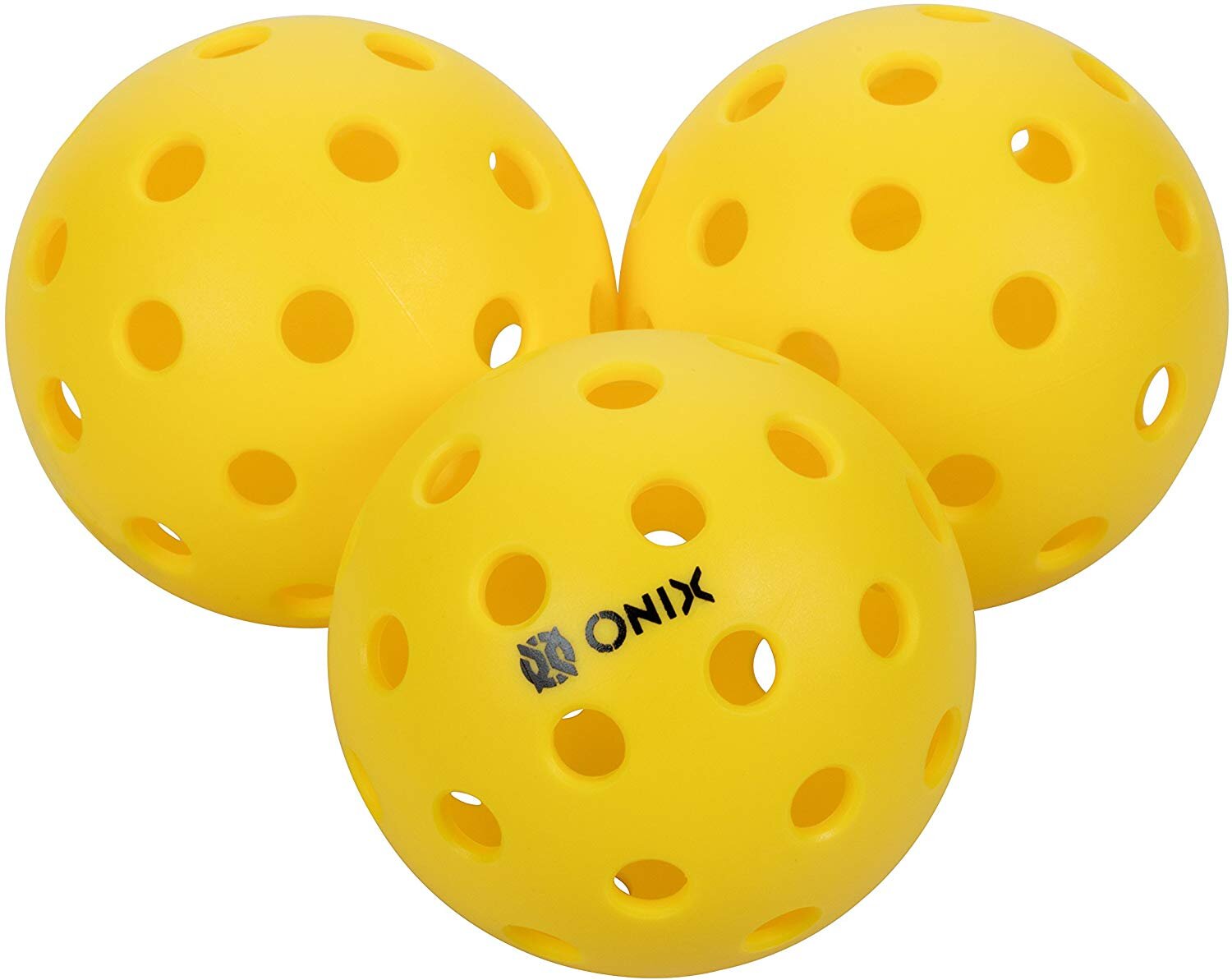
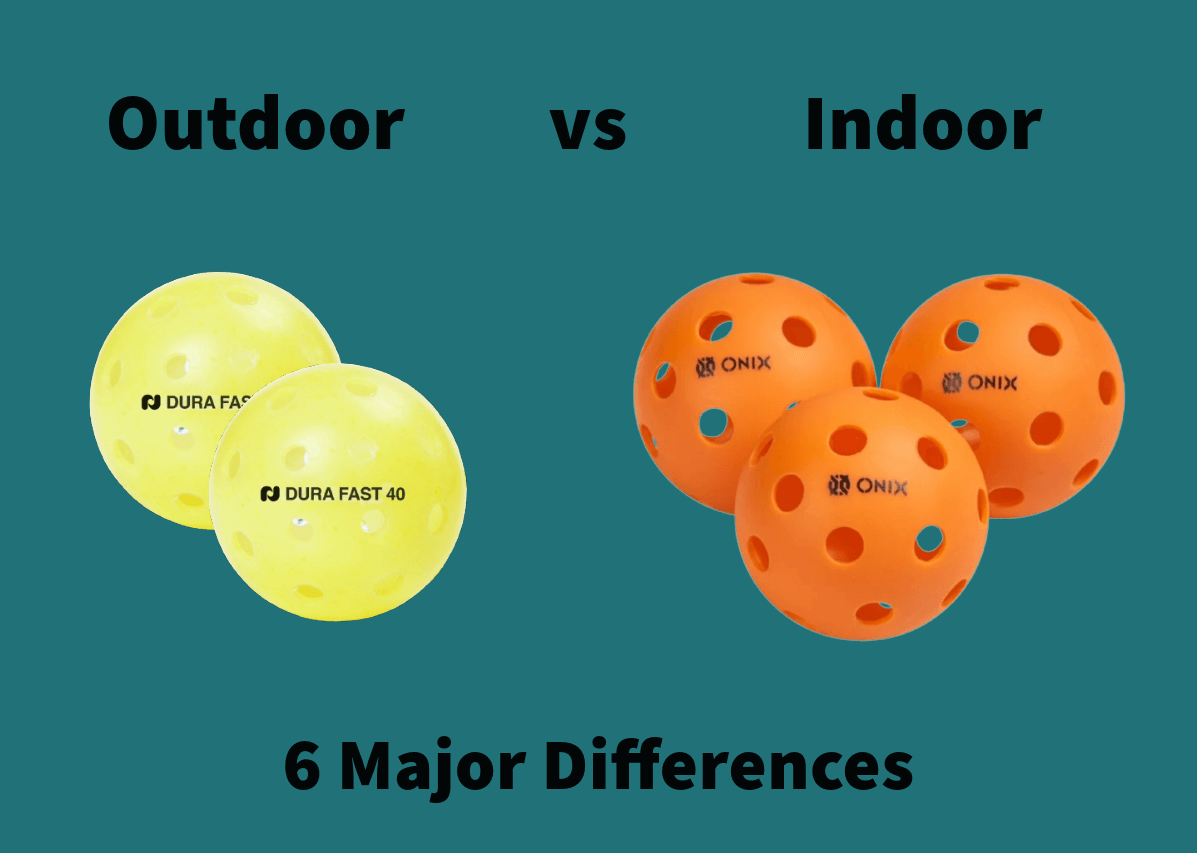
Holes define how it flies. Outdoor balls use many small holes. Indoor balls use fewer big holes. This is why the ball acts so different from gym to park.
If you simply want to know what ball is used in pickleball, start with an approved outdoor 40-hole ball for outside play, and a softer 26-hole ball for gyms. That one choice solves most issues for new players.

Indoor vs outdoor balls: feel, flight, and control
Indoor balls have 26 big holes and a softer shell. They are quieter and slower. They sit on the paddle a bit longer. That helps control and resets.
Outdoor balls have 40 small holes and a stiffer shell. They cut the wind better and move faster. They can crack sooner on cold days.
Here is a quick way to pick what ball is used in pickleball for your court:
- Play in a gym on a wood or rubber floor? Choose a 26-hole indoor ball.
- Play outside on concrete or asphalt? Choose a 40-hole outdoor ball.
- Play in light wind or heat? Outdoor 40-hole still works best.

Tournament approval and brands to know
If you compete, use only USA Pickleball approved balls. That list changes, so always check event rules. Many tournaments use Franklin X-40, Dura Fast 40, or Onix balls. Indoor players often like Jugs or Onix Fuse indoor.
Brand choice affects speed and touch. Dura often feels the fastest and most lively. Franklin X-40 is very common and stable across temps. Onix Fuse indoor feels soft and easy to control.
If you ask pros what ball is used in pickleball at big events, the answer often includes these models. Learn two options, so you can adapt when events switch balls.
How to choose for your level and style
Your skill and style shape what ball is used in pickleball for you. Slower balls help new players build rallies. Faster balls reward sharp hands and attack play.
Try this simple match:
- Newer players: Indoor gyms? Use a soft 26-hole ball. Outside? Use a steady 40-hole like Franklin X-40.
- Intermediate players: If you like long points, pick a slightly softer outdoor ball. If you like drives, pick a faster 40-hole ball.
- Advanced players: Practice with the ball used in your league or event. That builds real match feel.
I coach mixed levels at a busy club. When players ask what ball is used in pickleball for windy evenings, I hand them a 40-hole ball with a stiffer shell. Their volleys clean up fast.
Temperature, altitude, and surface
Heat makes balls softer and bouncier. Cold makes them harder and more brittle. At high altitude, balls fly more and bounce higher. On rough outdoor courts, balls scuff faster and crack sooner.
Plan ahead:
- Hot days: Expect higher bounce and faster pace. Try a ball known for control.
- Cold days: Warm balls in a bag. Rotate more often to avoid cracks.
- Wind: Outdoor 40-hole only. Heavier-feel models hold the line better.
Here, what ball is used in pickleball depends on weather first, then brand. Always carry two types in your bag.

Durability, seams, and care
Most outdoor balls have a two-piece seam. This seam improves structure but can split with hard play. Indoor one-piece balls are often more forgiving.
Make your balls last longer:
- Keep them at room temp before play.
- Store in a dry bag, out of the trunk in summer and winter.
- Clean with warm water to remove grit that speeds wear.
You still need to replace balls. If your dinks skid or the ball eggs, swap it. When friends ask what ball is used in pickleball that holds up in league, I suggest a well-known 40-hole ball and a spare sleeve.
A simple five-minute test to pick your ball
I use a quick court test when trying a new model. It is fast and clear. You can run it in warm-up.
Do this:
- Drop test: From shoulder height, check bounce height and sound. It should be crisp, not dull.
- Dink ladder: Hit 10 soft dinks cross-court. Feel dwell time on the paddle.
- Drive and block: Hit five drives and have a partner block. Note speed and stability.
- Spin check: Hit three topspin rolls. Watch dip and skid.
- Serve aim: Hit three targets deep. Check your miss pattern.
By the end, you will know what ball is used in pickleball for your touch and pace that day.

Common mistakes to avoid
Players often use the wrong ball for the surface. They also leave balls in a hot car, then wonder why they feel mushy. Some use cracked balls in drills and build bad timing.
Avoid these traps:
- Matching mistake: Using indoor balls outside on windy days.
- Temperature shock: Going from a cold trunk straight to play.
- Old inventory: Training with dead balls, then struggling in matches.
Ask yourself before each session: what ball is used in pickleball for these conditions? Make a small change and enjoy cleaner rallies.
Budget and buying guide
Balls are consumables. Outdoor balls can crack sooner, especially in cold weather. Indoor balls last longer but still go out of round over time.
Smart buying tips:
- For weekly play, buy a 12-pack of your main ball.
- Mix in two brands to cover heat and wind.
- Track lifespan. Many outdoor balls last 3 to 10 sessions.
When cost matters, I compare cost per match. That is how I decide what ball is used in pickleball for big group nights. A steady mid-price ball often wins.
Frequently Asked Questions of what ball is used in pickleball
What ball is used in pickleball for outdoor play?
Most outdoor play uses a 40-hole, hard plastic ball. Choose a USA Pickleball approved model for the best results.
What ball is used in pickleball for indoor courts?
Use a 26-hole, softer plastic ball with larger holes. It gives better control on smooth gym floors.
What ball is used in pickleball for tournaments?
Events use USA Pickleball approved balls listed in the rulebook. Common picks include Franklin X-40 and Dura Fast 40.
What ball is used in pickleball for beginners?
Pick a stable, mid-speed ball. For outside, try a 40-hole ball known for control rather than pure speed.
What ball is used in pickleball in cold weather?
Use a durable outdoor ball and keep it warm before play. Expect to rotate balls more often to avoid cracks.
What ball is used in pickleball when it’s windy?
A stiff 40-hole outdoor ball handles wind best. It stays truer in flight than a softer indoor ball.
Conclusion
The right ball changes how the game feels, sounds, and flows. Pick an indoor 26-hole ball for gyms and a 40-hole ball for outdoor courts. Then, match brand and model to your climate, level, and style.
Test two approved models this week and note the difference. You will know what ball is used in pickleball for your court in minutes. Ready to go deeper? Subscribe for new testing guides, drills, and gear reviews, and leave a comment with your favorite ball and why.