A let in pickleball is a replay of a rally due to disruption or error.
Curious about what is a let in pickleball and how it affects your game? You’re in the right place. I coach new and seasoned players, and I’ve seen confusion around this rule cost points. In this guide, I break down what is a let in pickleball, what changed with the serve rule, and how to handle real match situations with confidence.

What is a let in pickleball?
If you ask what is a let in pickleball, think of a clean do-over. A let is a replay of the rally when something outside normal play disrupts it. The most common cause is a stray ball rolling onto the court. It can also come from errors like a wrong score call.
In official terms, service lets no longer exist. But referees and players still use let as shorthand for a replay. The USA Pickleball rulebook uses words like replay and hinder. Many players still say let, and that is fine in casual play.
So, what is a let in pickleball, in simple words? It is a fair reset when play is not safe or valid. You stop, call it, and replay the point.
The old let serve rule vs today
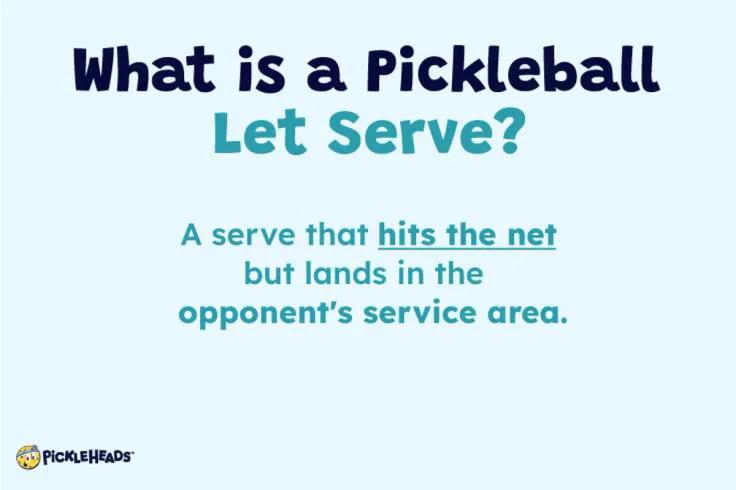
You may hear old advice about a serve that clips the net. Years ago, that was a let and the server got a redo. That rule changed. Today, a serve that hits the net and lands in the correct service box stays in play.
This update speeds up rallies and reduces disputes. It also rewards a good serve, even if it kisses the tape. If you still wonder what is a let in pickleball on the serve, the answer is simple now. There are no service lets in standard play.

When a replay is called
Here are common times a ref or player may stop play for a replay. If you ask what is a let in pickleball in these spots, it means the rally restarts.
- Stray ball or person enters the court. This is a safety issue. Replay the point.
- Wrong score called by the ref or server. If caught right away, stop and replay.
- Equipment breaks or a ball pops mid-rally. Stop and replay.
- Clear external noise or distraction out of a player’s control. Ask for a replay.
- Referee error. The ref can call a let and replay the rally.
Note that a player-created distraction does not earn a replay. If I shout or step into you, that can be a fault, not a let. What is a let in pickleball does not cover poor judgment or gamesmanship.

How lets affect scoring and momentum
A let does not change the score. It resets that rally to start again. Serve position and order remain as they were for that rally.
But the rhythm of a game can shift. A well-timed replay can cool a hot streak. When I coach doubles, I tell players to use a calm reset. Take a breath. Confirm the score. Ask, what is a let in pickleball going to do here? It gives your team a chance to refocus.

Common misconceptions and mistakes
I hear these a lot in clinics and league nights.
- You can call a service let. Not anymore. Play on if the serve clips the net and lands in.
- A ball brushing your shoe is a let. That is a live ball. If it touches you during a rally, it is your fault unless it was not the ball in play.
- Any noise is a let. Only if it is outside your control and affects the rally.
- You can call a let late. You must call it right away. Delayed calls are not valid.
If you still ask what is a let in pickleball in a gray area, ask the ref, or agree with opponents before the next point.

Practical examples from real matches
These are real moments I have seen on court.
- A stray ball rolls behind the baseline. The receiver points it out at once. We stop, remove the ball, and replay. That is what is a let in pickleball done right.
- The server calls the wrong score, then serves. The receiver returns, then stops. Too late. The rally continues. You must stop it right after the serve, not after a few shots.
- A cracked ball wobbles in mid-rally. Players stop and show the crack. Replay granted. Always check the ball when bounces feel odd.

How to handle lets in recreational play
Not every game has a ref. Use simple steps to keep it fair and friendly.
- Call it loud and early. Say let or replay so all hear you.
- Explain why in one short line. Stray ball on court. Wrong score. Broken ball.
- Reset with grace. No drama. No blame.
- Confirm serve, score, and positions before resuming.
If your group asks what is a let in pickleball often, set a quick pre-game plan. Agree on how you will handle stray balls and score errors.

Tournament rules and referee signals
In a sanctioned event, the referee manages replays. The ref will stop play, state the reason, and order a replay. Players should not self-call a let, except for safety and clear hindrance.
Know these basics for events:
- No service lets. Serves that catch the net and land in are live.
- Call safety issues right away. The ref will confirm and replay.
- Wrong score called. Stop at once. If the rally has not ended, it is a replay.
- Equipment failure. Show it to the ref. Expect a replay.
If you forget what is a let in pickleball during a match, ask the ref before the next serve.

Drills and habits to reduce lets
You cannot stop random balls, but you can cut avoidable stops.
- Pre-point check. Confirm score, server, and receiver every time.
- Ball control. Keep spare balls off the court and out of the way.
- Serve routine. Wait one beat after the call to allow a challenge or correction.
- Communication. In doubles, call out bounce, out, and no so your partner stays calm.
These small habits avoid confusion. They keep you in flow. They also reduce the need to ask what is a let in pickleball mid-rally.
Compare with tennis and table tennis
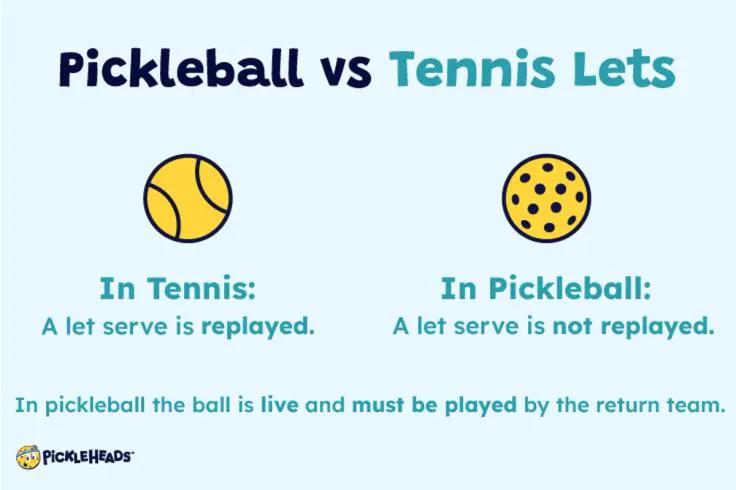
In tennis, a serve that clips the net and lands in is a let and is redone. In table tennis, a net serve is also a let. Pickleball changed course.
Pickleball now treats a net-cord serve that lands in as live. This creates longer rallies and faster pace. So if friends from tennis ask what is a let in pickleball, tell them the serve rule is different here.
Quick rule references and updates
Rules evolve. Here are key points many players miss.
- Service lets were removed in recent rule updates. Net-cord serves that land in play on.
- Replays still exist for safety, interference, and certain errors.
- The official rulebook may use replay or hinder rather than let.
- Local events might add house rules. Ask before you play.
If you keep hearing what is a let in pickleball on your courts, share these notes. It helps everyone play by the same book.
Frequently Asked Questions of what is a let in pickleball
What is a let in pickleball in one sentence?
A let is a replay of a rally due to interference, error, or safety concerns. It does not change the score or server.
Is there still a let serve in pickleball?
No. A serve that hits the net and lands in is live. Only replays for disruptions or certain errors remain.
Who can call a let in a tournament?
The referee controls replays. Players can alert the ref to safety issues or clear hindrance, and the ref decides.
What happens to the score after a let?
The score stays the same. You replay the rally from the same server and positions.
Can I call a let after the rally ends?
No. You must call it right away. Late calls are not accepted unless the referee stopped play during the rally.
Conclusion
You now know what is a let in pickleball and how it works today. Treat a let as a fair replay for safety or real disruptions. Remember, there are no service lets now, so play on after a net-cord serve if it lands in.
Use clear calls, quick resets, and good habits to keep play smooth. Share this with your group, and ask your organizer about local rules before you start. If this helped, subscribe for more court-smart tips and leave your questions in the comments.