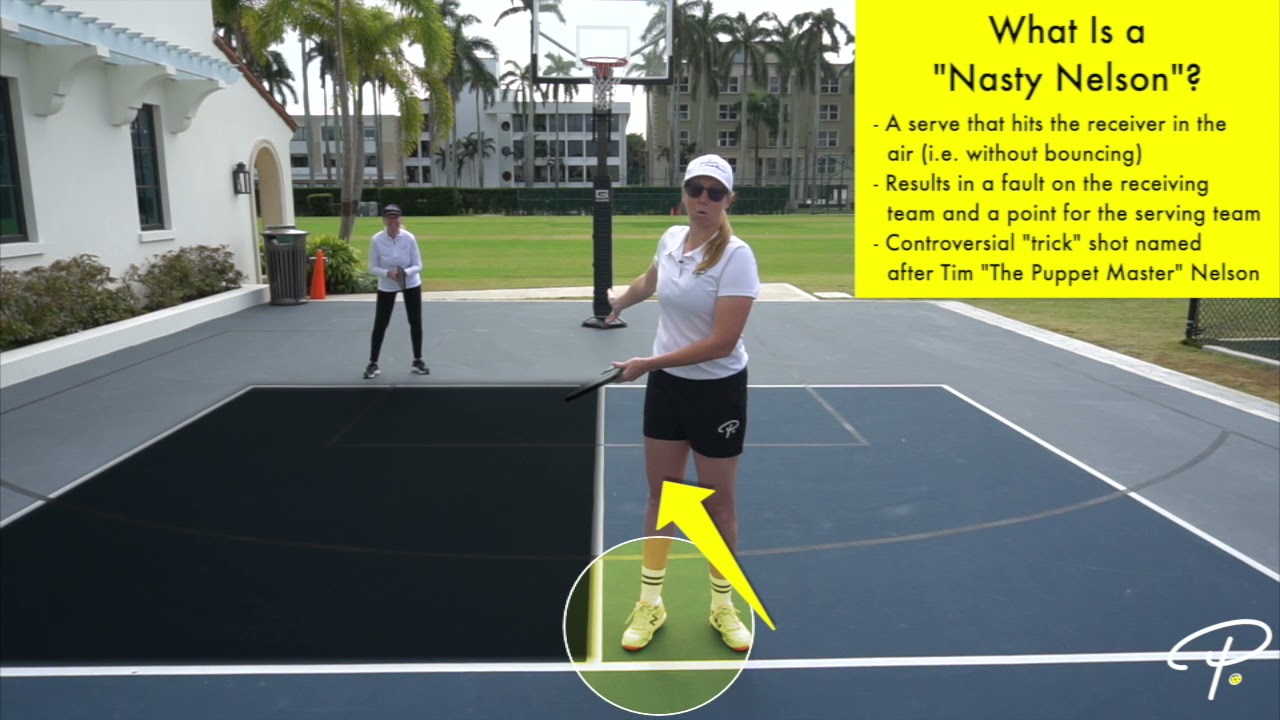
A Nasty Nelson is a legal serve that hits the non-receiver for a point.
If you have asked what is a nasty nelson in pickleball, you are in the right spot. I teach players how to use and stop this serve in real games. In this guide, I break down rules, tactics, drills, and etiquette with clear steps and real court tips.

What is a Nasty Nelson in Pickleball?
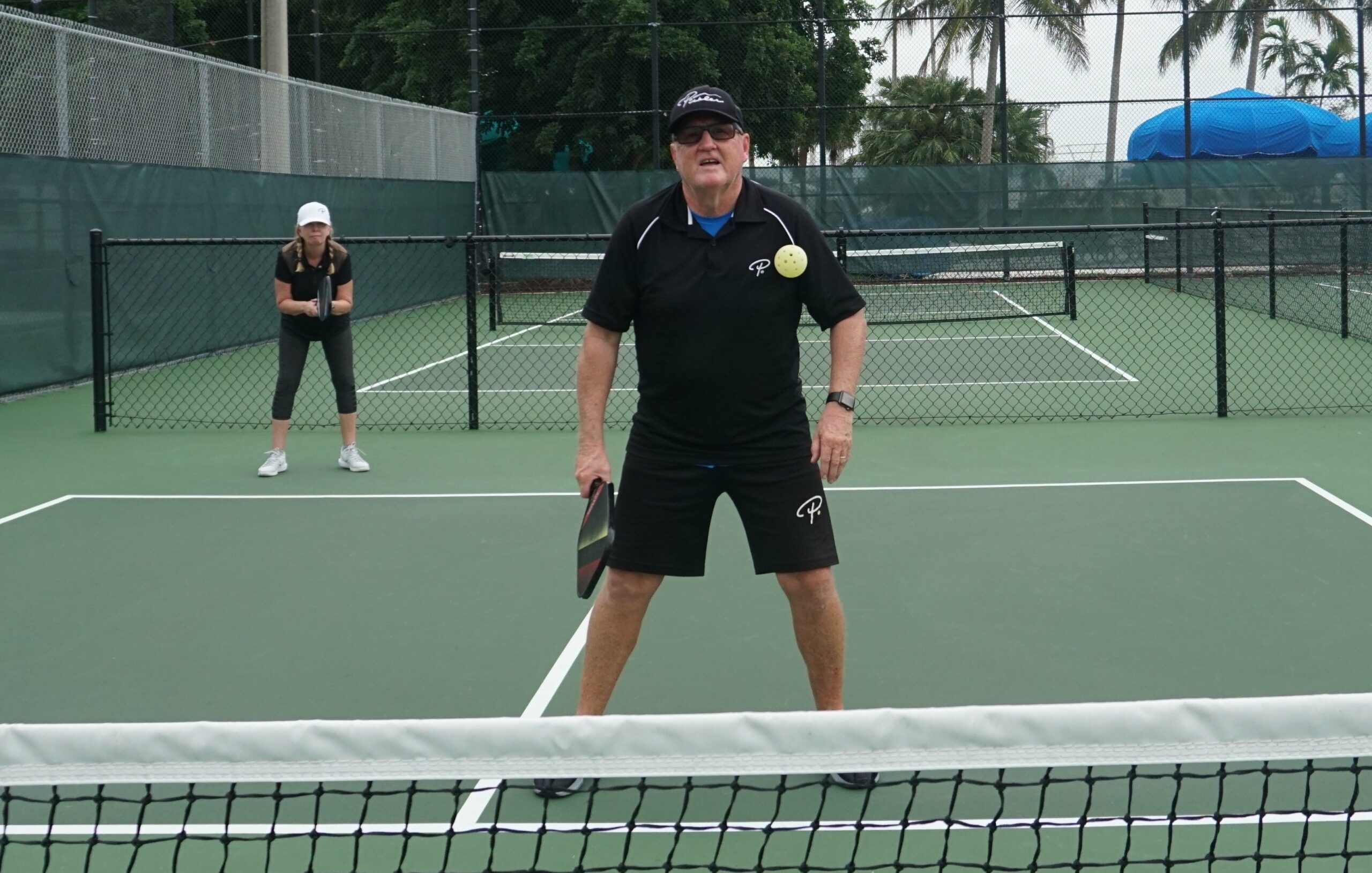
A Nasty Nelson is a serve that hits the receiver’s partner before the bounce. The ball is live, and contact ends the rally at once. The serving team wins the point. It works because many partners stand near the kitchen line and lean in.
The name comes from pro player Tim Nelson. He used it in high level play. It is cheeky, yet legal. You will see it from time to time in tournaments.
If you wonder what is a nasty nelson in pickleball, think of it as a surprise serve. You aim close to the middle line. You target the partner’s foot, hip, or paddle edge. If the ball hits them or what they wear, that is your point.

Is a Nasty Nelson Legal? The Rules in Plain English
Here is the core rule in simple words. If the served ball hits the receiver or the receiver’s partner before it bounces, the serving team wins the point. The ball is live from contact until the bounce. Clothing and gear count as part of the player.
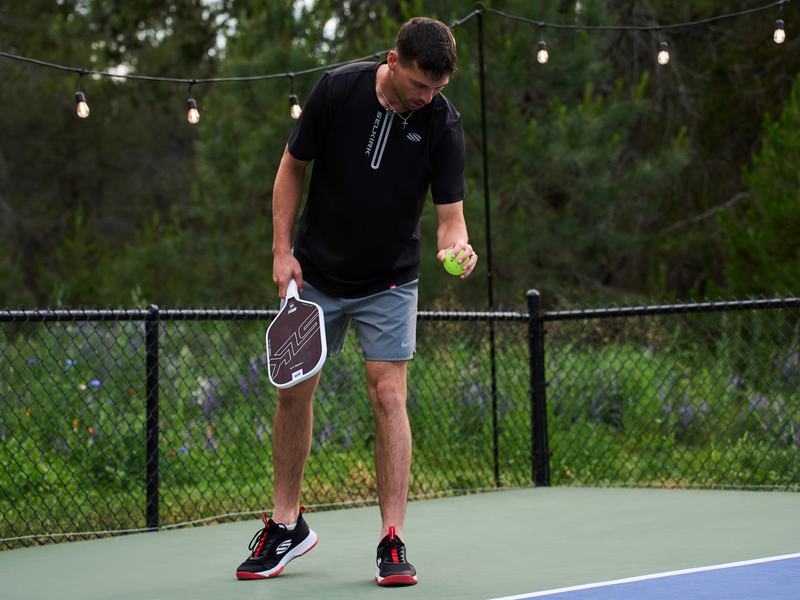
The serve must still be legal. At contact, your paddle must hit the ball below your waist. Your feet must be behind the baseline. Hit to the correct service box. You can use a volley serve or a drop serve under the current rules.
When is it not a point? If the serve lands out or hits the net and does not clear, it is a fault. If the serve bounces first and then the receiver’s partner plays it, that is still a fault on the receiving team. The receiver is the only one who can return the serve.
I hear this question a lot: what is a nasty nelson in pickleball, and is it dirty play? It is legal by the rulebook. But use care. Aim low. Do not aim at the face. Good sports play still matters.
Why Players Use It: Strategy and Psychology
Players use a Nasty Nelson to get free points. It makes the partner back off the line. It can set a sharp tone early in a game.
It also creates doubt. The partner now has two jobs. They must avoid the ball and avoid blocking the receiver. That stress helps the server win the next few points.
Yet there are tradeoffs. If you miss, the ball may go out. Or you clip the net. Use this shot with a plan. When you ask what is a nasty nelson in pickleball, also ask when it helps your larger serve pattern.

When to Try It (and When to Skip It)
Good times to try it:
- The partner crowds the kitchen line and leans in.
- You have a big lead or need a momentum spark.
- The partner waves the paddle near the center line.
- The sun or wind hides your toss and aim.
Times to skip it:
- The partner stands far back. The chance to hit is low.
- You face a player with eye or face risks. Safety first.
- The match is tense. Sports vibes are key here.
- Your last few serves missed. You must land a deep, safe serve.
If you seek to nail what is a nasty nelson in pickleball, learn to read the start positions. Do not force it. Pick your spots.
How to Execute a Nasty Nelson Step-by-Step
- Set your stance. Line up near the middle of the baseline. Keep both feet behind the line.
- Watch the partner. Lock eyes on their paddle and feet near the kitchen.
- Choose a target. Aim at the inside foot, shin, or paddle edge. Low is safe.
- Use a compact motion. Keep the serve simple. Reduce toss height to cut stray spin.
- Hit flat or slight slice. You want a fast, true path. Avoid big curve or topspin.
- Aim over the center line edge. Skim the tape zone. Do not flirt with wide outs.
- Follow through to your target. Freeze your finish. This builds repeat aim.
- Reset for the next point. Expect the partner to step back now. Use that space.
What is a nasty nelson in pickleball without control? It is a free miss. Train to land the ball in the right box while grazing the danger zone.

Drills to Practice Safely
Try these safe and simple reps:
- Cone lane drill. Place two cones two feet apart near the center line in the opposite box. Serve through the lane for ten reps.
- Paddle shield drill. Your partner stands two feet behind the kitchen with a paddle as a shield. Aim at the edge of the paddle, not their body.
- Tape target drill. Put a strip of tape two feet inside the service box line near middle. Land ten serves on or just past the tape.
- Rhythm ladder. Serve two safe deep balls. Then one Nelson try. Repeat. This blends risk and base serves.
Add eye work. Say out loud your target before each serve. This adds intent. It helps you own what is a nasty nelson in pickleball under match stress.

Common Mistakes and How to Fix Them
Mistake: Swinging too hard.
Fix: Serve at 60 to 70 percent power. Focus on aim first.
Mistake: Telegraphing the plan.
Fix: Use the same pre-serve look. Do not stare at the partner too long.
Mistake: Illegal serve motion.
Fix: Keep contact below the waist. Keep at least one foot on the ground for a volley serve.
Mistake: Aiming too wide.
Fix: Start with a middle-line lane. Add risk once your hit rate tops eight of ten.
Mistake: Only using it once.
Fix: Mix it in a few times. Then serve deep to the backhand. Make a full pattern.
What is a nasty nelson in pickleball if you cannot sell your normal serve? It is a one-off trick. Build a mix to keep them guessing.
How to Defend Against a Nasty Nelson
If you are the partner, do this:
- Take one step back from the kitchen line on the serve.
- Hold your paddle as a shield in front of your body.
- Angle your body away from the middle line.
Talk with your partner before the serve:
- Agree who leans and who stays still.
- Use hand signs. Stand still until the bounce.
- If in doubt, duck and clear the lane.
As the receiver, be ready to move:
- Start a bit deeper. Get low and split step.
- Track the ball from the toss. Call “mine” early.
One more key note. Only the receiver can return the serve. If the partner touches the ball, it is a fault. So, when you learn what is a nasty nelson in pickleball, also learn how to avoid being baited into a touch.

Real-World Lessons From the Court
I have used a Nasty Nelson in league play. My goal was not to hurt. I aimed at the shoelaces. The partner jumped back. On the next serve, I went deep to the corner and got a weak return.
I have also paid the price. I tried it when the wind swirled. The ball sailed wide by a foot. That one point swung a tight game. Lesson learned. If you ask what is a nasty nelson in pickleball, also ask if the day’s conditions fit.
As a coach, I guide players to use it with care. I suggest one try early if the partner crowds. If you hit, say “sorry” and smile. Keep respect high. The sport grows when we blend edge with grace.
Frequently Asked Questions of what is a nasty nelson in pickleball
Is a Nasty Nelson legal in all levels of play?
Yes. It is legal under the official rules. The serve must be legal, and if it hits the receiver or partner before the bounce, the serving team gets the point.
Does the ball have to hit before the bounce to count?
No. If the partner touches the serve at any point before the receiver hits it, it is a fault on the receiving team. That includes after a legal bounce if the partner plays it.
Who is it named after?
It is named after Tim Nelson, a well-known player. He used it in high level play, and the name stuck.
Is using a Nasty Nelson poor sportsmanship?
It can be if you aim high or gloat. Use it sparingly, aim low, and show respect. Most players accept it when done with care.
How do I reduce the risk of getting hit by one?
Stand a step back on the serve and hold your paddle in front. Do not lean in early. Talk with your partner about roles.
What is the best target for a Nasty Nelson?
Aim at the inside foot or paddle edge of the partner. Keep the ball low and near the center line to cut risk.
Can I use a drop serve for a Nasty Nelson?
Yes. A drop serve works well because it lowers spin and keeps the path true. It also helps control height and speed.
Conclusion
A Nasty Nelson is a sharp serve tactic that can swing a rally fast. It is legal, simple in idea, and tricky in use. You pick on space, not on a face. With smart aim and timing, it can open the court and shape the next few points.
If you came here asking what is a nasty nelson in pickleball, you now know how it works, when to try it, and how to stop it. Practice the drills, add it to a full serve plan, and keep your play kind and clean. Want more tips like this? Subscribe, share your experience in the comments, and level up your serve game today.