A pickleball court is built from asphalt or concrete topped with acrylic coatings.
If you have wondered what is a pickleball court made of, you’re in the right place. I’ve helped plan, resurface, and play-test courts across different climates. In this guide, I break down every layer, explain material choices, and share real tips so you can decide what fits your space, budget, and game goals. Stick around to learn what is a pickleball court made of, how it performs, and how to build one that lasts.
Core Components: What a Pickleball Court Is Made Of
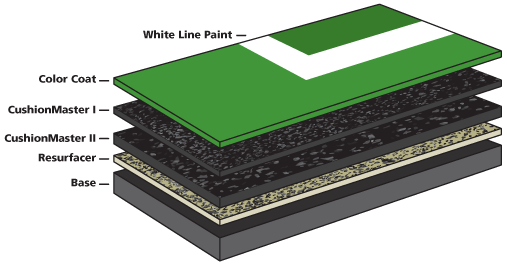
At its core, a modern outdoor pickleball court uses a hard base, a color system, and precise lines. Most courts start with asphalt or concrete. Then they get a multi-coat acrylic surface for grip, color, and ball bounce.
The acrylic layers are key to comfort and consistency. They include a resurfacer coat, one or two color coats, and line paint. Some courts add cushioned acrylic for softer play on the joints.
If you ask what is a pickleball court made of in simple terms, think layers: stable base, acrylic finishing system, and regulation lines. Each choice affects speed, traction, and lifespan.

Asphalt vs Concrete vs Post-Tensioned Concrete
If you want a straight answer to what is a pickleball court made of, most pros will say asphalt or concrete. Both work well, but they behave differently over time.
- Asphalt is common, budget-friendly, and quick to install. It can flex with temperature swings but may rut or crack in hot climates.
- Conventional concrete is strong and stable. It needs proper joints and can reflect cracks into the surface if not reinforced and cured well.
- Post-tensioned concrete is the premium option. Steel cables compress the slab to reduce cracking and keep a long, smooth life.
From my experience, concrete or post-tensioned concrete wins in freeze-thaw zones and high-use clubs. Asphalt is fine for parks or budget builds if the soil and drainage are solid.
Acrylic Coating System: Resurfacer, Color, Cushion, Lines
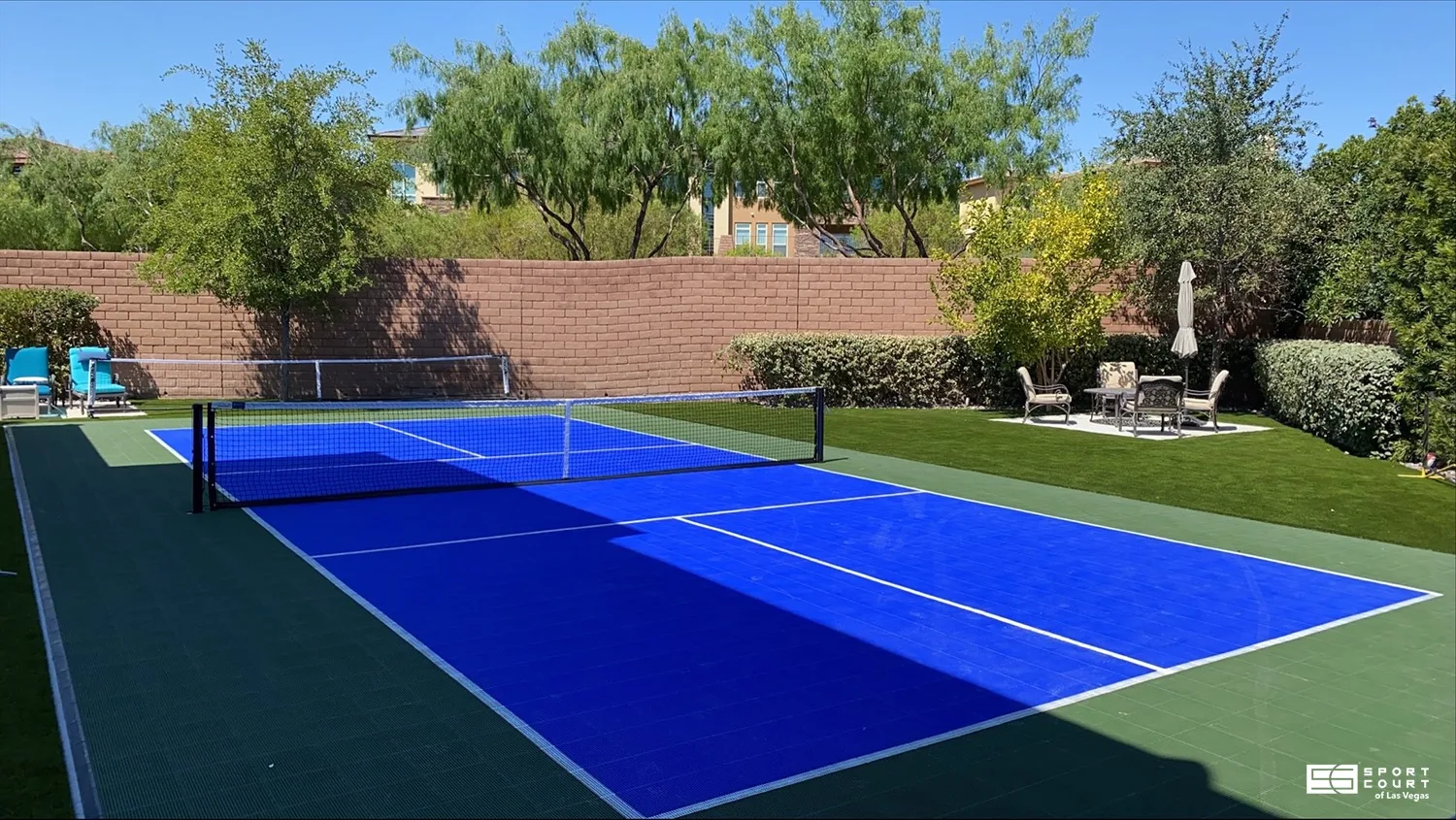
Acrylic is where the look and feel come alive. When people ask what is a pickleball court made of on the top layer, the answer is acrylic built for sport.
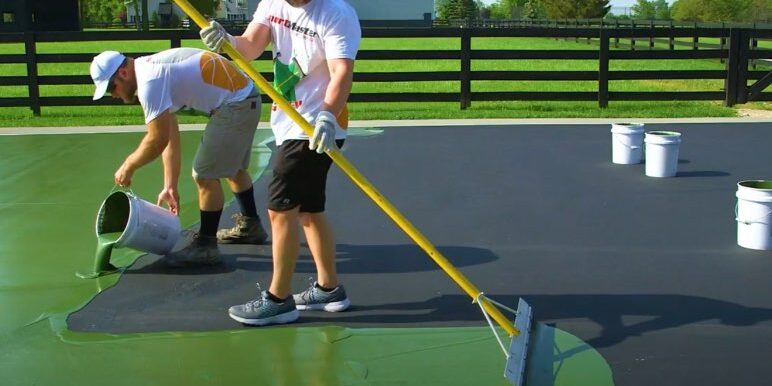
- Resurfacer coat fills small voids and creates a uniform texture.
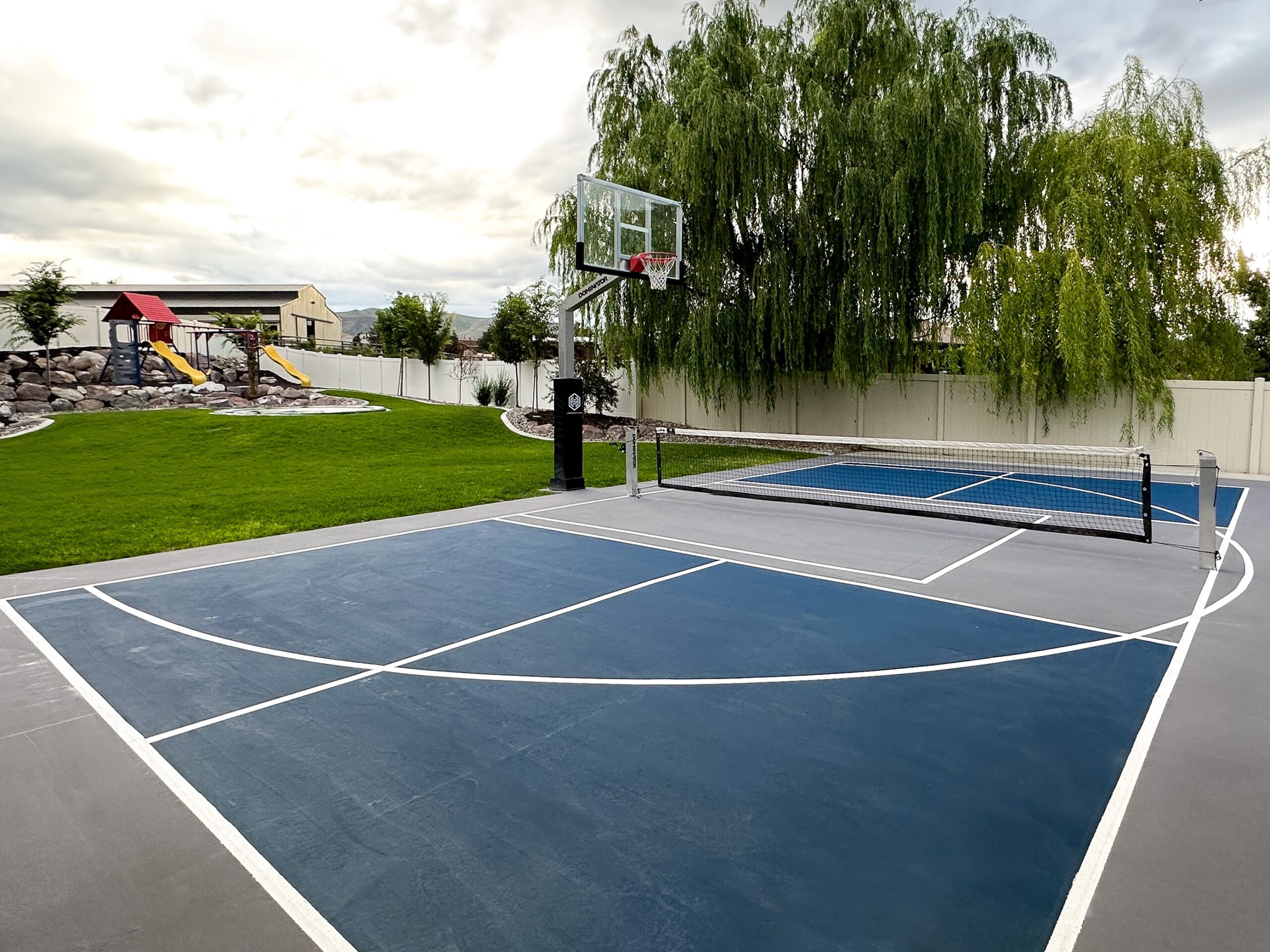
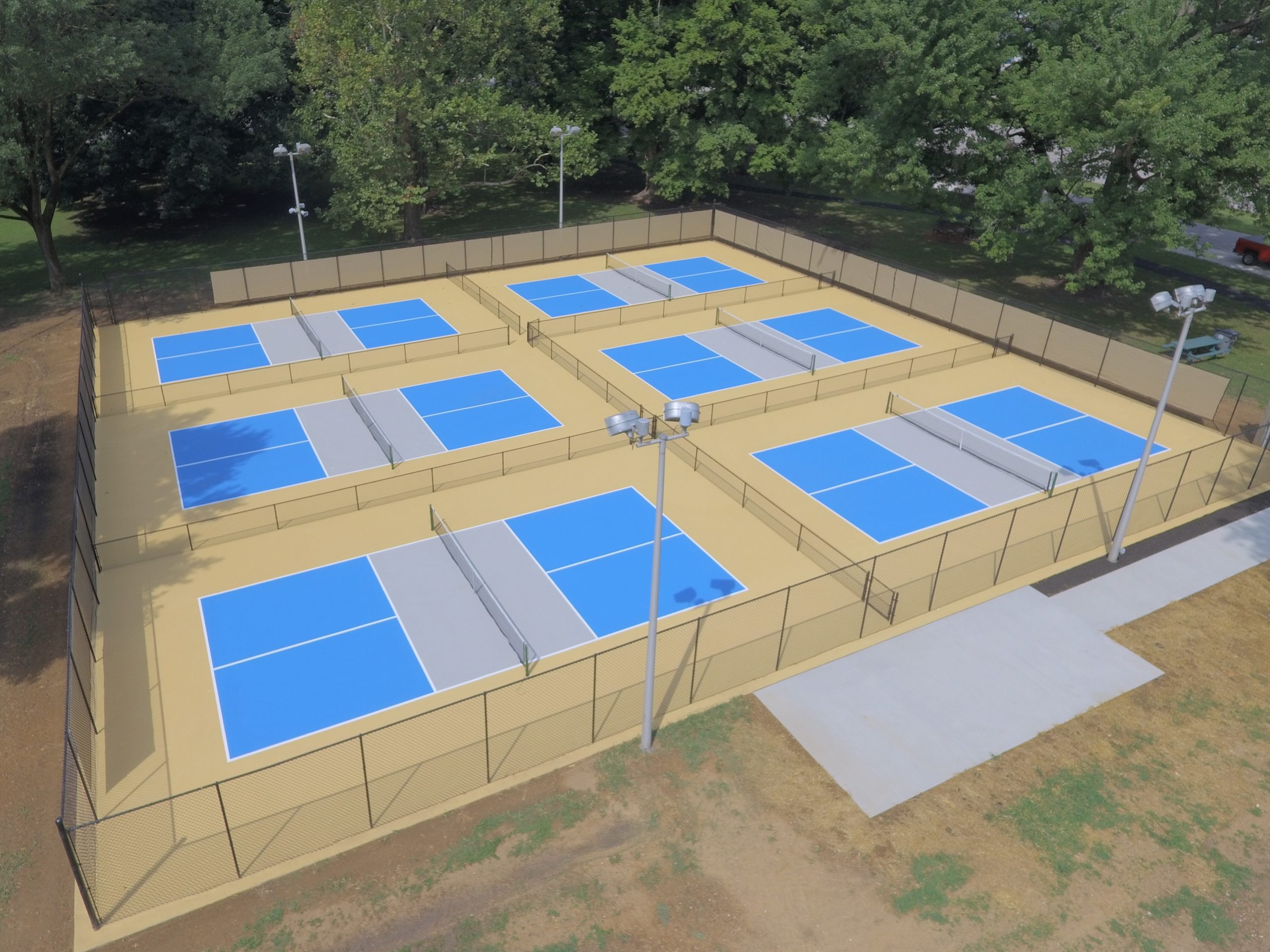
- Color coats add UV-stable pigment and tuned traction. Common colors are blue or green for contrast with the yellow ball.
- Cushioned acrylic is optional. It adds rubberized layers for comfort, helpful for older players or long play sessions.
- Line paint defines accurate play. It should be textured, bright, and durable.
A well-installed system balances grip and glide. Too rough chews balls and knees. Too smooth becomes slippery when dusty or damp. Aim for a medium-fine texture and consistent bounce.
Modular Tile Courts: When and Why
Some ask what is a pickleball court made of if it is temporary or sits over bad pavement. In that case, modular sport tiles can help.
- Interlocking polypropylene tiles sit on a flat, stable base.
- They drain well and can be removed or replaced by section.
- They reduce crack telegraphing from older asphalt or concrete.
- They feel a bit louder and springier than acrylic on hard base.
I use tiles for rooftops, gyms, or event courts. For premium outdoor play, acrylic on concrete still gives the truest bounce and the quietest game.

Indoor Pickleball Courts: Wood, PVC, and Sport Vinyl
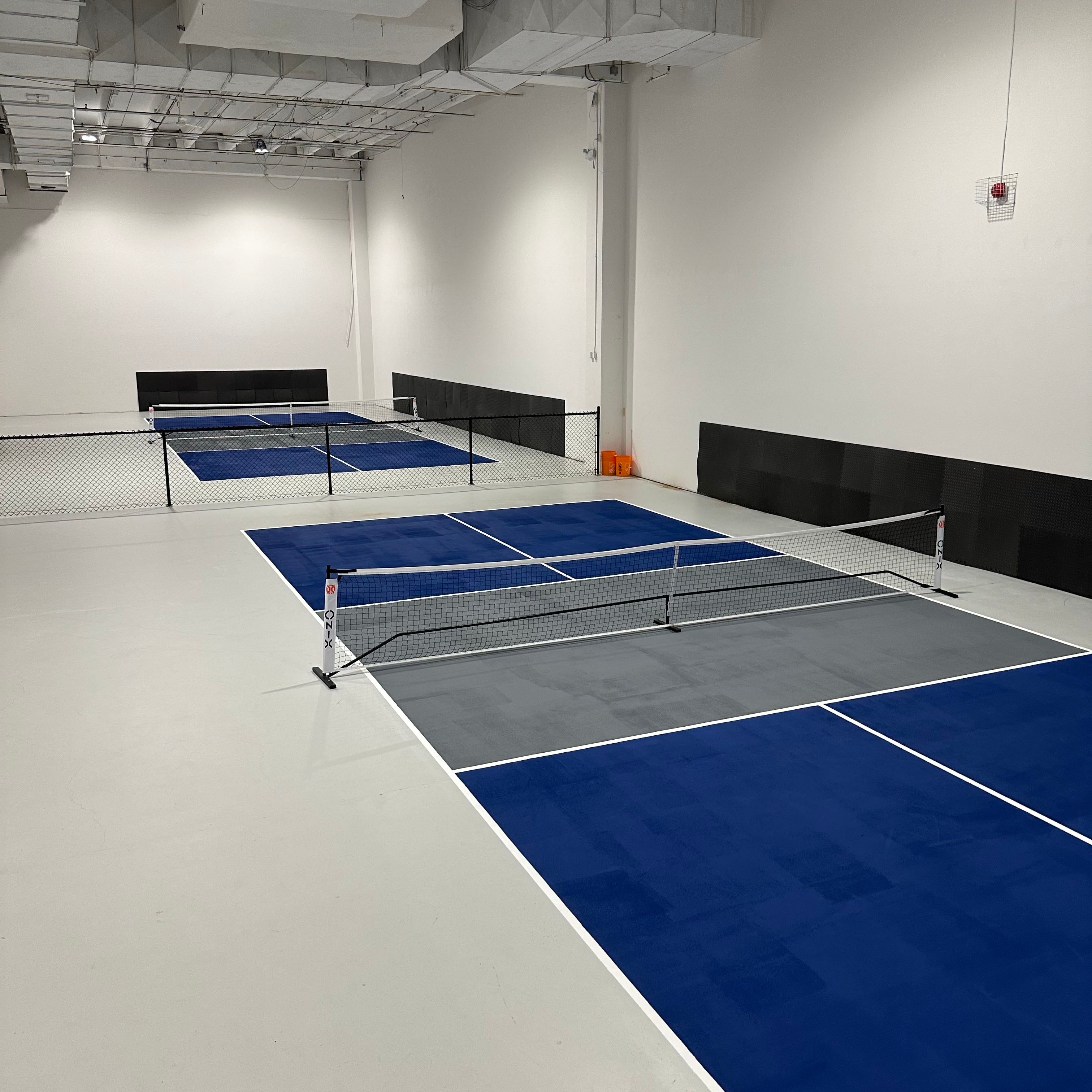
Indoors, what is a pickleball court made of usually differs from outdoor builds. You will often see wood, PVC sheets, or sport vinyl.
- Maple wood courts feel fast and smooth with a sealed finish. Great for multipurpose gyms.
- PVC or vinyl sport floors come in rolls or planks. They offer cushioning and consistent traction.
- Acrylic can be used indoors on concrete, but moisture control is critical.
Ball bounce and shoe grip change across these materials. Test a few balls and paddles indoors to find your ideal surface speed.
Base, Sub-base, and Drainage That Make or Break Your Court
Before any talk of what is a pickleball court made of on the surface, the ground must be right. Stable soil, graded sub-base, and drainage protect your investment.
- Sub-base uses compacted stone to provide strength and drainage.
- Slope the court slightly to move water off the surface. A gentle slope prevents puddles without affecting play.
- Edge restraints keep the base from migrating over time.
- In wet areas, add perimeter drains or French drains.
I have seen perfect acrylic jobs ruined by standing water. Spend the time and money to build the foundation right.
Lines, Nets, And Accessories Materials
Lines and net systems round out what is a pickleball court made of for daily play. They need to be accurate, durable, and easy to maintain.
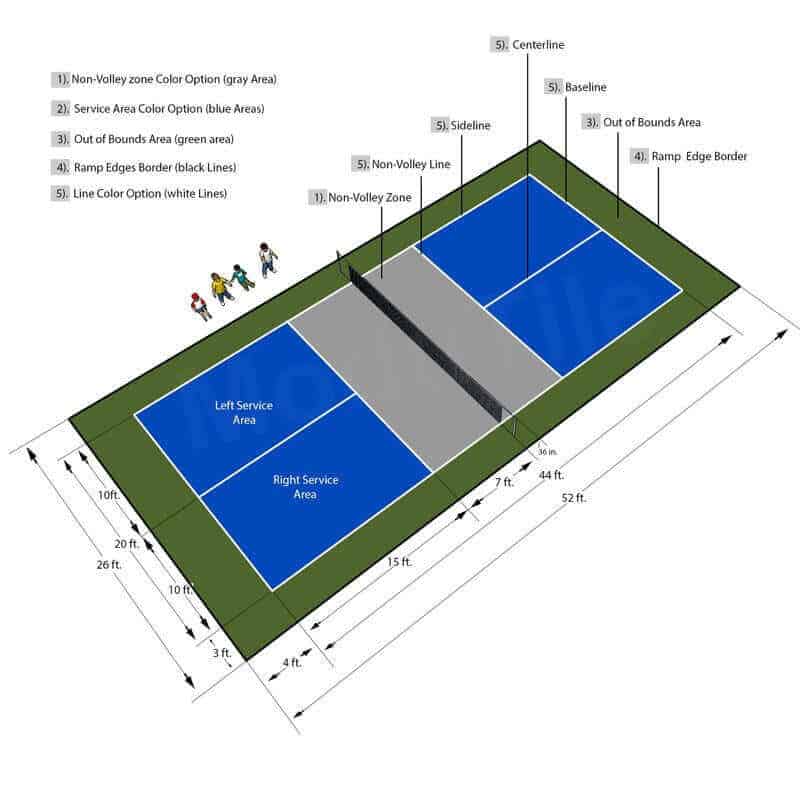
- Line paint should be high-solids, UV-stable, and slightly textured. Standard line width is two inches.
- Net posts are usually powder-coated steel or aluminum. Anchor sleeves set them in place cleanly.
- Nets use braided polyethylene or polyester with a strong headband and center strap for 34 inches at the middle.
Small details matter. A bright, crisp line and a taut net make the whole court feel professional.
Performance Specs: Traction, Bounce, Color, Noise
Players often ask what is a pickleball court made of to achieve the right feel. Performance comes from the combo of base and finish.
- Traction should prevent slips but allow quick pivots. Medium texture is the sweet spot for knees and ankles.
- Bounce should be predictable. Hard bases with quality acrylic give a true, even rebound.
- Color contrast helps track the ball. Lighter courts with darker lines work well under sun and lights.
- Noise varies. Acrylic over concrete is quieter. Tiles can click more underfoot and on ball strike.
If you host leagues, test with different balls. Summer heat and cold mornings change ball speed and grip.
Climate, Maintenance, and Lifespan
Climate shapes what is a pickleball court made of in your area. Choose materials that handle your weather cycle.
- Hot, sunny climates favor light colors and UV-stable acrylics.
- Freeze-thaw zones benefit from concrete and flexible coatings that resist cracking.
- Coastal sites need corrosion-resistant posts and hardware.
Maintenance is simple but steady. Sweep grit, rinse with water, and spot-clean stains. Plan to recoat acrylic every few years for fresh texture and color.
Cost, Timelines, And DIY Tips
It helps to link budget to what is a pickleball court made of on your site. Costs vary with base choice, coatings, and accessories.
- Asphalt base with acrylic is often the budget pick.
- Concrete with acrylic costs more but lasts longer.
- Post-tensioned concrete is the most expensive upfront and the most stable long-term.
DIY can handle cleaning, striping touch-ups, and simple repairs. For base work and full resurfacing, hire pros with sport-court experience. Ask for references and recent photos.
Common Mistakes I See And How To Avoid Them
After years of court installs and makeovers, I see the same pitfalls. Many start with paint first and foundation last.
- Skipping drainage leads to puddles and peeling. Grade and drain before color.
- Choosing the wrong texture hurts play. Sample panels help you feel the finish.
- Cheap line paint fades fast. Use sport-rated, UV-stable lines.
- Ignoring expansion joints on concrete causes cracks. Plan joints, then stripe around them.
When someone asks what is a pickleball court made of, I also remind them it is made of choices. Good prep and quality layers make a court you will love for years.
Frequently Asked Questions of what is a pickleball court made of
What is a pickleball court made of at the base level?
Most outdoor courts use asphalt or concrete as the base. Post-tensioned concrete is a premium option that reduces cracks and improves longevity.
What coatings go on top of the base?
Acrylic sport coatings go on top. They include a resurfacer, color coats, and line paint, with optional cushioned layers for comfort.
Can I use modular tiles instead of paint?
Yes, modular tiles work on flat bases and are easy to replace. They are ideal for temporary courts or older slabs with cracks.
What colors are best for visibility?
Blue and green courts with white lines are common for ball contrast. Choose colors that reduce glare in your climate and lighting.
How big is a standard pickleball court?
The playing area is 20 by 44 feet. Many sites allow extra space around it, often at least 30 by 60 feet, for safe movement.
How often should I resurface the court?
Most acrylic courts need fresh color every 3 to 7 years. Heavy use, harsh sun, and poor drainage can shorten that cycle.
What net and post materials hold up best?
Powder-coated steel or aluminum posts with anchor sleeves are reliable. Look for a durable, center-strap net made from braided polyethylene or polyester.
Does cushioned acrylic change play?
Cushioned systems are easier on joints and slightly reduce ball speed. They are popular for clubs and players who log many hours.
Can indoor courts use the same materials?
Indoors, you often see wood, PVC, or sport vinyl floors. Acrylic on concrete can work if moisture is controlled well.
What is a pickleball court made of if I have a tight budget?
Asphalt with a standard acrylic system is the most cost-effective. Invest in good prep and line paint to get the most value.
Conclusion
You now know what is a pickleball court made of from the ground up. The best courts combine a stable base, a well-chosen acrylic system, and clean lines that boost visibility and play. Match materials to your climate, budget, and level of use, and you will enjoy a court that stays true and safe.
Ready to plan your project? Use this guide to pick your base, coating, and extras, then get quotes from experienced installers. Share your questions below, subscribe for more build tips, and start mapping your dream court today.