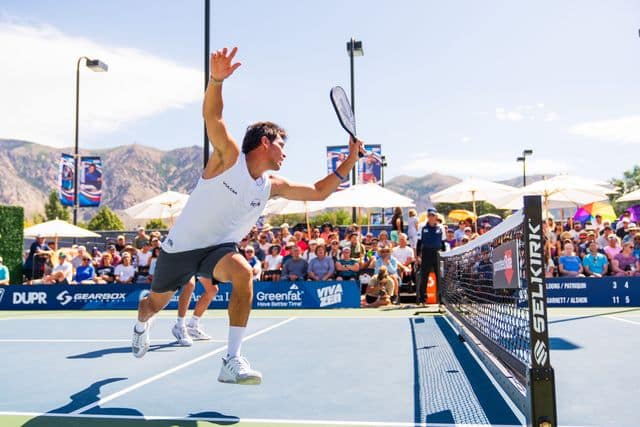
An Erne in pickleball is a sideline jump volley outside the kitchen.
If you have heard the term but still wonder what is an erne in pickleball, you are in the right place. I coach and play at a high level, and I’ll break it down step by step with rules, tactics, and drills. By the end, you will know exactly what is an erne in pickleball, when to use it, and how to practice it safely.

What is an Erne in Pickleball?
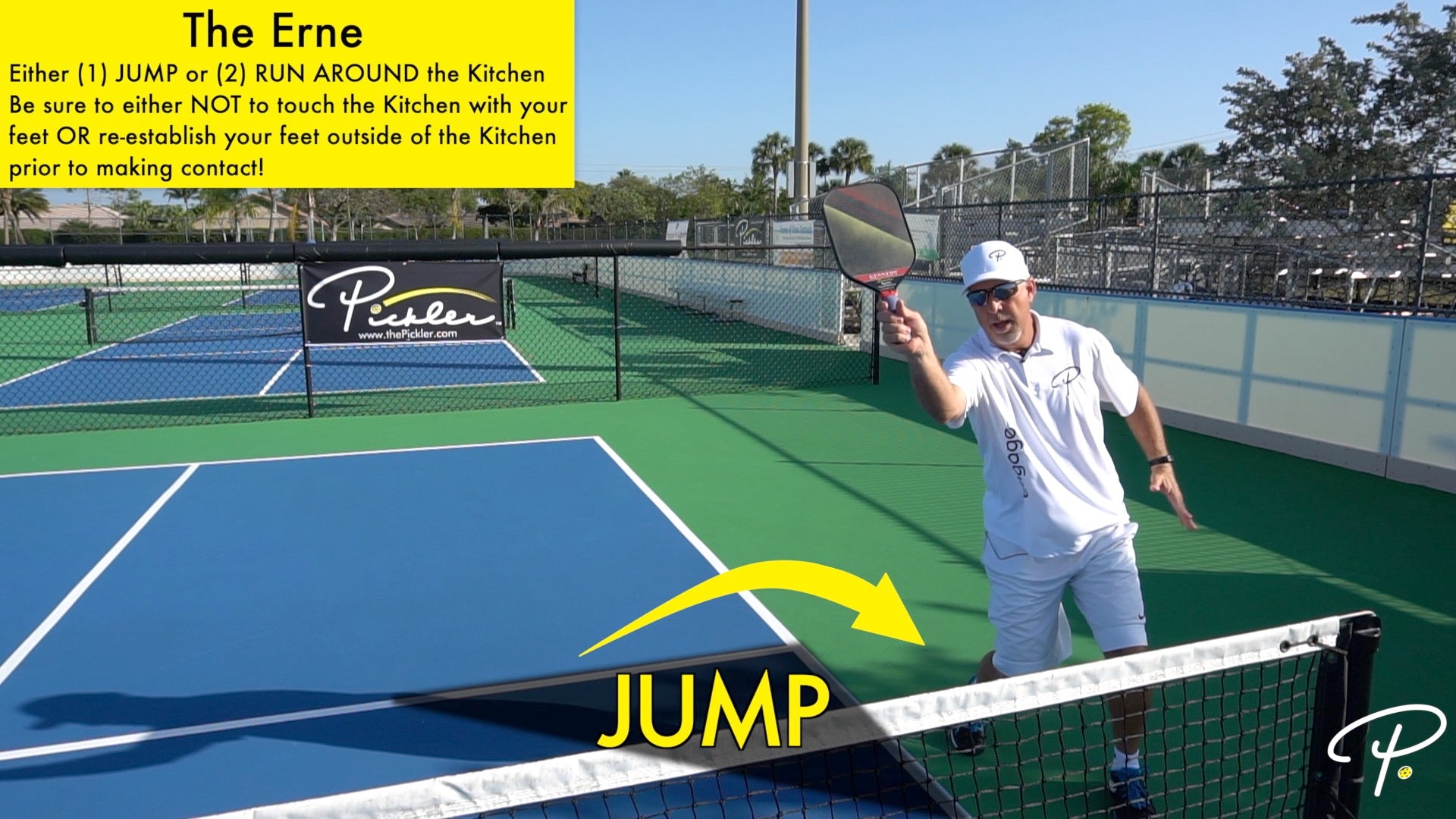
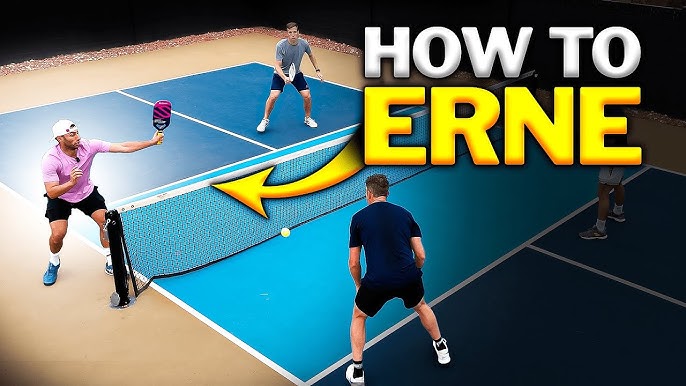
An Erne is an advanced volley where you contact the ball while positioned outside the non-volley zone, near the sideline, often after jumping over the corner of the kitchen. You set your feet beyond the kitchen line and take the ball early, usually off a predictable crosscourt dink. The goal is to cut time and angle, force a weak reply, or finish the point outright.
The term comes from a player named Erne Perry, who popularized the move in competitive play. If someone asks what is an erne in pickleball, the easiest answer is this: it is a legal, fast sideline volley that uses position, timing, and surprise to win the kitchen battle.
The Rules That Make an Erne Legal
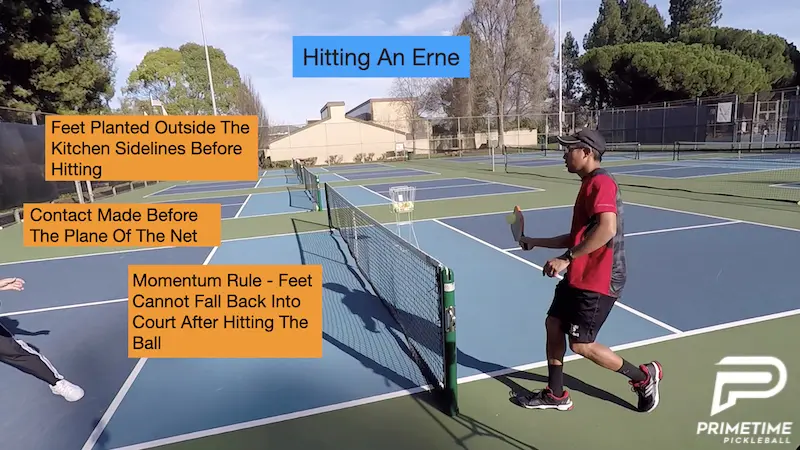
To master what is an erne in pickleball, you must first know the rules that keep it legal. The USA Pickleball rulebook allows this move if you meet these conditions.
- Your feet cannot touch the non-volley zone or its line when you strike the volley.
- You can cross the airspace above the kitchen. Only foot contact matters.
- You must re-establish position outside the kitchen before and at contact.
- You can approach from outside the court or by jumping over the corner, as long as your feet land beyond the kitchen.
- If your momentum carries you into the kitchen after a volley, that is a fault.
In simple terms, think of the kitchen like hot lava. You can soar over it, but your feet cannot land in it when you hit the ball.

How to Execute an Erne Step-by-Step
I teach this sequence in clinics. It keeps things safe and repeatable.
-
Read the pattern
- Watch for a crosscourt dink that floats or travels near the sideline.
- Notice if the opponent repeats that same lane.
-
Get early position
- Take a small shuffle along the kitchen line toward the sideline.
- Turn your hips and shoulders like a sprinter in the blocks.
-
Commit and clear the corner
- Plant the inside foot.
- Jump or step past the corner so your landing is outside the kitchen.
-
Set the strike zone
- Keep paddle up and in front.
- Contact the ball out in front at eye level or chest height.
-
Finish with balance
- Land light on the outside foot.
- Recover your stance and be ready for the next ball.
Tip from experience: your first few Ernes will feel rushed. Slow your feet, not your swing. The ball comes fast, so a compact swing wins.
When and Why to Use an Erne
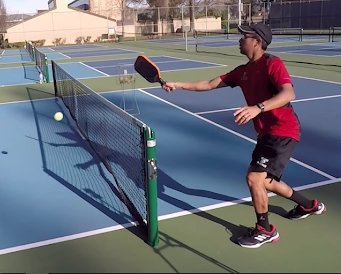
If you are still asking what is an erne in pickleball from a strategy view, think ambush. You win space and time by jumping the lane.
- Use it against looping crosscourt dinks that sit up near the sideline.
- Use it when a righty-lefty pairing leaves the sideline exposed.
- Use it after you have softened them up with patient dinks.
- Use it to punish players who stare at their dinks and do not reset their paddle.
In my matches, I call it a “freeze move.” The sudden presence at the sideline freezes the opponent, and they pop up the ball or miss wide.
Common Mistakes and How to Fix Them
Learning what is an erne in pickleball includes avoiding avoidable errors. These are the big ones I see.
-
Landing on the kitchen line
Fix by marking the corner with tape in practice. Aim for a full shoe beyond the line. -
Jumping too early
Fix by waiting until you see the opponent’s paddle face sending the ball crosscourt. -
Swinging too big
Fix by using a short punch volley. Let their pace work for you. -
Telegraphing the move
Fix by keeping the same pre-move posture you use on normal dinks. -
Forgetting recovery
Fix by planning two shots ahead. After contact, reset your balance, not your bragging rights.

Drills to Learn the Erne
Reps build trust. Here are simple drills I use with students.
-
Cone lane drill
Place a cone on the sideline target. Your partner feeds crosscourt dinks that land near the cone. You step in and volley from outside the kitchen. -
Shadow footwork
No ball. Practice two steps and a jump over the corner. Land outside, freeze, and hold balance for one second. -
Paddle-up reaction
Partner fakes middle or line. React to line only. This trains patience so you do not jump on every ball. -
Live point triggers
Play skinny singles crosscourt. Call “Erne” before you move. This adds pressure and accountability. -
Video check
Record from the sideline. Look for foot contact, landing spot, and paddle height.
%20(2).webp)
Safety, Etiquette, and Sportsmanship
A clean Erne looks great and keeps everyone safe. A reckless one can cause collisions.
- Call the ball early and loud in doubles so your partner knows your lane.
- Avoid leaping into your partner’s space. Agree on signals before the game.
- Keep your eyes up after you land. Stray balls and players move fast.
- Respect rec play. Not every court loves constant Ernes. Read the room.
If someone asks you what is an erne in pickleball and whether it is “fair,” point to the rules and your footwork. It rewards skill, not luck.
Gear and Court Awareness Tips
You do not need special gear, but the right setup helps.
-
Paddle with a quick face
A light to midweight paddle with a responsive sweet spot helps punch volleys. -
Shoes with lateral grip
Good traction matters when you plant near the sideline. -
Court scan
Before games, note the kitchen line paint, any slick spots, and spacing off the sideline fence. -
Ball type
Outdoor balls bounce lower and fly faster. That makes timing more precise. -
Breath and posture
Short breath in, long breath out as you land. It calms the hands.
Knowing what is an erne in pickleball is part skill and part awareness. Your eyes and feet make the shot safe and strong.

Frequently Asked Questions of what is an erne in pickleball
Is the Erne legal if I jump over the kitchen?
Yes, as long as your feet do not touch the non-volley zone at contact. You can cross above the kitchen in the air.
Do I have to jump to hit an Erne?
No. You can step around the outside of the kitchen and volley. Jumping the corner is common but not required.
What is the best time to attempt an Erne?
Look for a crosscourt dink that drifts near the sideline and sits up. Repeated patterns make the Erne safer and more effective.
Can I land in the kitchen after I hit the Erne?
If your momentum carries you into the kitchen after a volley, it is a fault. Land and stay outside the kitchen.
Is the Erne only for advanced players?
It is easier with experience, but beginners can learn the footwork. Start slow with shadow drills and cone targets.
Does an Erne work against bangers?
Yes, if they drive crosscourt near the sideline. Your early position can take time away and block their lane.
How do I practice without a partner?
Use a ball machine or wall to feed crosscourt balls. Combine with shadow footwork to groove your landing spot.
Conclusion
Now you can answer what is an erne in pickleball with confidence. It is a legal, smart volley from outside the kitchen that steals time and angle. With the right read, footwork, and compact punch, you can turn a soft pattern into a hard winner.
Take one drill from this guide and practice it for ten minutes this week. Then add the Erne to a few friendly games and track your success. Want more tips like this? Subscribe for new drills, share this with your doubles partner, and drop your questions in the comments.