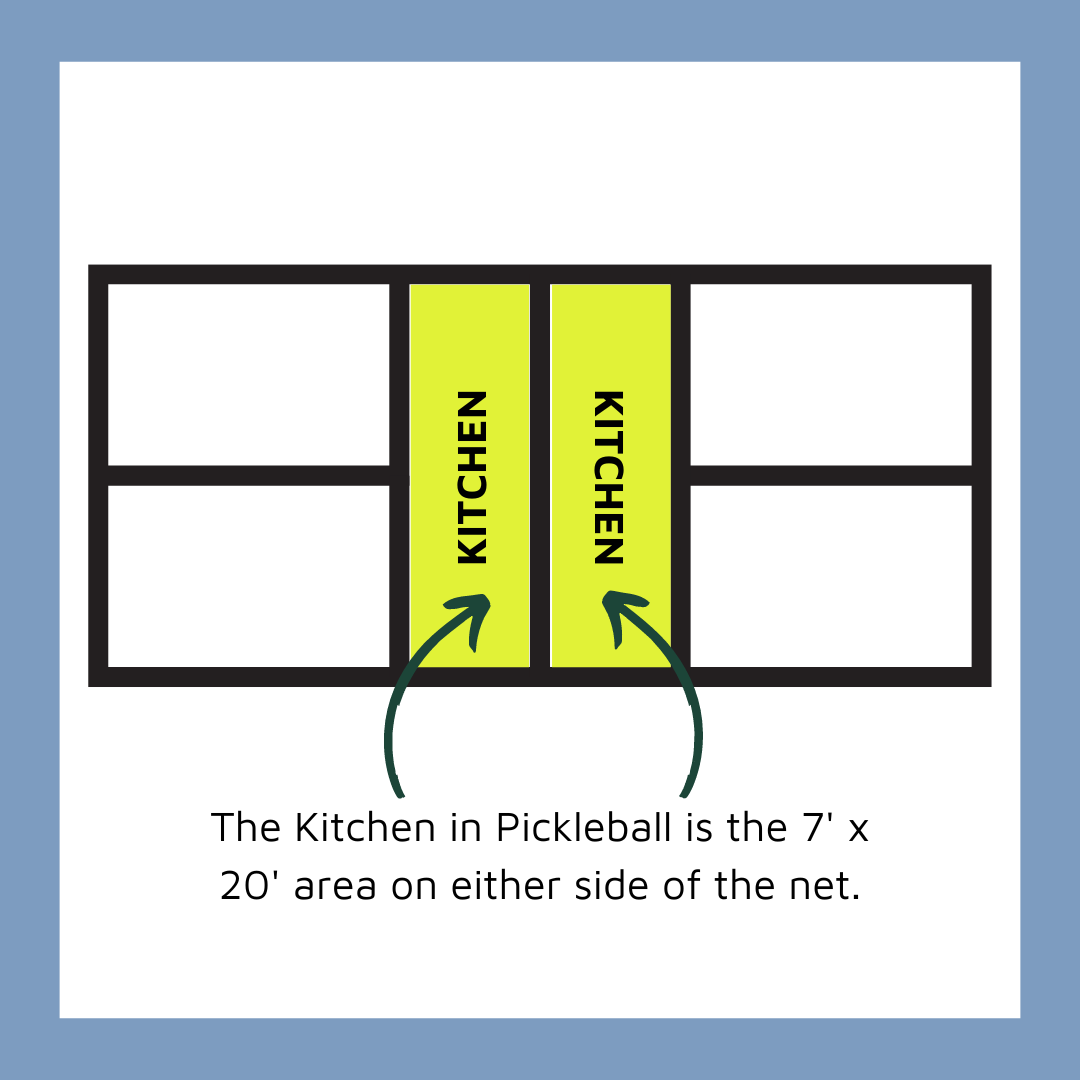
The kitchen in pickleball is the 7-foot non-volley zone near the net.
If you’ve ever wondered what is kitchen in pickleball and why it confuses so many new players, you’re in the right place. I coach beginners and league players, and I’ve seen the kitchen make or break rallies. In this guide, I’ll explain what is kitchen in pickleball in clear terms, share on-court tips that work, and show you how to use it to win more points.

What Is the Kitchen in Pickleball?
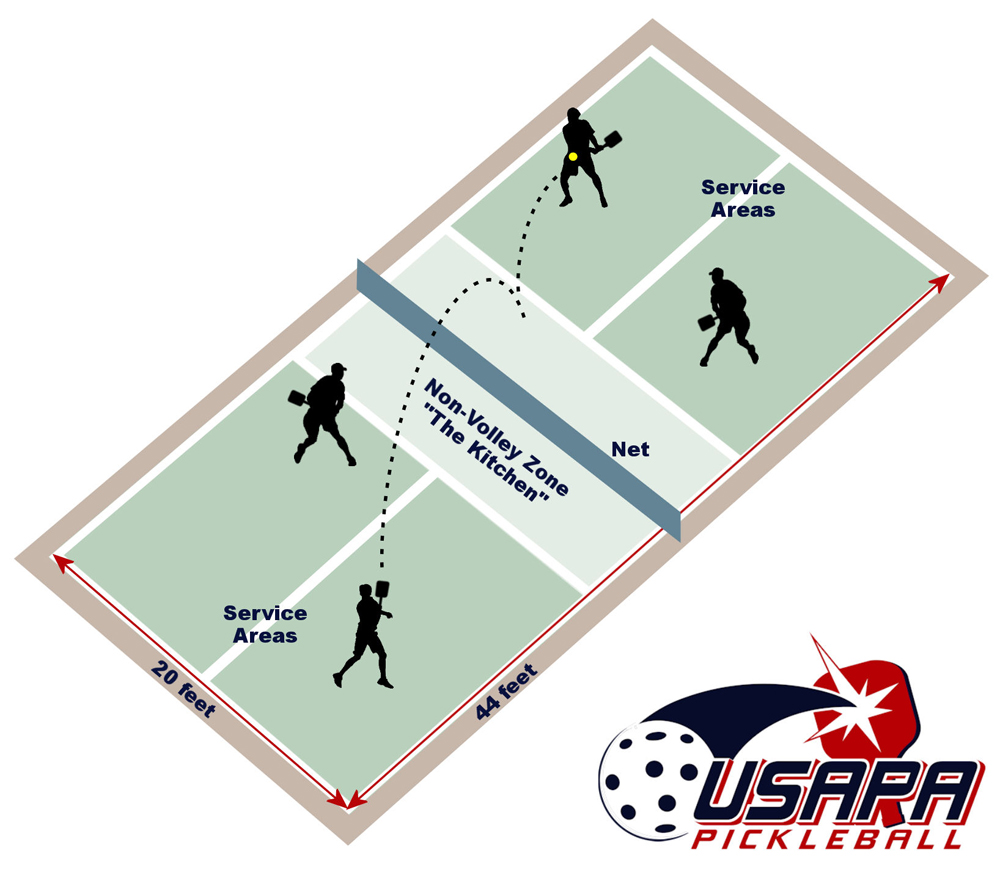
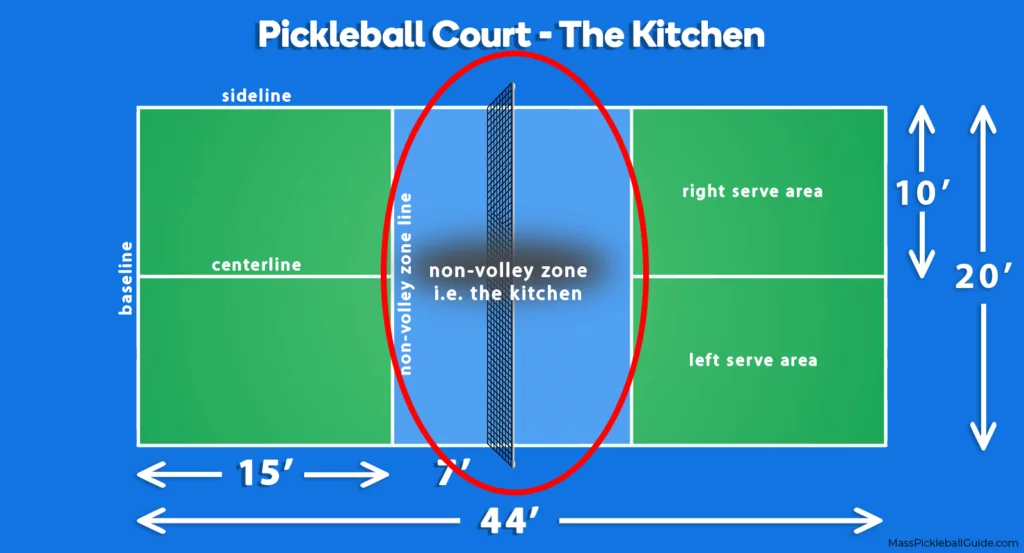
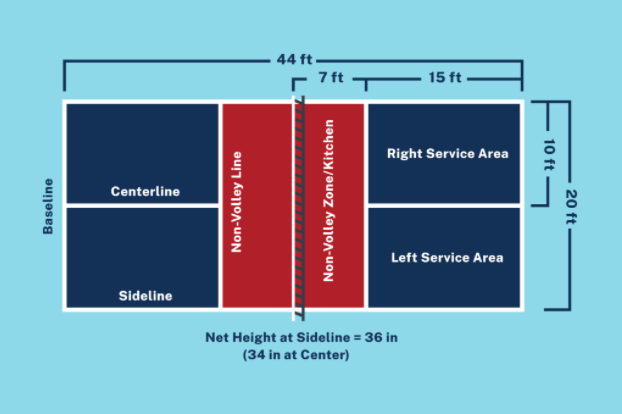
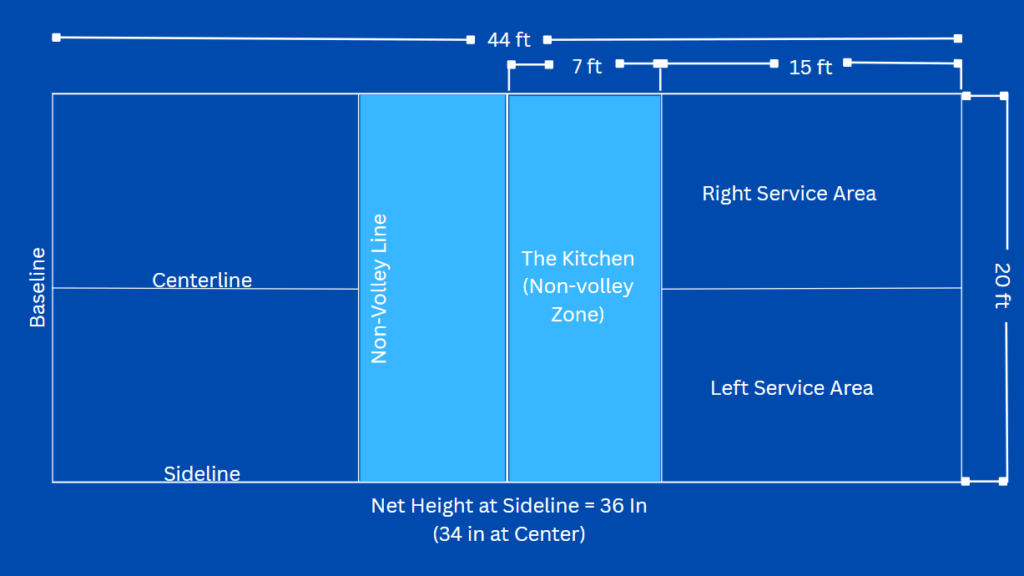
The kitchen is the non-volley zone (NVZ). It runs 7 feet from the net on both sides of the court. The NVZ line is part of the kitchen. If you touch that line while volleying, it’s a fault.
Players often ask what is kitchen in pickleball because the name sounds odd. Think of it as a no-smash zone. You can step in the kitchen. You can hit balls there. You just cannot volley there. A volley is a ball hit out of the air before it bounces.
Key facts:
- Size: 7 feet deep from the net, the full width of the court.
- The line counts: Any part of your foot on the line while volleying is a fault.
- Over-the-zone is fine: Your paddle can hover over the kitchen while you stand outside it.
- You can enter anytime: You may step into the kitchen to hit a ball that has bounced.
If a friend asks what is kitchen in pickleball, tell them it is a space that slows the game down. It rewards soft hands, aim, and control.
Why the Kitchen Matters
The kitchen shapes the flow of play. It stops players from standing on top of the net and blasting winners. That keeps rallies fun and fair.
At the kitchen line, points are won with touch. Dinks, drops, and smart angles rule here. If you learn what is kitchen in pickleball and how to use it, you will improve fast.
Benefits of strong kitchen play:
- You force errors with soft shots and sharp aim.
- You control pace and place the ball where rivals hate it.
- You open the middle and set up put-aways.
Official Rules of the Non-Volley Zone
Once you know what is kitchen in pickleball, learn the rules that guard it. These are the big ones you will use every game.
- No volleying in the kitchen. You cannot volley while any part of you is touching the kitchen or the NVZ line.
- Momentum rule. If you volley outside the kitchen and your momentum carries you into it, it’s a fault, even after the ball is dead.
- The line is part of the kitchen. A toe on the line during a volley is a fault.
- You can enter for a bounce. You may step in to hit a ball that has bounced. You just need to exit before your next volley.
- Paddle over the air is okay. You can reach over the kitchen in the air, as long as your feet and body stay out.
- The two-bounce rule still applies. The serve must bounce once on the return and once before you volley at all. This rule is separate but it affects kitchen play.
- Jumping plays like the Erne are legal. You can jump past the kitchen and volley, as long as you never touch the NVZ during or after your shot.
These come from the official rule set most clubs use. If you ever forget what is kitchen in pickleball during play, remember this: no body, no clothing, no paddle may touch the NVZ during or after a volley.

Common Mistakes and How to Avoid Them
I’ve coached many players through kitchen chaos. Here are the top slip-ups I see and how to fix them.
- Toe on the line. Many faults are tiny. Keep your weight on the balls of your feet. Set a mental marker one shoe length behind the line.
- Falling in after a volley. Your shot is great, but your body drifts. Bend your knees. Shorten your follow-through. Finish in balance.
- Backpedaling out of the kitchen. This can cause falls. Shuffle sideways, then reset behind the line. Stay low and wide.
- Swinging hard on dinks. Power is not the plan here. Use a loose grip. Aim for the kitchen, not the baseline.
- Rushing the net after the return. Clear the two-bounce rule first. Then close the gap. If you ask what is kitchen in pickleball in motion, it’s all about timing your steps.
What is kitchen in pickleball without control? It’s a fault magnet. Be patient, breathe, and move with small steps.

Drills to Master Kitchen Play
Drills make kitchen skills stick. Keep them short and focused. Ten minutes a day helps a lot.
- Dink to the corners. Stand at the kitchen line. Trade soft cross-court dinks. Aim for the opponent’s outside foot.
- No-volley shadow drill. Set your toes one shoe behind the line. Practice split steps and reach without crossing the line.
- Drop to the kitchen target. From the baseline, hit third-shot drops that land in the kitchen. Use a towel as a target.
- Wall control. Stand close to a wall and dink to yourself. Keep the ball low and soft for 50 taps in a row.
- Reset rally. Have a partner speed up at you. Block and reset with a soft dink into the kitchen.
When students ask what is kitchen in pickleball training, I say it’s the art of soft touch. These drills build that feel.
Singles vs Doubles Dynamics at the Kitchen
Kitchen play changes with format. The goal is the same: win the soft game first.
In doubles:
- Both players hold the kitchen line as a team.
- Guard the middle with forehands when you can.
- Use dinks to move rivals wide, then attack the open gap.
In singles:
- You must cover the whole line alone.
- Work the short angle dink, then attack the open court.
- Fitness and footwork matter more, since you move farther.
If you are learning what is kitchen in pickleball for both formats, train edge control and middle coverage. That wins points.
Gear and Court Setup Tips
Smart setup helps you respect the kitchen and avoid faults.
- Shoes. Pick shoes with good grip and support. Court shoes resist sliding near the line.
- Lines. Make sure the NVZ line is clear and not thick with paint or tape. A thick line can hide a toe fault.
- Measuring. The kitchen must be 7 feet from the net. Use a tape measure when chalking a driveway court.
- Nets. Standard net height is 36 inches at posts and 34 inches at center. That affects your drop and dink arc.
- Paddles. A softer face helps with control at the kitchen.
Many home courts miss the 7-foot mark. If you want to teach others what is kitchen in pickleball, start by marking it right.
Etiquette and Safety Around the Kitchen
Good play is more than shots. It is also how you act at the kitchen line.
- Call your own kitchen faults. It keeps trust high.
- Yield space. Do not crowd under the net or trash talk after a let.
- Watch your step. Wet lines are slick. Dry the area if needed.
- Protect your partner. Avoid full swings in tight spaces.
- Calm first. Take a breath before big points at the line.
I tell new players what is kitchen in pickleball is also a mindset. It is calm, fair, and safe.

Frequently Asked Questions of what is kitchen in pickleball
What is kitchen in pickleball?
It is the non-volley zone that extends 7 feet from the net on both sides. You cannot volley while touching it or the line.
Can you step in the kitchen?
Yes, you can step in any time to play a ball that has bounced. You must be out before you volley.
Is the kitchen line part of the kitchen?
Yes. If any part of your foot touches the line during a volley, it’s a fault. Treat the line as part of the zone.
Can your paddle go over the kitchen while you volley?
Yes, as long as your feet and body stay outside the kitchen. Nothing may touch the NVZ during or after the volley.
What is a kitchen foot fault?
It is when you touch the kitchen or its line while volleying. Momentum that carries you in after the volley still counts as a fault.
Can you jump over the kitchen to hit a volley?
Yes, if you never touch the kitchen before, during, or after the shot. You must land outside the NVZ.
How does the two-bounce rule affect kitchen play?
You cannot volley until the serve and return have each bounced once. After that, kitchen rules for volleys apply.
Conclusion
The kitchen is the heart of smart pickleball. Learn what is kitchen in pickleball, honor the rules, and work the soft game. You will win more points with calm hands, quick feet, and sharp aim.
Start with two drills today and film 10 minutes of play at the line. Keep track of kitchen faults and aim to cut them in half this week. Want more tips like these? Subscribe for new drills, rule updates, and gear guides.