
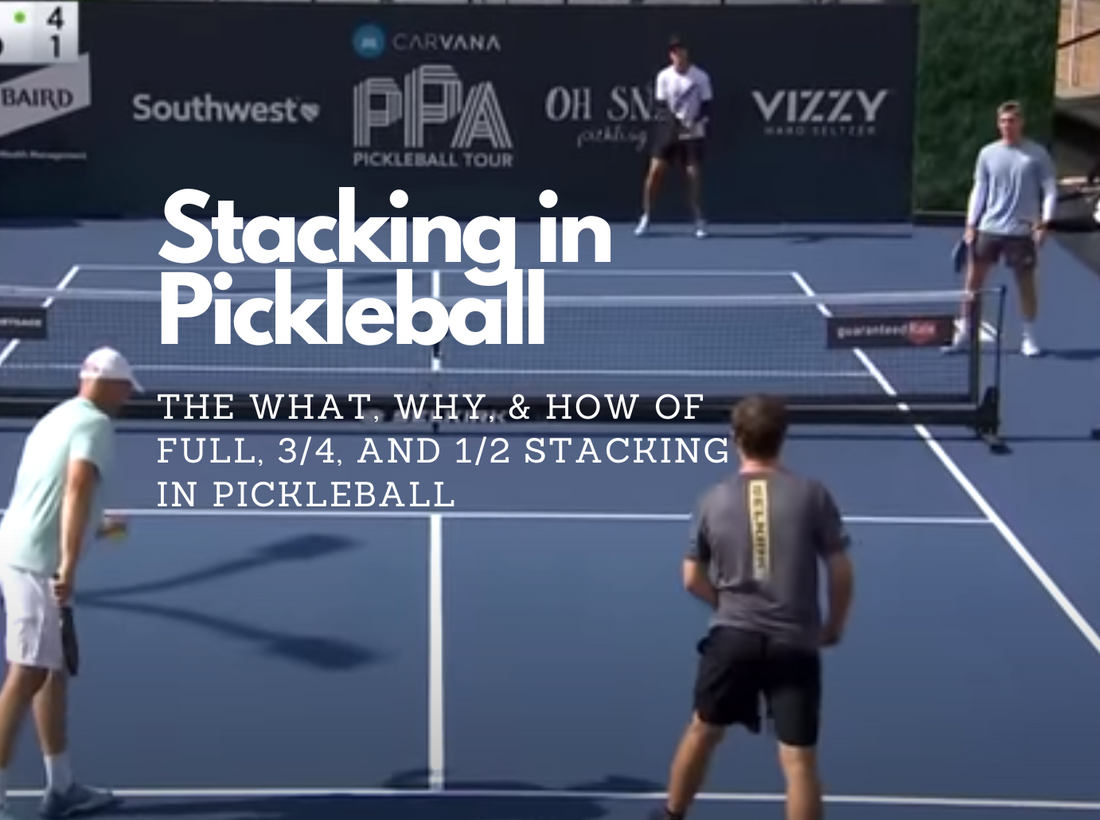
Stacking in pickleball is a doubles strategy to keep each player on their best side.
If you have ever asked what is stacking in pickleball, you’re in the right place. I’ve coached and played through leagues and tournaments, and I’ll break down what is stacking in pickleball in clear, simple steps. This guide shows how it works, why it helps, and how to use it without breaking rules. Stick around for drills, fixes, and pro tips that make stacking feel easy.

What is stacking in pickleball?
Stacking is a doubles setup where both players line up on the same side before or after the serve. The goal is to keep a forehand or backhand in the middle, or to protect a weaker wing. If you search what is stacking in pickleball, think “start here, end there” while staying within the rules. You still keep the correct server and receiver, but you finish rallies in your best spots.
Why do teams stack? It boosts your strengths and lowers errors. Data from match reviews shows that teams win more when their best shot covers the middle. If you want a simple answer to what is stacking in pickleball, it is a smart way to set positions without breaking rotation rules.
Why players stack: benefits and trade-offs
Stacking gives clear payoffs. It also has costs. Here is the balance.
Benefits:
- Keep a strong forehand in the middle for put-aways.
- Protect a weaker backhand from heavy attacks.
- Set lefty-righty teams in their best lanes.
- Keep roles simple, which lowers stress in big points.
Trade-offs:
- Footwork gets tricky if you slide late.
- You may expose wide angles on the open court.
- Opponents can target the player in motion.
- Communication must be sharp on every point.
If someone asks what is stacking in pickleball good for, it is control. You control who takes the middle. You control who begins at the kitchen. That control wins close games.

How to stack: step-by-step for righty and lefty teams
Start with a plan, then practice the steps until they are automatic.
On the serve:
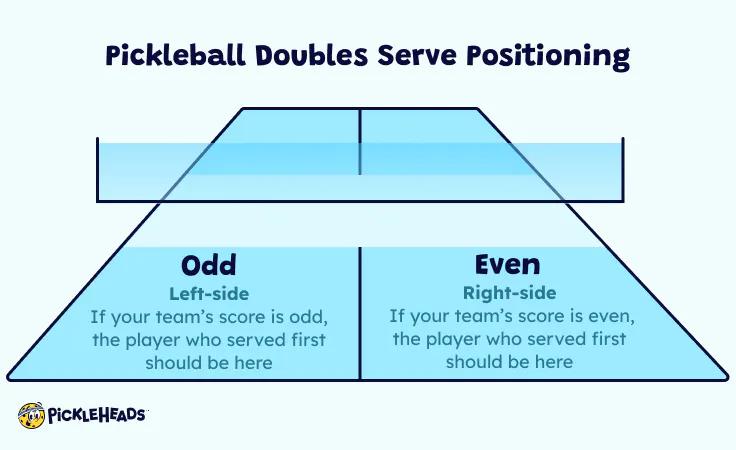
- Server stands where the rules require.
- Partner can stand anywhere on their team’s side.
- After the serve, both slide to the planned spots.
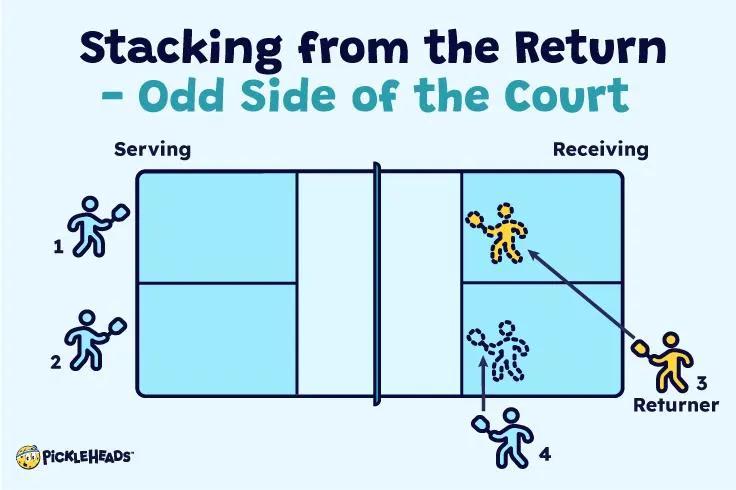
On the return:
- Receiver stands where the rules require.
- Receiver’s partner can stand anywhere on their team’s side.
- After the return clears the net, both slide to their lanes.
Righty-righty plan:
- Put the stronger forehand in the middle.
- If Player A has a heavy forehand, stack to keep A in the middle.
Righty-lefty plan:
- Keep both forehands in the middle for max reach.
- Many top duos use this daily.
If you wonder what is stacking in pickleball for beginners, this is it: follow the serve and return rules, then slide to your spots.
Stacking on serve vs return
Serving team:
- You choose who starts left or right, as long as the correct server hits.
- Slide after contact to set your middle coverage.
- Be ready for fast third-shot pressure.
Returning team:
- The receiver must be in the correct box.
- Use deep, high returns to buy time to slide.
- Avoid late crosses that leave the middle open.
When people search what is stacking in pickleball on serve or return, the key is timing. Serve teams slide sooner. Return teams slide later, after the ball crosses.

Rotations, signals, and footwork
Signals make stacking smooth. Use simple calls.
Signals you can use:
- Stay: no switch after serve or return.
- Switch: cross after contact and take the other side.
- Middle: take balls through the center line with the forehand.
Footwork keys:
- Slide, do not sprint. Small steps keep balance.
- Keep your paddle up while moving.
- Stop before you hit. Plant, then swing.
I teach new teams to whisper the plan before each point. If you forget what is stacking in pickleball mid-match, a one-word signal saves the rally.

Common mistakes and how to fix them
Late slides:
- Fix by starting one step closer to your target side.
- Count “serve, split, slide” out loud for rhythm.
Wrong receiver:
- Fix by pointing to the correct box before the serve.
- Use colored tape on your paddle edge to mark odd or even.
Open middle:
- Fix by setting the middle player’s forehand as the boss.
- Call “mine” early on floaters.
I made all these errors when I first learned what is stacking in pickleball. The cure was slow reps and simple calls.

Legal rules and line-call nuances
Stacking is legal when you follow two core rules:
- The correct server must serve from the correct side.
- The correct receiver must receive from the correct side.
Everything else on court position is open, as long as you stay on your half. Avoid foot faults at the kitchen on the volley. If you ask what is stacking in pickleball in terms of rules, it is fully legal with proper server and receiver order.
Who should use stacking: skill levels and styles
Beginners:
- Try light stacking on serve only.
- Pick one plan and repeat it.
Intermediates:
- Use stacking on both serve and return.
- Add signals for odd and even points.
Advanced:
- Mix switch and stay to hide intent.
- Scout opponents and stack to attack their weaker wing.
Players who ask what is stacking in pickleball often think it is only for pros. It helps all levels when you keep it simple.

Drills to learn stacking
Shadow slides:
- No ball. Serve or pretend to return, then slide to spots.
- Add a split step and paddle check.
Third-ball pattern:
- Serve, drop to the kitchen, and hold shape.
- Do 10 reps each side with a partner.
Return and cross:
- Return deep, then cross to your lane.
- Partner feeds to test your timing.
Pressure test:
- Call the signal before each point and track errors.
- If errors climb, go back to Stay only.
These drills build the moves behind what is stacking in pickleball. Keep reps short and crisp.
Equipment and strategy synergy
Paddle choices:
- Control paddles help you drop while you slide.
- Longer handles help two-handed backhands in the middle.
Shoes:
- Look for grip and side support for safe slides.
- Replace worn shoes to avoid slips on quick crosses.
Court prep:
- Wipe lines if dusty to prevent skids.
- Check sun and wind and stack to protect the weaker side.
Gear will not answer what is stacking in pickleball by itself, but it supports clean footwork and safe movement.
Frequently Asked Questions of what is stacking in pickleball
What is stacking in pickleball in one sentence?
It is a doubles setup that keeps each player on their best side while staying legal.
Is stacking legal in all formats?
Yes, it is legal in recreational and tournament play if server and receiver positions are correct.
Do I have to stack every point?
No. You can stack on serve only, return only, or mix it based on matchups.
How do I avoid confusion when stacking?
Use simple signals like Stay or Switch and confirm the plan before each point.
Will stacking work if we are both right-handed?
Yes. Many righty-righty teams stack to keep a strong forehand in the middle.
Does stacking make me run more?
It can if your timing is late. Clean slides and a deep return reduce extra steps.
Conclusion
Stacking lets you play to your strengths, protect weak spots, and own the middle. You now know what is stacking in pickleball, how to do it, when to use it, and how to fix the common slips. Start with one plan, add clear signals, and build reps with simple drills.
Take this to your next session. Try a Stay plan for five points, then add a Switch call. Share your results, ask questions, or subscribe for more guides that turn strategy into wins.