Both sides must let the serve and the return bounce before any volley.
If you have ever asked what is the double bounce rule in pickleball, you are in the right place. I coach new and seasoned players on court, and I see this rule confuse people more than almost any other. In this guide, I will break it down simply, show real game examples, and share my best tips so you can use the rule to win more points.

What Is the Double Bounce Rule?
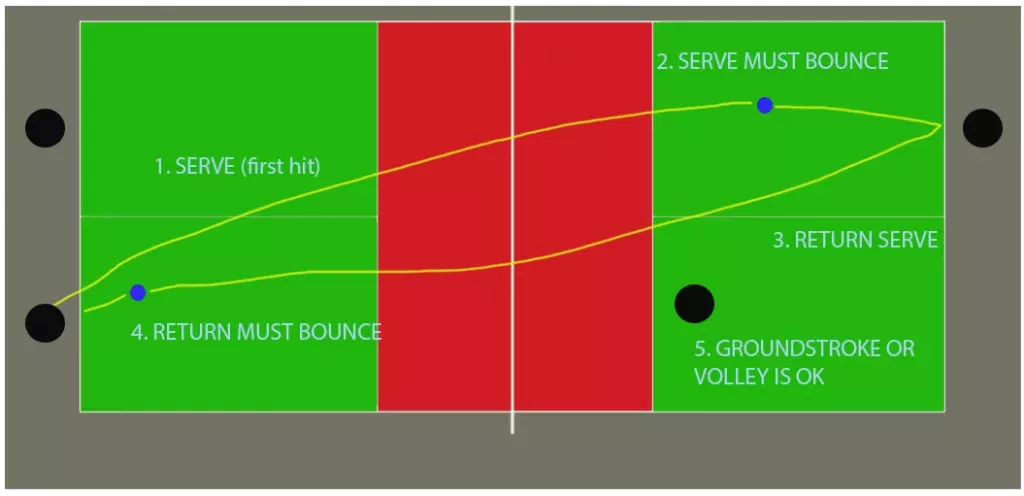
The double bounce rule (also called the two-bounce rule) says this: after the serve, the ball must bounce once on the receiver’s side, then once on the server’s side, before either team can hit a volley. A volley is any shot hit in the air without a bounce. Until those two bounces happen, you must let the ball bounce before you hit it.
If you are unsure what is the double bounce rule in pickleball, think of it as a short pause at the start of every rally. The pause forces a bounce on each side. After that, all normal volley and kitchen rules apply. If anyone volleys the serve or volleys the return, it is a fault, and the rally ends.

Why the Rule Exists
This rule was designed to keep rallies fair and fun. It slows the server’s advantage and gives both sides a chance to move into position. It also encourages smart third shots, like a controlled drop, instead of wild power.
When players ask what is the double bounce rule in pickleball, I tell them it is the rule that creates the heartbeat of the game. It sets the rhythm so the point can build rather than end right away.

How the Rule Works Step by Step
- The serve must land in the correct diagonal court, past the non-volley zone line.
- The receiver must let that serve bounce once before hitting it.
- The return must land in the server’s court and bounce once.
- After this second bounce, either team may volley or groundstroke.
- All other rules still apply, like kitchen and line rules.
Many players ask what is the double bounce rule in pickleball when a net cord serve happens. The answer is the same. If the serve is good and in, the return must still bounce, and the next shot must still bounce.

Real-World Scenarios and Examples
Here are simple game moments that bring the rule to life:
- Net-cord serve that drops in: Play on. The return must bounce. The next shot must bounce.
- Over-eager returner: If the returner smashes the serve in the air, it is a fault.
- Deep return to backhand: Server must let it bounce before touching it. Then open play begins.
- Soft third shot drop: After the two bounces, a soft drop pulls both teams toward the kitchen.
- Lob return: It still must bounce on the server’s side before anyone can volley it.
If friends ask you what is the double bounce rule in pickleball, use these quick scenes to explain it. They stick.
Common Mistakes and How to Avoid Them
I see the same errors over and over. These fixes help right away:
- Creeping forward too fast: You volley the return by accident. Count the two bounces out loud: “One, two.”
- Misreading spin: Heavy slice on the return can skid. Get your feet set early and stay low.
- Forgetting the kitchen on the serve: Serves that hit the non-volley zone line are faults, so reset and focus.
- Rushing the third shot: Aim for a high, safe target over the net strap to buy time.
When I first taught a beginner clinic, half the class kept stepping in to volley the return. We fixed it by using a call-and-response. I would call “No volley yet,” and they would answer “Two bounces.” It worked fast. If you wonder what is the double bounce rule in pickleball, training your brain with a short cue helps.

Strategy Tips That Work With the Two-Bounce Rule
Use the rule to set up smart patterns:
- Server’s team: Serve deep, then prepare for a third shot drop. Do not crash early. Wait for bounce two.
- Returner’s team: Return deep down the middle. This forces a longer third shot and keeps the pressure safe.
- After two bounces: Choose. If the ball is high, attack. If it is low, drop or reset.
In lessons, I often repeat what is the double bounce rule in pickleball while we set up patterns. It cements timing for both teams and reduces errors.

Drills to Master the Rule
Use these simple drills to build muscle memory:
- Bounce-count warm-up: Partner serve and return while both players count out loud: “Bounce one, bounce two.” Stop the rally if anyone volleys too early.
- Deep return ladder: Receiver aims five returns to deep targets. Server must let each one bounce, then play a safe third shot.
- Third shot decision tree: After the second bounce, call your shot before you hit it: “Drop,” “Drive,” or “Lob.” This builds intent.
If a player asks what is the double bounce rule in pickleball mid-drill, I say, “It is the green light system.” The light turns green only after bounce two.

Advanced Clarifications and Edge Cases
These details end many court debates:
- No let rule on serves: If a serve clips the net and lands in, play on. Two bounces still required.
- Ball hits a player: If the ball hits a player or clothing before the second bounce, the rally ends with a fault on that side.
- Kitchen and the serve: A serve that lands in the kitchen or on the kitchen line is a fault. Returns may land anywhere.
- Out balls: If a serve is going out, the receiver can let it go. If they hit it, the ball must still bounce first.
- Wheelchair play: The two-bounce rule coexists with adaptive rules that allow two bounces, with the second bounce permitted outside the court in some formats.
If someone presses you on what is the double bounce rule in pickleball during a tricky rally, remember that only bounces on the court surface count. Deflections off a player do not count as bounces.

Rulebook Notes and Officiating
The official rulebook defines the two-bounce requirement clearly. The serve must bounce. The return must bounce. After that, volleys are legal, subject to non-volley zone rules.
In recreational play, players call their own faults. Be fair and call early. In officiated matches, the referee will rule on two-bounce violations, but players should still play with integrity. When teaching what is the double bounce rule in pickleball, I stress this: announce your own early volley if you commit one. It builds trust and keeps games fun.
Frequently Asked Questions of what is the double bounce rule in pickleball
Does the double bounce rule apply to shots near the kitchen?
Yes. The rule applies to the serve and the return regardless of court position. You cannot volley either shot until both bounces have happened.
Is it legal to let the ball bounce twice on my side?
No. Once the ball has bounced on your side, you must hit it before a second bounce or you lose the rally. The double bounce rule involves one bounce per side, not two on one side.
What happens if the serve lands in the kitchen?
It is a fault. The serve must clear the non-volley zone and its line. If the serve is good, then the double bounce rule still applies.
Does a net-cord serve change the two-bounce rule?
No. If the serve lands in the correct service box, play continues. The return must bounce, and the next shot must bounce.
Is the rule different in singles versus doubles?
The rule is the same in singles and doubles. Both formats require a bounce on the serve and a bounce on the return before any volley.
Can I step into the kitchen before the second bounce?
You may step into the kitchen anytime the ball has bounced on your side. You just can’t volley from the kitchen at any time.
Conclusion
You now know what is the double bounce rule in pickleball, why it exists, and how to use it to your advantage. Let the first two shots bounce, get set, and build the point with purpose. When rallies start with control, they often end with a clean winner.
Put this into action today. Count the bounces out loud for three games and track how many errors you prevent. Want more tips? Subscribe for new drills, strategy breakdowns, and weekly court fixes.