
You cannot volley in pickleball while touching the non-volley zone or line.
If you want to win more points and avoid easy faults, you need to understand what is the kitchen rule in pickleball. I’ve coached new and seasoned players through the same confusion, and I’ll break it down with clear examples, simple steps, and proven tips. Stick with me, and you’ll play with confidence at the kitchen line.
What Is the Kitchen in Pickleball?
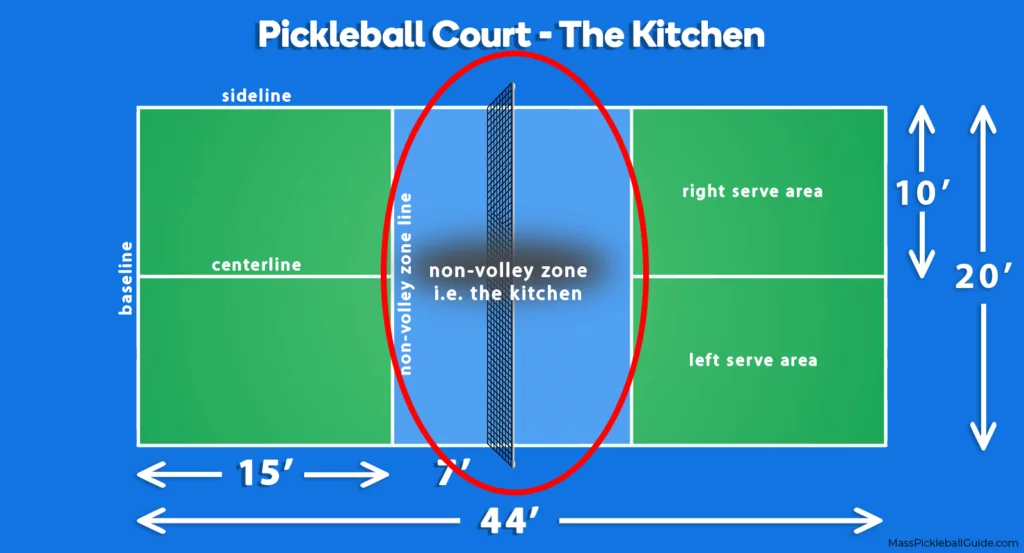
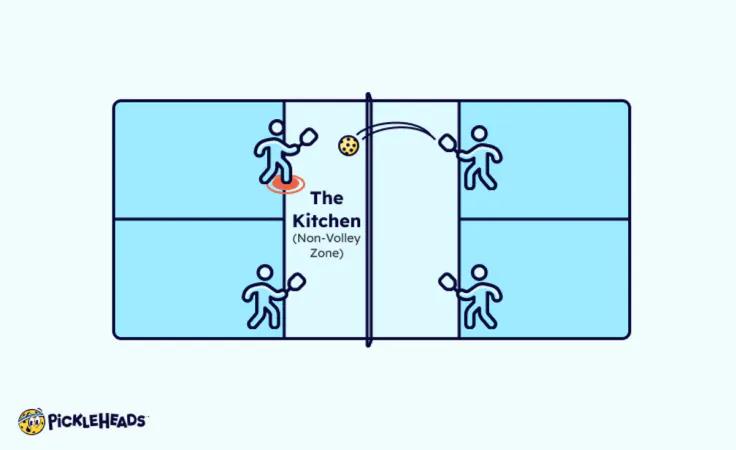
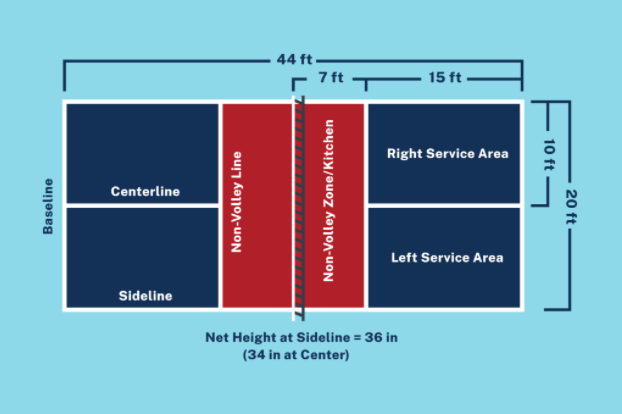
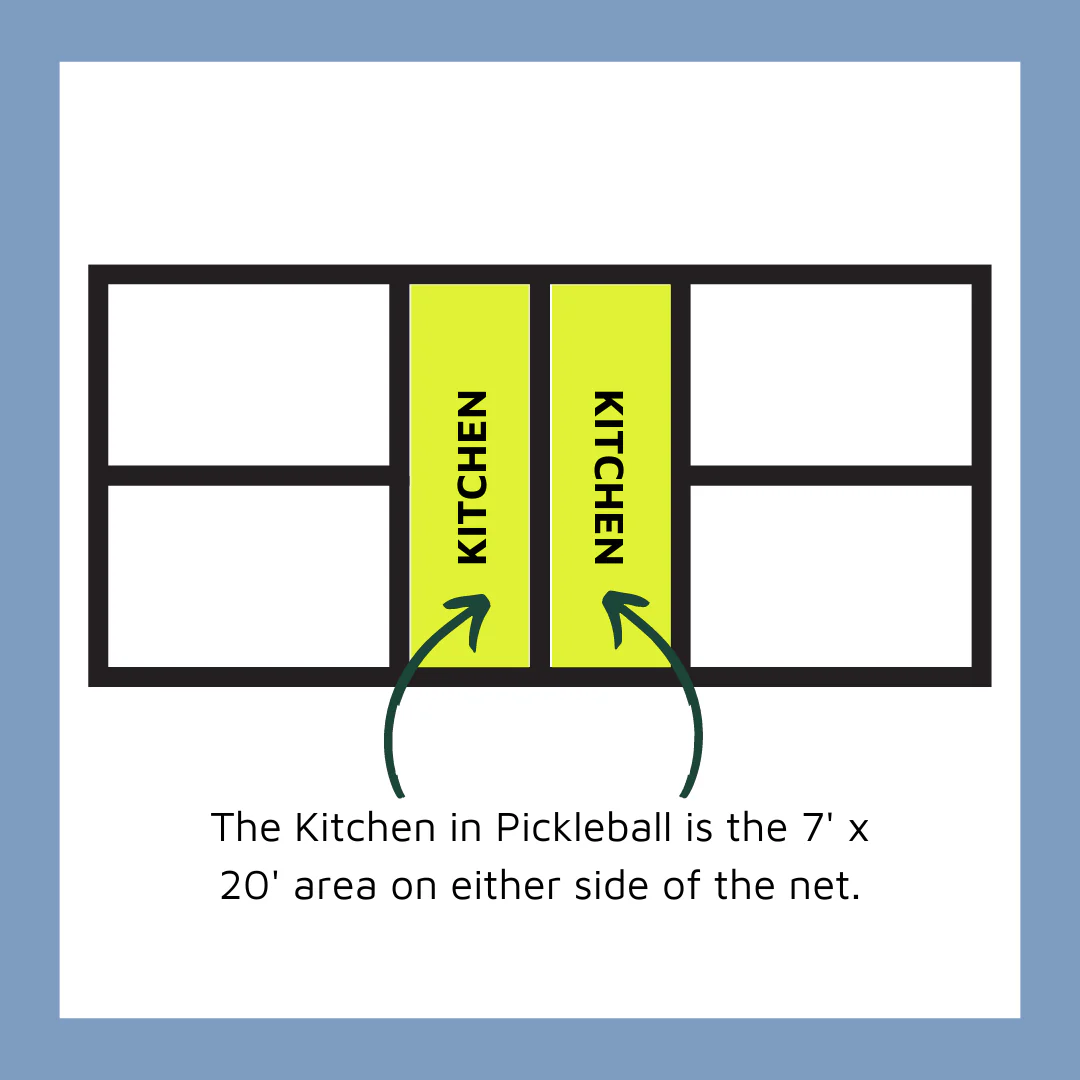
The kitchen is the non-volley zone. It is a 7-foot area on both sides of the net that includes the non-volley line. The core rule is simple: you cannot volley a ball while touching the kitchen or the line. That is the heart of what is the kitchen rule in pickleball.
You can enter the kitchen at any time. You can stand in it to hit a ball that has bounced. You just cannot hit a volley while any part of your body or gear is in contact with the kitchen.
Momentum matters. If you volley from outside the kitchen and your momentum carries you into the kitchen afterward, it is a fault. Even if the ball is dead, you still cannot step into the kitchen until you have regained balance.

The Kitchen Rule, Simply Explained With Real Examples
Think of the kitchen as a “no-volley box.” If the ball has not bounced, your feet, hands, paddle, hat, or even your sweatband cannot touch the kitchen. That includes the line. This is the easiest way to remember what is the kitchen rule in pickleball.
Real examples I see on courts:
- You stretch for a high ball at the net and tip forward. Your paddle hand taps the kitchen after the volley. That is a fault.
- You jump to take a volley and land outside the kitchen. You never touch the kitchen before or after. That is legal.
- You step into the kitchen to hit a soft dink after it bounces. That is legal. Then you must step back out before you volley again.
From coaching sessions, the most common error is momentum. Players make a great put-away, then stumble into the kitchen. The shot felt perfect, but the point is lost.
Why the Kitchen Rule Exists
The kitchen rule keeps play fair and safe. Without it, tall players could reach over the net and smash every ball. The non-volley zone forces softer shots near the net and longer rallies.
It also shapes the game’s flow. The kitchen encourages touch shots, resets, and patience. When people ask what is the kitchen rule in pickleball, I say it is the rule that makes pickleball feel like pickleball.

How to Follow the Kitchen Rule Step by Step
Use these simple steps during points:
- Start with your toes just behind the line. Keep a small gap.
- Split step as the opponent hits. This helps you avoid drifting into the kitchen.
- If the ball is high, check your feet first. If any part is on the line, do not volley.
- After a volley, freeze for a beat. Make sure your momentum stops outside the kitchen.
- If the ball bounces in front, step in, dink, and step back out when safe.
A quick phrase I teach: bounce means you can be in; no bounce means you must be out. Repeat that, and you will master what is the kitchen rule in pickleball fast.
Common Kitchen Mistakes and How to Fix Them
These are the top mistakes I see and how to stop them:
- Toe on the line during a volley. Fix it by setting your ready stance an inch back.
- Leaning forward with your paddle over the line. Keep your weight centered and your knees bent.
- Momentum faults after a swing. Shorten your swing at the net and plant your lead foot outside the kitchen.
- Reaching in for a ball that would have bounced out. Let it go. Learn to judge depth early.
- Confusing the two-bounce rule with the kitchen rule. The serve and return must bounce, but the kitchen rule is about volleys at any time.
If you struggle with what is the kitchen rule in pickleball, film a few points. You will see small foot faults you do not feel in the moment.

Strategy: Use the Kitchen to Win More Points
The kitchen is not a barrier. It is an asset when you know how to use it. Great players win with soft hands at the line.
Try these tactics:
- Dink to the opponent’s backhand. Aim at their feet and move them wide.
- Mix speed-ups off a high dink. But only when your feet are clear of the line.
- Reset from mid-court. Drop the ball into the kitchen to slow the pace.
- Use the Erne. Step or jump outside the sideline near the kitchen and volley from there without touching the kitchen. It is legal and powerful.
These patterns help you apply what is the kitchen rule in pickleball while also turning defense into offense.

Rules Nuances and Clarifications
Details that often trip players up:
- The non-volley line is part of the kitchen. Touching it during a volley is a fault.
- Anything you wear or hold counts. If your paddle, hat, or even a towel touches the kitchen during a volley, it is a fault.
- Airborne volleys are legal if you take off and land outside the kitchen. But if momentum makes you touch the kitchen after, it is still a fault.
- You can stand in the kitchen to return a ball that has bounced. You do not have to exit before your next shot if that next shot also bounces.
- The rule is the same in singles and doubles.
These points reflect the official rulebook language. If you want to verify what is the kitchen rule in pickleball, review the non-volley zone section before your next match.

Drills to Master the Kitchen
Use these simple drills to build muscle memory:
- Line hover drill. Set your toes an inch behind the line. Volley with short swings. Keep your balance. Do three sets of 15.
- Bounce call-out. Rally dinks in the kitchen. Partner calls “in” when a bounce happens so you can step in and hit. This trains your feet to match the bounce.
- Freeze and check. After each volley, hold your finish for one second. Confirm you did not drift in.
- Wall touch drill. Stand close to a wall to limit your follow-through. This teaches compact swings near the net.
Do these for 10 minutes, three times a week. It will cement what is the kitchen rule in pickleball in your body, not just your mind.
Gear and Court Setup Tips
Small changes help you avoid faults:
- Wear court shoes with good grip. You will stop cleaner near the line.
- Chalk or tape a thin “buffer” line one inch behind the kitchen line during practice. Learn where safe feels like.
- Use a lower grip pressure at the net. Soft hands reduce big swings that pull you forward.
- Keep sweat in check. A dropped hat or towel into the kitchen after a volley can still cause a fault.
These tweaks reduce stress and support clean play, which supports what is the kitchen rule in pickleball every point.
Frequently Asked Questions of what is the kitchen rule in pickleball
What is the kitchen rule in pickleball in one sentence?
You cannot volley while touching the non-volley zone or the line. You can step in only after the ball bounces.
Can I step into the kitchen after a volley if the point is over?
No. If your momentum carries you into the kitchen after a volley, it is still a fault. You must stop outside first.
Is the kitchen line part of the kitchen?
Yes. The line counts as part of the non-volley zone. If you touch it while volleying, it is a fault.
Can I jump and volley over the kitchen?
Yes, if you take off and land outside the kitchen and never touch it. If momentum makes you touch it after, it is a fault.
Does the kitchen rule change in singles?
No. The rule is the same in singles and doubles. It always applies to volleys, not bounces.
What happens if my paddle falls into the kitchen after a volley?
That is a fault. Anything you wear or hold counts if it touches the kitchen due to your momentum.
Can I stand in the kitchen and hit a ball?
Yes, if the ball has bounced. You only need to be outside the kitchen for volleys.
Conclusion
The kitchen rule is simple to say and tricky to master. Stay out for volleys, step in for bounces, and control your momentum. With practice, what is the kitchen rule in pickleball becomes second nature, and your game gets sharper at once.
Start today. Add one drill, set your stance an inch back, and record a few points. If this guide helped, share it with a partner, subscribe for more tips, or ask your questions in the comments.