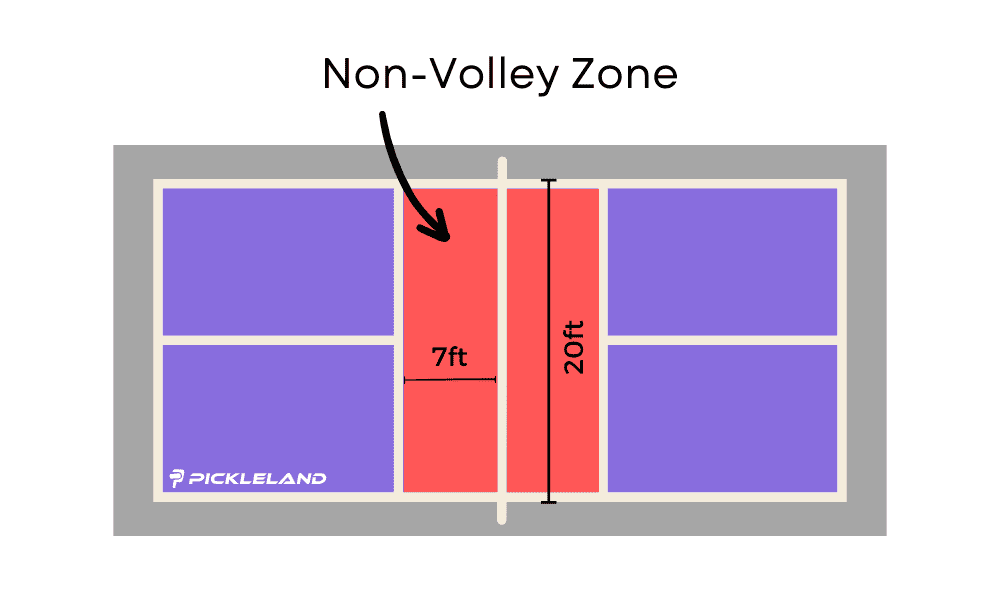
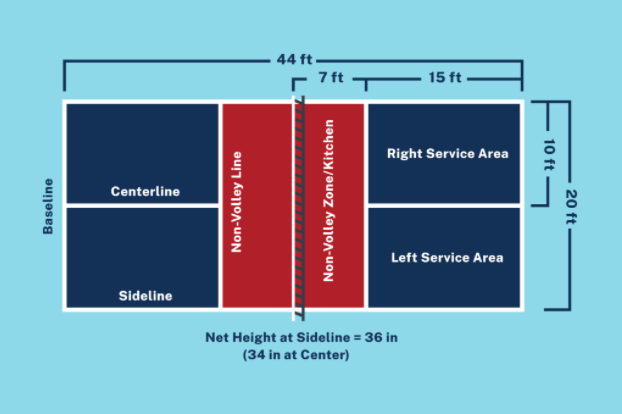
The non-volley zone is the 7-foot kitchen near the net where volleying is not allowed.
If you play pickleball, you will hear about the kitchen a lot. Knowing what is the non volley zone in pickleball changes how you move, swing, and score. I coach new players every week. The ones who learn the kitchen first rise the fastest. Stick with me and you will master this space with clear tips, real game notes, and pro-level rules you can trust.

What is the Non-Volley Zone?
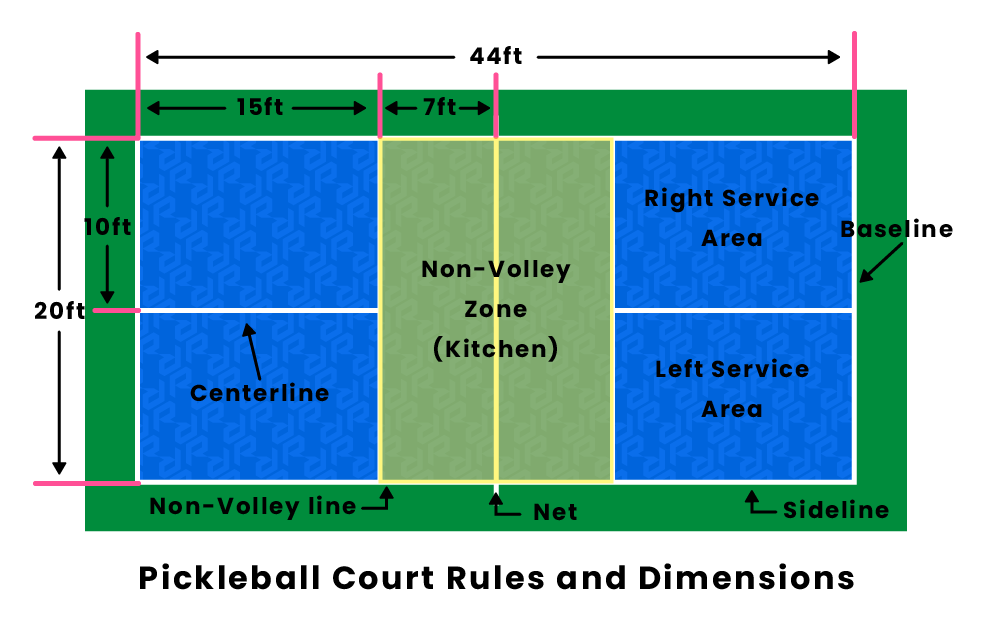
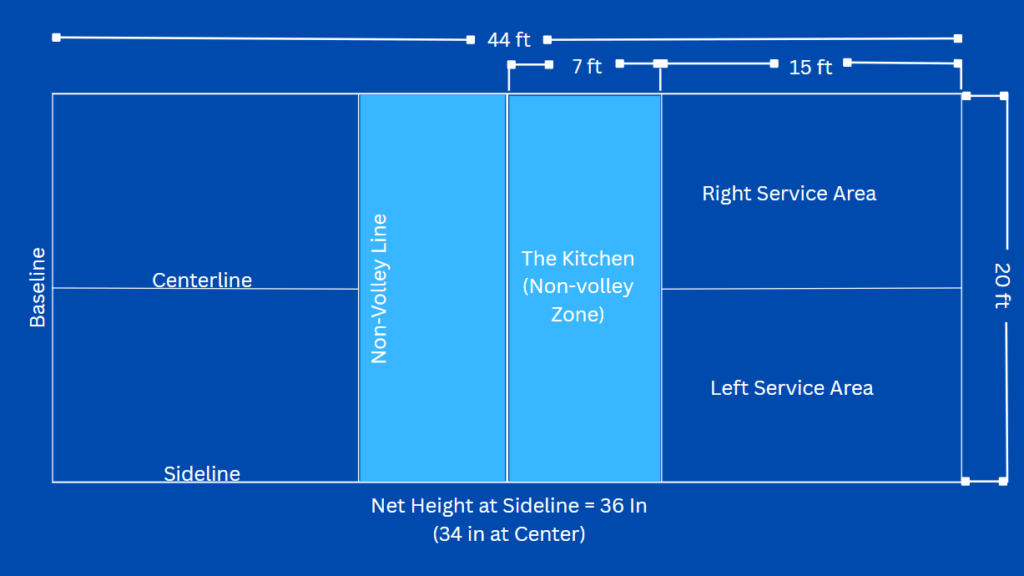
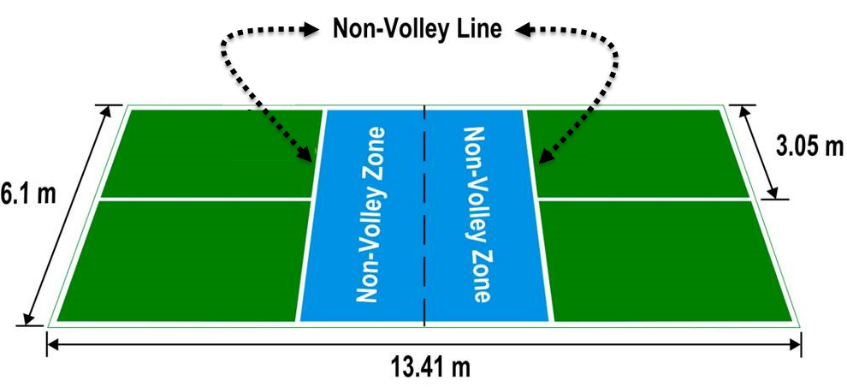
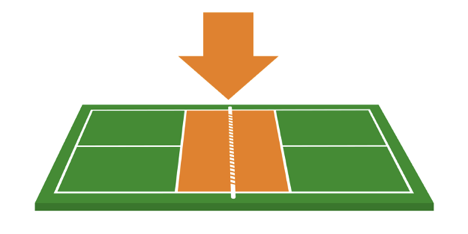
The non-volley zone is the strip that runs along the net on both sides. It is 7 feet deep from the net and spans the full width of the court. The line itself is part of the zone. If you touch the line, you are in the zone.
The rule is simple. You cannot volley while any part of you is in the zone. A volley is a ball hit in the air before it bounces. You may step into the zone to hit a ball that has bounced first. Then you must step back out before you volley again.
If you want a short answer to what is the non volley zone in pickleball, think safety and fair play. It stops easy smashes from right on top of the net. It also creates soft play at the line, which is a big part of the sport.

Why the Non-Volley Zone Exists
The zone keeps bodies safe near the net. In tennis, a net rush is fine due to court size and racket weight. In pickleball, the court is small and the paddles are fast. A slam at the tape would be dangerous.
The zone also adds skill to the game. You trade speed for touch. You must shape a drop, a dink, or a reset. It turns a blast into a chess match at the line. This is why learning what is the non volley zone in pickleball gives you a big edge.

Core Rules You Must Know
Here are the most important kitchen rules that catch players out.
- You cannot volley while any part of your body, your paddle, or your gear touches the zone or the line. The line is part of the zone.
- Momentum counts. If you volley and your forward motion causes you to touch the zone after, it is a fault. Even if the ball is dead.
- You can jump and volley. But you must take off from outside the zone and land outside the zone. If you land in the zone, it is a fault.
- You may enter the zone to hit a ball that bounces. You can even stay there. You just cannot volley until both feet have reestablished outside.
- A hat, sweat, or paddle that falls into the zone after a volley is a fault. Your stuff is part of you for this rule.
In clinics, I ask each player to say out loud what is the non volley zone in pickleball before we drill. It sticks. Then we drill momentum control so the rules become second nature.
Footwork and Positioning at the Kitchen Line
You win at the kitchen with feet first. Get your toes just behind the line. Keep a light bounce in your legs. Hold your paddle up, face open, near chest height.
Use small steps on every ball. A tiny shuffle beats a big lunge. Try this cue: nose over toes, paddle out front, eyes on the ball. When you learn what is the non volley zone in pickleball, you learn to respect the line without fearing it.
Key habits that help:
- Split step as your rival hits. You will react faster and stay in balance.
- Reset to neutral after each shot. Do not drift into the line or rock back on your heels.
- Keep elbows in and soften your grip for dinks and blocks.

Shots You Need Near the Non-Volley Zone
The zone turns rallies into touch play. These are your must-have shots.
- Dink: A soft shot that lands in the other kitchen. Aim cross-court for a higher net and more space.
- Third shot drop: From the back, float the ball into the kitchen to gain the line.
- Reset block: When under fire, calm the ball back into the kitchen to slow the point.
- Erne set-up: A sharp angle dink that tempts a high ball. Then step outside the sideline to volley the next ball legally.
Each of these shots ties back to what is the non volley zone in pickleball. Your goal is to place the ball just over the net and force a mistake.
Common Kitchen Faults and How to Avoid Them
Kitchen faults feel small but cost big points. Here is how they happen and how to fix them.
- Toe on the line during a volley: Paint the line bold or use tape so you can see it. Set your toes an inch back.
- Follow-through into the zone: Shorten your swing on shoulder-high balls. Use legs and core, not a big arm whip.
- Momentum step after a put-away: Call out “stop” as you hit. Plant and decelerate. A tiny hop back helps.
- Reaching for a low ball in the air: Let it bounce. Then step in and roll it back soft.
I once lost a medal match from a hat that fell into the zone after a jump volley. Now I tuck my cap tight. Little things matter when you learn what is the non volley zone in pickleball the hard way.
Drills to Master the Kitchen
You will learn the zone faster with simple, short drills.
- Line hover: Stand one inch behind the line. Volley to a partner at mid-speed for 60 seconds. Goal: no line touches.
- Bounce call: Rally dinks. Call “bounce” or “air” before each hit. This trains legal choices fast.
- Two-cone shuffle: Place two cones two feet behind the line. Slide side to side for 30 seconds. Keep toes off the line.
- Reset ladder: Partner drives five balls at you. Your job: block each ball into the kitchen with a soft hand.
Set a timer for six minutes. Do each drill for one minute on, 30 seconds off. Track faults. This makes what is the non volley zone in pickleball feel like second nature.
Strategy: Win the Battle at the Line
At the line, aim more than you aim hard. Control the middle. Reach with your forehand when you can. Move with your partner as one.
Targets that win:
- Cross-court dinks that pull your rival wide.
- Middle balls at the hip to cause a clash.
- Soft topspin rolls at the outside shoulder.
- Short angles that open space for the next ball.
Patience beats power here. When you know what is the non volley zone in pickleball, you know that a high ball is earned, not forced.
Ref Tips, Rec Play, and Fair Calls
In rec play, call your own kitchen faults. If you feel the line, say it. Earn trust. Ask partners to watch your feet on big points.
In events with refs, they call kitchen faults on volleys and momentum. Still, play honest. If you step on the line, own it. That respect is a key part of what is the non volley zone in pickleball culture.
Rule Nuances and Edge Cases
A few edge cases spark debate. Here is the simple truth.
- The line is in. Touching it while volleying is a fault, every time.
- Your paddle can reach over the net after contact is made on your side. The kitchen rule still applies to your feet.
- You can be in the kitchen after a bounce and then volley the next ball only after both feet come back out and you have full control.
If you keep asking yourself what is the non volley zone in pickleball as you play, you will catch these small moments before they cost you.
Frequently Asked Questions of what is the non volley zone in pickleball
What is the size of the non-volley zone?
It is 7 feet deep from the net on both sides and spans the court width. The painted line is part of the zone.
Can I step in the kitchen to hit a ball?
Yes, if the ball bounces first. You must exit the zone before you can hit a volley again.
Is jumping and volleying legal over the kitchen?
Yes, if you take off from outside and land outside. Landing in the zone after the volley is a fault.
Does my paddle or hat causing contact make it a fault?
Yes. If any part of you or your gear touches the zone during or after a volley, it is a fault.
Who calls kitchen faults in casual games?
Players call their own faults in rec play. In refereed matches, officials call them, but good sports still self-report.
Why is it called the kitchen?
It is a nickname that stuck from early play culture. It makes a strict rule sound friendly and fun.
How many times should I practice kitchen drills each week?
Two or three short sessions of 10 to 15 minutes work well. Focus on dinks, resets, and footwork.
Conclusion
The kitchen shapes every point. Learn the space, master your feet, and choose the right shot at the right time. That is the heart of what is the non volley zone in pickleball and why it matters so much.
Take one drill from this guide and do it today. Then teach a friend what is the non volley zone in pickleball during your next game. Want more tips like this? Subscribe, share your kitchen wins, and drop your questions in the comments.