

A standard pickleball court is 20 feet by 44 feet, lines included.
If you came here asking what is the size of a pickleball court, you’re in the right place. I coach, set up courts, and help players pick gear. In this guide, I explain what is the size of a pickleball court in clear, simple terms. You will learn the exact dimensions, buffer space, net height, and how to mark a court at home or on a tennis court. Stick with me to avoid costly mistakes and play by the book.
Official court dimensions you need to know
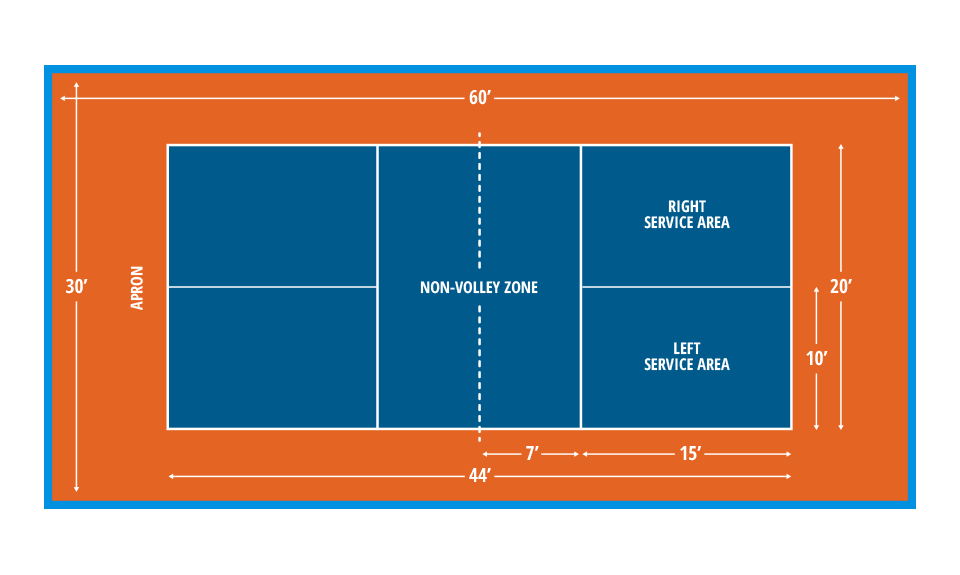
When people ask what is the size of a pickleball court, the answer starts with 20 feet by 44 feet. That size is the same for singles and doubles. The lines are part of the court. The official rulebook notes lines are 2 inches wide.
Key specs at a glance:
- Court size: 20 feet wide by 44 feet long (6.10 m by 13.41 m)
- Non-volley zone (the kitchen): 7 feet from the net on each side (2.13 m)
- Service courts: each is 10 feet by 15 feet
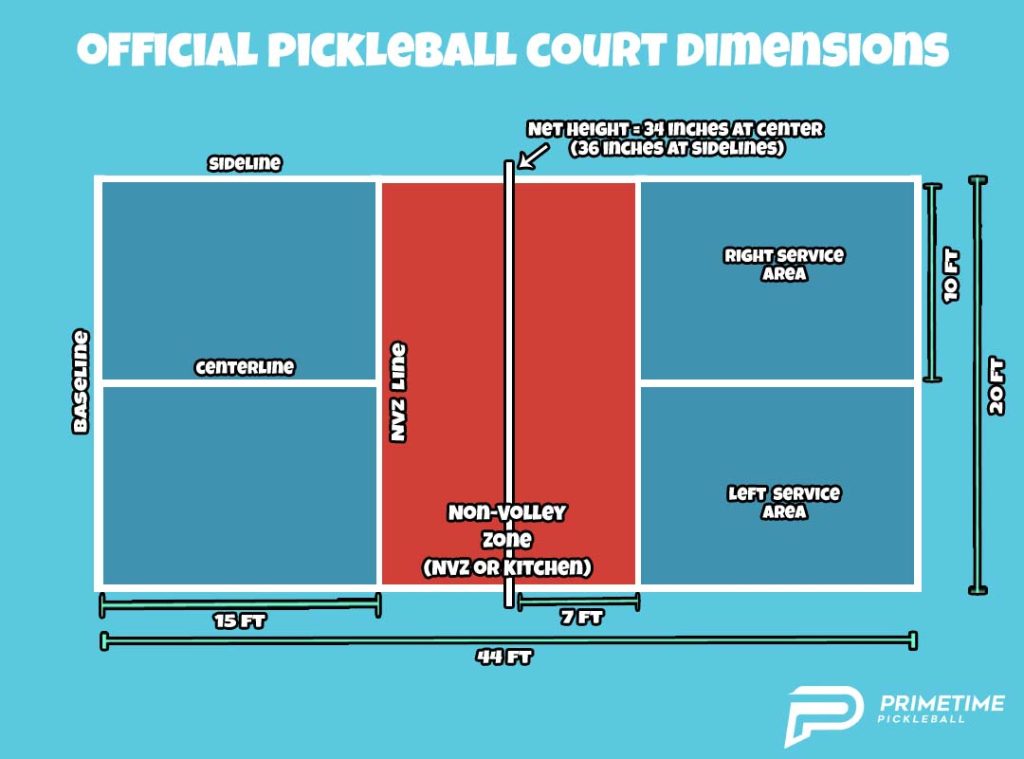
- Net height: 36 inches at sidelines, 34 inches at center
- Net length between posts: 22 feet
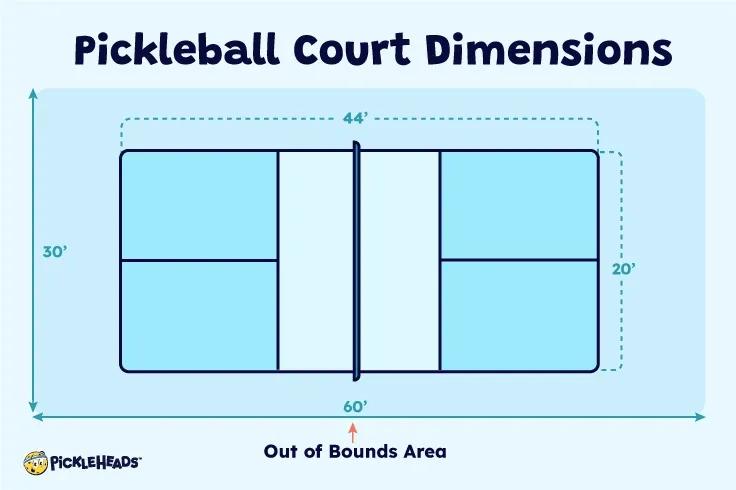
Total playing area matters too. Most facilities use 30 feet by 60 feet as the minimum. The preferred area is 34 feet by 64 feet for safe run-off space. This space helps with lobs, wide balls, and safe stops.
If you search what is the size of a pickleball court for home use, plan for the full layout. The paint area is 20 by 44 feet, but the safe zone pushes it to at least 30 by 60 feet.
Singles vs doubles: does the size change?
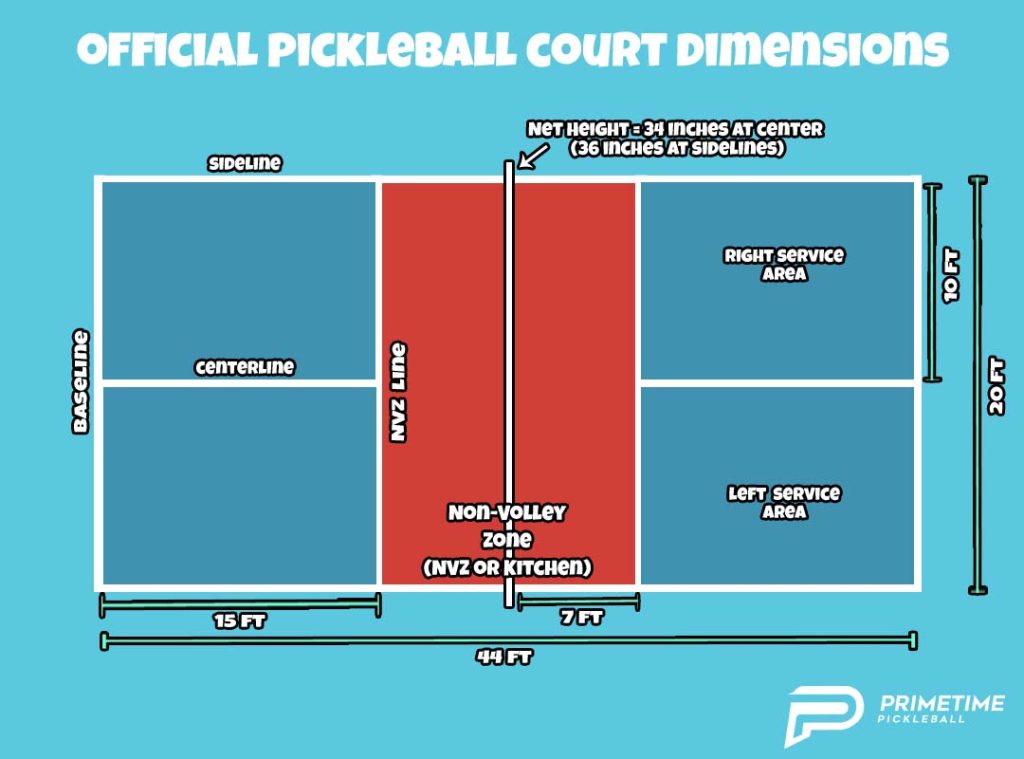
This is a common myth. The court does not change for singles. It stays 20 by 44 feet for all play.
Scoring and strategy shift, but the dimensions do not. So when you ask what is the size of a pickleball court for doubles, it is the same as singles.

Lines and zones explained
Knowing the zones helps you set the right size. The non-volley zone, or kitchen, is 7 feet deep on each side of the net. You cannot volley while your body contacts this zone or its line.
Here is how the court breaks down:
- Baselines are the back lines. You serve from behind them.
- Sidelines run the length. They mark the 20-foot width.
- The centerline splits each side into two service boxes, left and right.
- All lines are in. If a ball touches a line, it is good.
If you are still wondering what is the size of a pickleball court when taped on asphalt, keep the same zones. The kitchen must stay 7 feet deep. The lines should be clear and 2 inches wide.

Space, layout, and orientation
The court is the core, but space around it matters more than most think. Aim for at least 30 by 60 feet. Go to 34 by 64 feet if you can. That extra space saves knees and rackets.
Use these layout tips:
- Keep fences 10 feet or more from sidelines when possible.
- Face courts north–south to reduce sun glare.
- For indoor play, a 20-foot clear ceiling is ideal. Eighteen feet is workable.
- Leave space for benches and a safe gate swing.
People often ask what is the size of a pickleball court for a backyard. If your yard cannot fit 30 by 60 feet, consider a compact half-court for drilling. It is safer and more useful than a tight full court.
Net and equipment details that affect size
The net spans 22 feet between the inside faces of the posts. It dips to 34 inches at the center strap. It is 36 inches high at each sideline. Use a center strap for accurate height.
Helpful notes:
- A regulation net is usually 21 feet 9 inches of mesh to fit between posts and allow tension. Many label it as a 22-foot net.
- Posts should not intrude on the 20-foot playing width.
- Check height often. Weather and time lower the center.
What is the size of a pickleball court if your net sags? The court size stays the same, but play will feel off. Fix the net height before you start.

How to mark a temporary court on a tennis court
This is my favorite quick setup for clinics and travel. You can mark one or more courts without damage.
Follow these steps:
- Measure a 20 by 44 foot rectangle across the tennis court, often placed in the service boxes.
- Mark the baselines and sidelines with removable tape. Keep lines 2 inches wide.
- Measure 7 feet from the net on both sides for the kitchen line.
- Add the centerline to split service courts. Each box should be 10 by 15 feet.
- Set a portable net to 36 inches at the sides and 34 at center.
You can fit up to four pickleball courts on one tennis court with a planned layout. If your goal is what is the size of a pickleball court for one-off play, one taped court works great and keeps costs low.

Common sizing mistakes to avoid
I have seen these mistakes again and again:
- Forgetting buffer space. A tight 20 by 44 with no run-off is risky.
- Marking a kitchen less than 7 feet. It changes play and causes fights.
- Wrong net height. Always check 36 at sidelines and 34 at center.
- Thin or faded lines. If you cannot see them, you cannot call them.
If you are still unsure what is the size of a pickleball court for a community setup, follow the 34 by 64 preferred footprint. It future-proofs your space.

My on-court tips from setting up dozens of courts
Here is what works in real life:
- Paint only after a dry fit. Tape first. Play a few points. Then paint.
- Use bright lines that stand out from the surface color. White on green is classic.
- Keep a center strap and a small ruler in your bag. Fast checks save time.
- For home builds, plan lighting early. Even, shadow-free light beats more lumens.
People ask me what is the size of a pickleball court when space is tight. I tell them to protect safety first. A single well-spaced court beats two cramped ones every time.
Frequently Asked Questions of what is the size of a pickleball court
Is the court the same size for singles and doubles?
Yes. The court is always 20 feet by 44 feet. Only strategy and player count change.
What is the size of a pickleball court in meters?
It is 6.10 meters by 13.41 meters. The kitchen is 2.13 meters deep on each side.
How much total space do I need around the court?
Aim for at least 30 by 60 feet. The preferred space is 34 by 64 feet for safer play.
Does line width count in the court size?
Yes. Lines are 2 inches wide and are part of the court. A ball touching a line is in.
What is the size of a pickleball court when used indoors?
The playing area is still 20 by 44 feet. Try for an 18 to 20 foot clear ceiling.
Can I fit a pickleball court in my driveway?
Measure first. You need 20 by 44 feet plus extra space. If not, set a half-court for drills.
What is the net height for a pickleball court?
Set it to 36 inches at the sidelines and 34 inches at the center. Use a center strap to keep it true.
Conclusion
Now you know the exact court size, the space you need, and how to set it up right. You learned what is the size of a pickleball court, why buffer zones matter, and how to avoid common layout errors. Use this guide to mark your lines, check your net, and enjoy smooth, safe games.
Ready to play or build? Measure your space today, plan your layout, and share your progress. Subscribe for more step-by-step guides, or drop a question in the comments so I can help you dial it in.