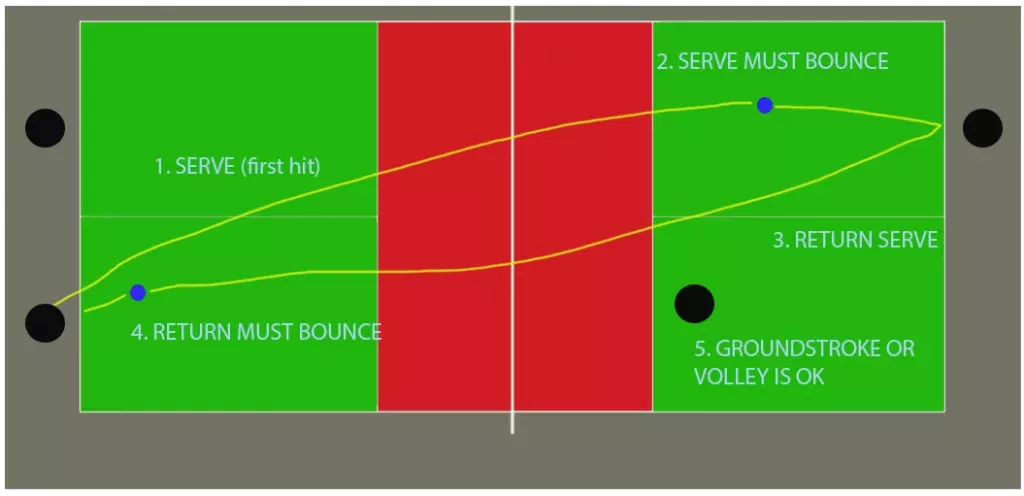
Both the serve and the return must bounce before anyone can volley.
If you have wondered what is the two bounce rule in pickleball, you are in the right place. I coach new players and help clubs run clinics, and I see this rule trip up even seasoned athletes. Below, I break down what is the two bounce rule in pickleball, why it exists, how it shapes strategy, and the simple drills that will make it second nature.

The two-bounce rule explained
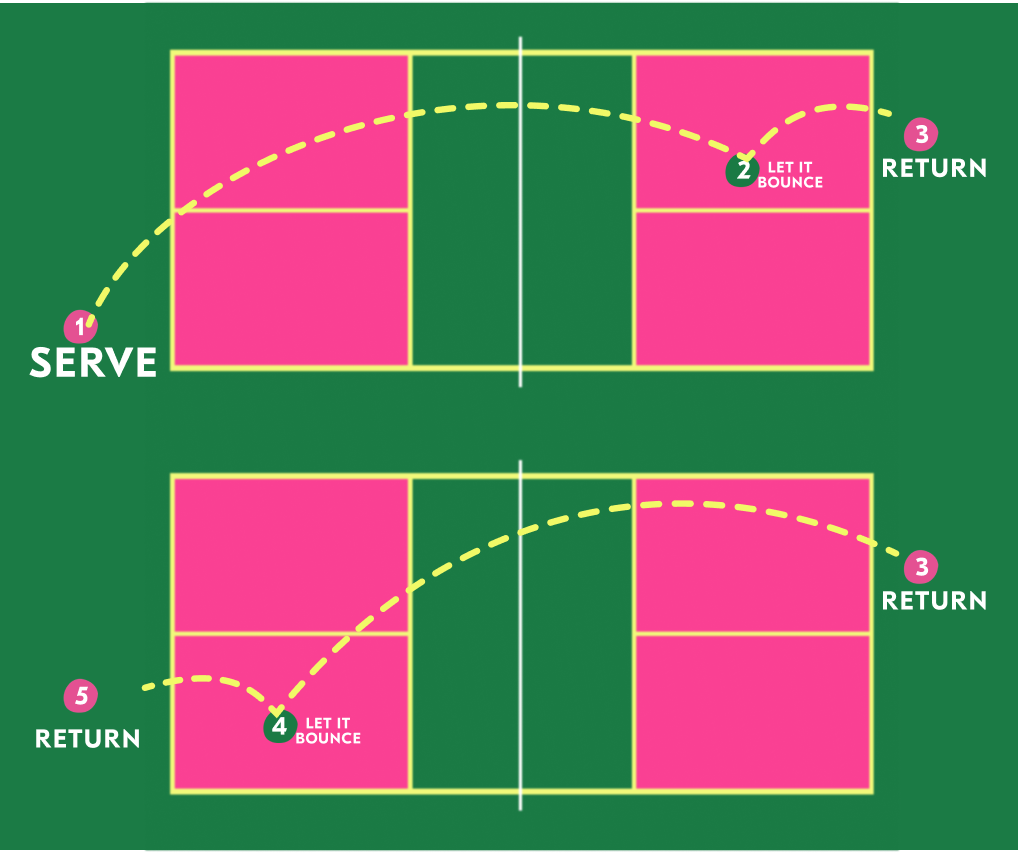
At its core, the rule is simple. After the serve, the ball must bounce once on the receiver’s side. After the return, the ball must bounce once on the server’s side. Only after these two bounces can either team hit a volley in the air.
This is why many players ask what is the two bounce rule in pickleball early in their journey. It controls the first three shots: serve, return, and the famous third shot. The rule applies in both singles and doubles. It is separate from the non-volley zone, often called the kitchen.
A few key points keep it clear:
- A bounce means the ball contacts the court surface.
- If the serve or return is hit out, the point ends; the bounce does not matter.
- If a player volleys the serve or the return before it bounces, that is a fault.
- After those two bounces happen, volleys are legal, provided you obey kitchen rules.
I still remember my first league match. My tennis reflexes kicked in. I tried to step in and punch the return early. Fault. That one swing taught me what is the two bounce rule in pickleball the hard way.

Why the two-bounce rule matters
The rule keeps the game fair and fun. It stops servers from rushing the net and crushing easy put-aways. It gives the receiver a fair chance to return. It also creates longer rallies, which most players love.
From a safety angle, it reduces sudden sprints to the net right off the serve. That helps players of all ages enjoy the game. When a new player asks what is the two bounce rule in pickleball, I tell them it is the heartbeat of flow and balance.
Strategically, it sets up the third shot. That is the pivot that shapes the point. Do you drop? Do you drive? The two-bounce rule is the reason that choice matters.

How it plays out point by point
Use this simple sequence each time:
- Server serves cross-court. The ball must land in.
- Receiver lets it bounce, then returns it.
- Serving team lets the return bounce. Now the ball has bounced twice.
- From here, either side may volley, as long as they are not in the kitchen.
A few examples bring it to life:
- Let serve that lands in: Ball is live. Receiver still must let it bounce.
- Return clips the net and drops in: Serving team must still let it bounce.
- Windy day: The bounce can be tricky. Do not cheat forward early.
If you keep asking what is the two bounce rule in pickleball during play, run this four-step checklist in your head. It builds a steady rhythm.

Common mistakes and how to avoid them
I see the same errors over and over. They are easy to fix.
- Vollying the return by habit. Solution: Say “bounce, bounce” out loud for the first two shots.
- Creep into the kitchen too soon. Solution: Split step behind the line until after bounce two.
- Floating the return short. Solution: Aim deep to keep servers back on bounce two.
- Overhitting the third shot. Solution: Swing with soft hands and a relaxed grip.
- Poor footwork at bounce two. Solution: Land in a stable stance before you swing.
When friends ask what is the two bounce rule in pickleball, I also stress patience. You do not need hero shots on the third. You need control.

Strategy tips to use the rule to your advantage
The two-bounce rule creates a narrow window for smart play. Use it.
- As the receiver: Return deep down the middle. It jams both servers and buys time.
- As the server: Serve to the backhand. It sets up a weaker return and a softer bounce two.
- On the third shot: Choose drop if both returners stay near the kitchen. Choose drive if they back up.
- If your partner is slow to the line: Hit a higher, softer third. Give them time to move.
- Use a split step at the moment of bounce two. Your balance will jump.
What is the two bounce rule in pickleball if not a timing gift? Let it guide your footwork and shot choice, not limit them.

Drills to master the timing
Reps make the rule feel natural. Try these simple drills.
- Bounce-count shadow drill. Without a ball, say “one” on the serve bounce and “two” on the return bounce. Split step right after “two.”
- Deep return ladder. Mark three depth zones with cones. Hit 20 returns to zone three. Focus on height and shape.
- Third-shot drop ladder. Start at the baseline. Hit 10 drops that land in the kitchen. Step in one yard and repeat.
- Drive or drop call-out. Partner returns. You call “drive” or “drop” after their contact. Train your decision on the fly.
- Kitchen reset rally. After bounce two, your partner feeds hard balls. Reset with soft blocks into the kitchen.
Players who ask what is the two bounce rule in pickleball often need the bounce-count rhythm first. Do that for a week. Your errors will fall fast.
Edge cases, clarifications, and official nuances
A few rule details answer most edge questions.
- The name. Many players say double bounce rule. The official term is two-bounce rule. Same meaning.
- Let serves. Serves that touch the net and land in are live. Receiver must still let them bounce.
- Kitchen vs two-bounce. They are separate rules. After the second bounce, you may volley only if you are not in the kitchen and have not stepped on the line during a volley.
- Second bounce on one side. If the ball bounces twice on your side, your team loses the rally.
- Ball hits player before the first bounce. If the served ball hits the receiver before bouncing and would have landed in, the receiving team faults.
- Wind, sun, and spin. External factors do not change the rule. Build in extra space for tricky bounces.
According to the official rulebook, the two-bounce rule applies the same in singles and doubles. If you still wonder what is the two bounce rule in pickleball in odd situations, remember this: serve bounce, return bounce, then you can volley.
History and rule updates
Pickleball began in the 1960s as a family game. The early rules aimed for rallies, not power serves. The two-bounce rule locked in that spirit. It slowed the rush to the net and made placement beat pace.
Over time, the game evolved. Paddle tech got better. Players got faster. Yet the two-bounce rule stayed firm. Other updates have come and gone, like the removal of service lets. Through all of that, players still ask what is the two bounce rule in pickleball because it shapes every point.
When I teach beginners and pros, I say this rule is the sport’s handshake. It sets the tone for fair play before the fight begins.
Court positioning and partner communication
Doubles is where the rule shines. Good teams talk through the first three shots.
- Before the serve: Call the target. Deep to backhand or middle.
- On the return: The non-hitter watches the bounce and calls “two” out loud.
- After bounce two: Both players move forward together in small steps.
- Third-shot roles: One hits. One covers middle. Decide this before the point.
- Stacking and switching: If you stack, plan your lanes so bounce two does not catch you crossing.
If your team keeps asking what is the two bounce rule in pickleball mid-rally, add a simple cue. We use “two and through.” It reminds us: wait for two, then flow to the line.
Frequently Asked Questions of what is the two bounce rule in pickleball
Is the two-bounce rule the same as the double bounce rule?
Yes, they mean the same thing. Many players still say double bounce, but the official term is two-bounce.
Does the two-bounce rule apply in singles and doubles?
Yes, it applies in both. The serve and return must bounce before any volley happens.
Can I volley from behind the baseline after the two bounces?
Yes, location does not matter after the second bounce. Just make sure you are not in the kitchen when you volley.
What happens if I volley the return by mistake?
It is a fault on your team. The other side wins the rally right away.
Does a let serve change the two-bounce rule?
No. If the let serve lands in, the ball is live, and the receiver must still let it bounce.
How does the two-bounce rule affect the third shot?
It creates the third shot by forcing a bounce on the serving side. That is why drops and drives are key parts of strategy.
What if the return hits the net cord and dribbles over?
The serving team must let it bounce. After that, play continues as normal.
Conclusion
Now you know what is the two bounce rule in pickleball and why it matters. It protects fairness, shapes strategy, and gives you a clear rhythm for the first three shots. Use that rhythm to return deep, hit a smart third shot, and move as a team.
Take this to the court today. Count your bounces out loud for a few games. Share the cue with a friend who still asks what is the two bounce rule in pickleball, and help them improve. Want more tips? Subscribe for weekly drills, match breakdowns, and simple guides that make you better, fast.