
Tennis uses bigger courts and racquets; pickleball uses smaller courts and paddles.
If you want to know what’s the difference between tennis and pickleball, you’re in the right place. I coach and play both sports, and I’ve helped many players switch between them. Below, I break down what matters most so you can choose with confidence and enjoy more play time.
Court size, nets, and layout
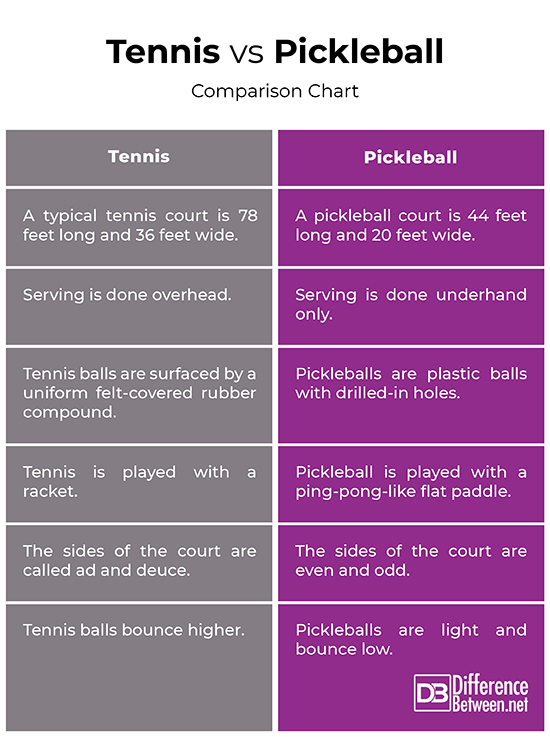
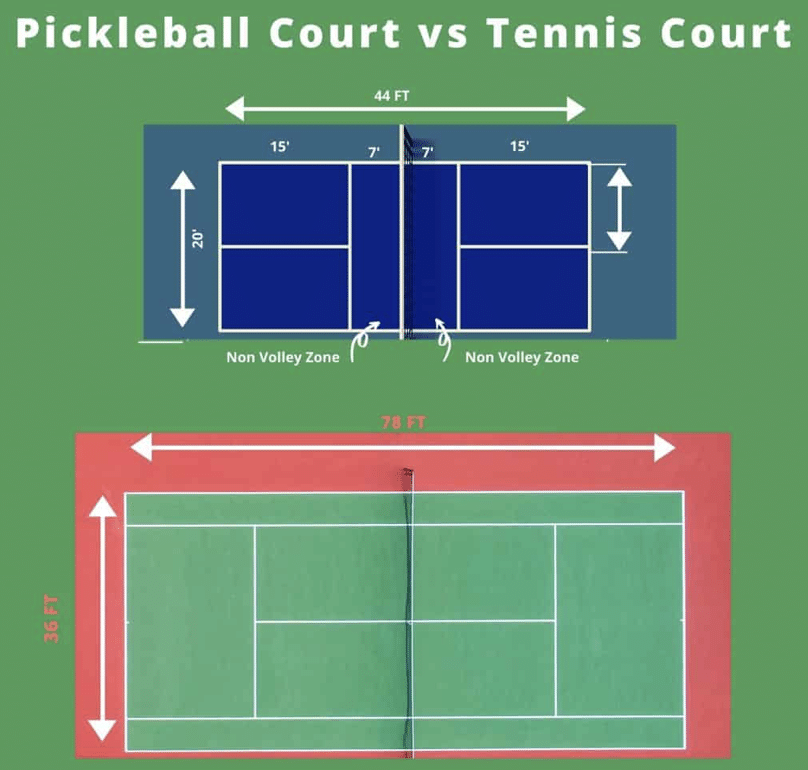
If you ask what’s the difference between tennis and pickleball, start with space. A tennis court is 78 feet long. Singles is 27 feet wide, and doubles is 36 feet wide. A pickleball court is much smaller at 44 by 20 feet for all play.
The net is not the same either. Tennis nets sit higher at the posts and dip to 3 feet in the center. Pickleball nets are 36 inches at the sides and 34 inches at the center.
There’s also the kitchen in pickleball. It is a 7-foot non-volley zone by the net. You cannot volley from there. This one rule changes how points feel and flow.

Equipment: racquets vs paddles, balls, and shoes
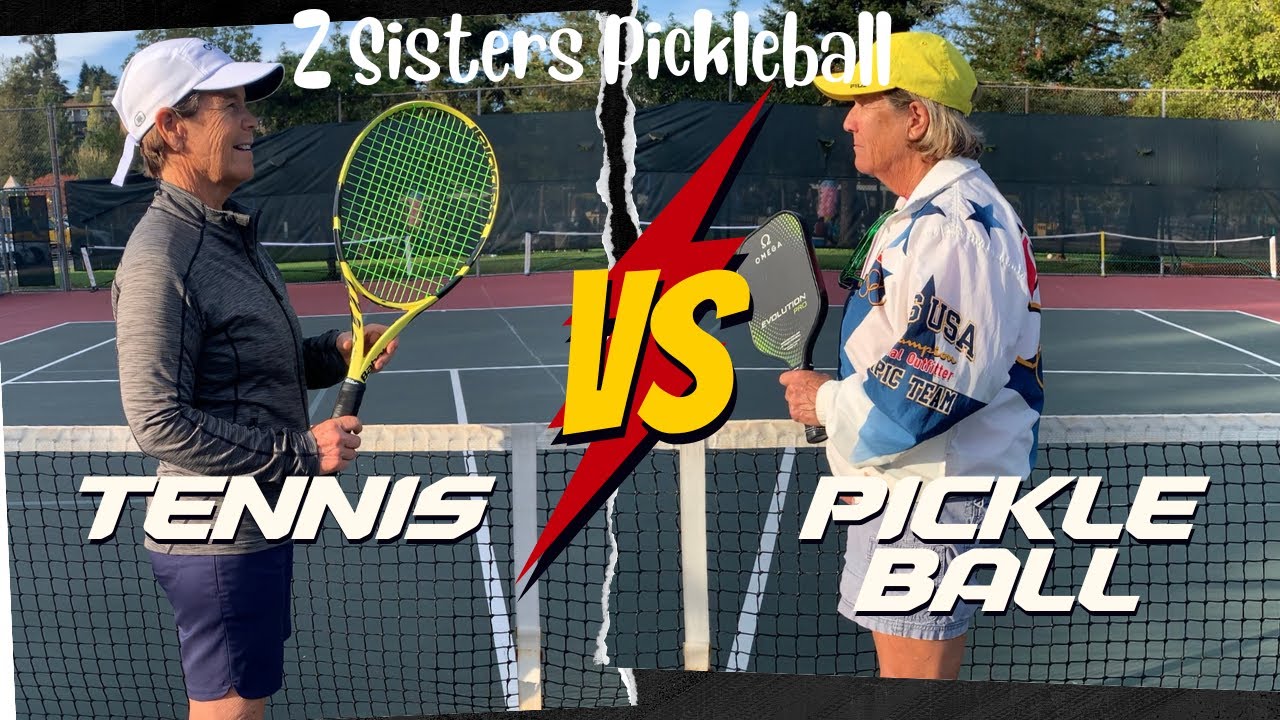
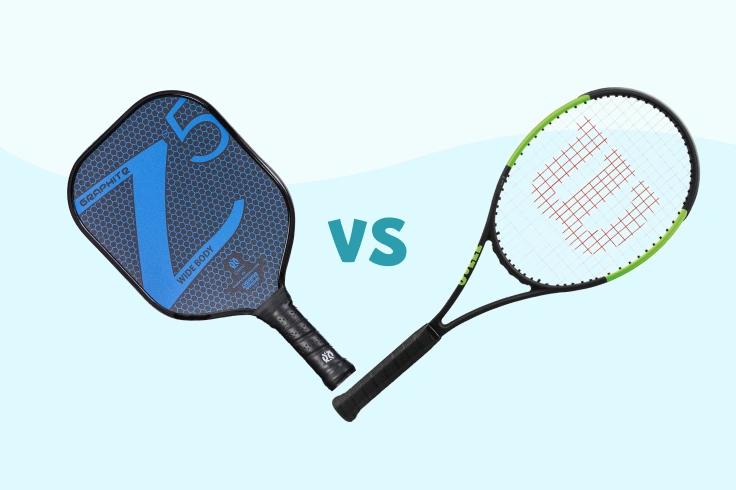
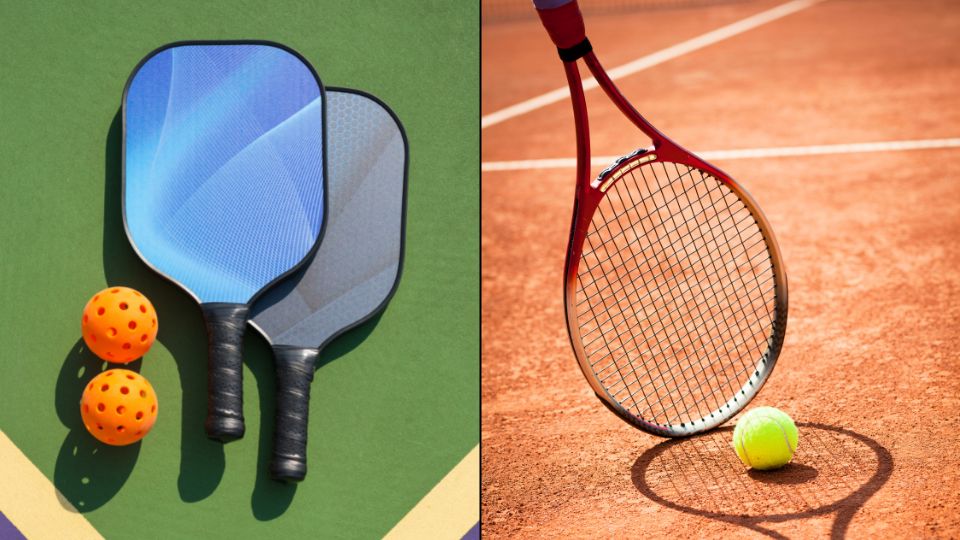
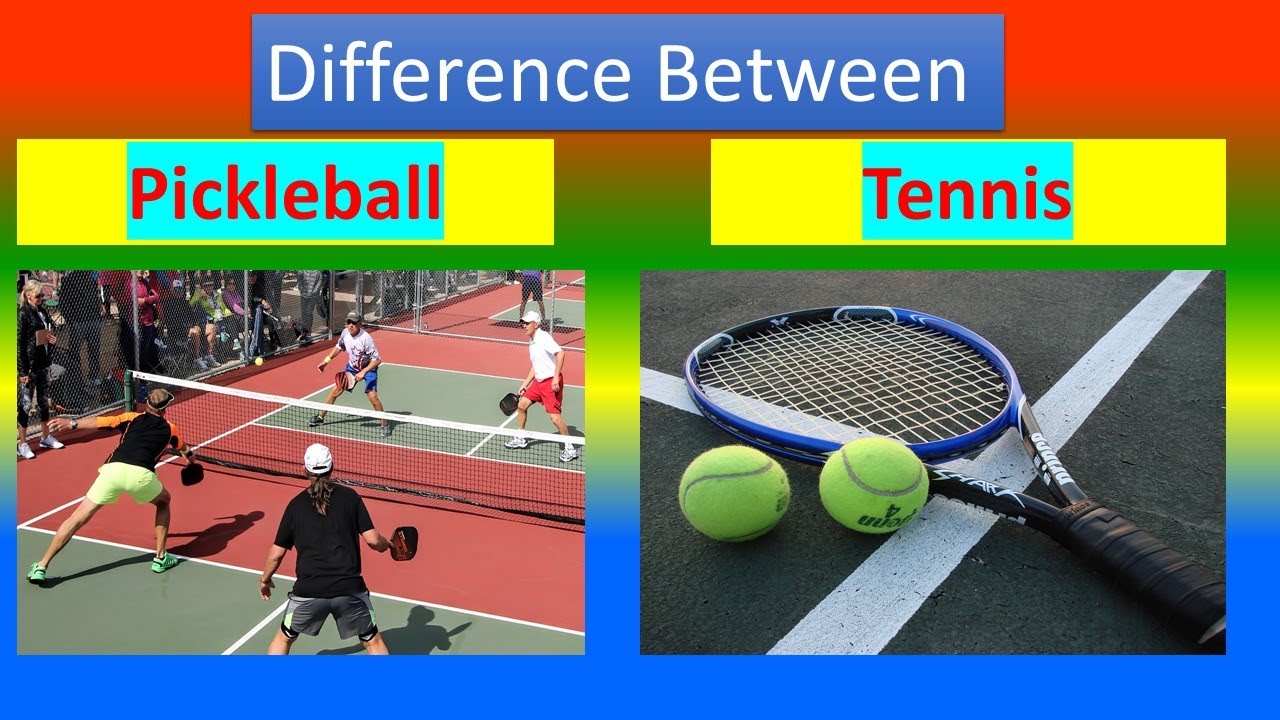
Here’s another clear way to see what’s the difference between tennis and pickleball. Tennis uses a strung racquet and a felt ball under pressure. Pickleball uses a solid paddle and a light plastic ball with holes.
Each tool shapes your shots. Tennis racquets add spin and depth through strings. Pickleball paddles reward soft hands, quick resets, and control at the net. A tennis ball is heavy and cuts the wind. A pickleball is light and can skid or sail in a breeze.
Footwear matters in both. Wear court shoes that support side moves. Running shoes grip poorly on courts and can raise injury risk.
Serving, rules, and scoring
What’s the difference between tennis and pickleball when you start a point? In tennis, you serve overhand, get two tries, and can blast an ace. In pickleball, you serve underhand, contact below the waist, and serve diagonally.
Pickleball also has the two-bounce rule. The serve must bounce. The return must bounce. Then volleys can start. There are no let serves in modern pickleball rules. If the ball hits the net and lands in, the point plays on.
Scoring is not the same. Tennis uses games, sets, and tiebreaks. Most pickleball play still uses side-out scoring to 11, win by 2. Some leagues use rally scoring, but most recreational play does not.
Play style and strategy
Ask a doubles player what’s the difference between tennis and pickleball, and they’ll say pace and pattern. Tennis points often build from deep rallies and big serves. Pickleball points often build at the kitchen with soft shots and quick hands.
You’ll hear terms like dink, third-shot drop, and speed-up in pickleball. In tennis, think baseline exchanges, approach shots, and volleys. I’ve seen strong tennis players struggle at first with the dink. Their power works, but soft touch wins more points.
In both sports, placement beats pace at key moments. Yet pickleball rewards patience and a low ball more often. Tennis rewards depth, topspin, and angles across more space.
Fitness demands and injury risk
If you wonder what’s the difference between tennis and pickleball for fitness, think movement. Tennis needs longer runs, more sprints, and bigger swings. Pickleball is shorter bursts, fast reactions, and lots of micro-steps.
Common aches are not the same. Tennis brings shoulder fatigue, calf strains, and elbow pain. Pickleball can stress knees, ankles, and wrists due to quick stops and quick hands. Falls happen more in crowded pickleball courts.
Smart prep helps both. Warm up for 10 minutes. Add calf raises, hip work, and shoulder bands. I’ve cut injuries for my groups with simple pre-play drills and better shoes.
Learning curve and who each sport suits
Many players ask what’s the difference between tennis and pickleball when it comes to learning. Pickleball is easier to start. The smaller court and underhand serve help new players rally fast. It feels social on day one.
Tennis can take longer. The serve is hard. Strings need timing. The court is big. But the joy of a clean topspin forehand is real and worth the work.
Pick what fits your season of life. Busy schedule? Pickleball games are short. Love a long grind or solo practice? Tennis drills shine.
Cost, time, and access
Another angle on what’s the difference between tennis and pickleball is budget. A good tennis racquet runs from $100 to $250. Strings and stringing add ongoing cost. A quality pickleball paddle runs from $60 to $200. Balls for both are cheap, but pickleballs crack more often.
Court access varies by town. Tennis courts are common, and many are free. Pickleball lines are popping up fast. Yet prime times fill up, and noise rules may limit hours.
Time is a factor. A tennis set can take 60 to 120 minutes. A pickleball game may take 10 to 20 minutes. That makes drop-in play simple.

Noise, culture, and community
Here’s a social take on what’s the difference between tennis and pickleball. Pickleball is loud, fast, and friendly. The pop of the ball is sharp. Games rotate fast, so you meet many players.
Tennis has its own vibe. It can feel calm and classic. You often stay with one partner for longer sets. Both communities are strong, but the pace and sound are not the same.
As a coach, I love both scenes. My morning pickleball group jokes nonstop. My evening tennis crew enjoys longer rallies and quiet focus.

Weather and playing conditions
You can also feel what’s the difference between tennis and pickleball when the wind picks up. A tennis ball fights wind better. A pickleball moves more. High wind makes dinks and lobs tricky.
Heat and cold affect both sports. Tennis balls bounce higher in heat. Pickleballs get brittle in cold and may crack. Bring extra balls in winter. Check your grip for sweat in summer.
Indoor play changes things. Indoor pickleball is common and avoids wind. Indoor tennis is great but can be harder to book.
Choosing your sport: a simple decision guide
If you still ask what’s the difference between tennis and pickleball for you, try this. Think about goals, time, and your body. Then make a small test plan.
Try this simple path:
- If you want fast games and quick wins, start with pickleball.
- If you love long rallies and spin, lean to tennis.
- If your knees ache on long runs, try pickleball first.
- If you enjoy solo practice, a tennis wall session is gold.
- If you crave both, cross-train. Skills transfer in fun ways.
When I mix both in a week, my reflexes grow. My patience does too. Play where you smile most.
Frequently Asked Questions of what's the difference between tennis and pickleball
Is pickleball easier to learn than tennis?
Yes, most new players rally and score in their first pickleball session. Tennis takes longer due to the overhand serve and larger court.
Can tennis players switch to pickleball quickly?
Yes, footwork and hand-eye skills transfer well. But expect an adjustment to the kitchen, soft shots, and the two-bounce rule.
What’s the main rule that separates the sports?
The non-volley zone in pickleball changes net play a lot. Tennis has no kitchen, so volleys from near the net are free.
Which sport is better for fitness and weight loss?
Tennis often burns more calories due to longer runs and bigger courts. Pickleball still offers great cardio with less pounding.
What gear do I need to start?
For tennis, a racquet, three balls, and court shoes. For pickleball, a paddle, two to four balls, and court shoes.
Conclusion
Both sports are fun, social, and great for your health. If you wondered what’s the difference between tennis and pickleball, now you know how courts, gear, rules, pace, and culture shape the game. Test both, note how your body feels, and choose the one that keeps you excited to play.
Take one action this week: book a 60-minute tennis hit or join a 90-minute pickleball drop-in. Then compare your smile score on the drive home. Want more tips? Subscribe, share this guide with a friend, or ask a question in the comments.