Choose weight, core, face, shape, grip, and balance to match your style.
If you want to know what to look for in a pickleball paddle, you’re in the right place. I test paddles weekly with players from beginner to 5.0. This guide breaks down the small choices that create a big difference in feel and results. Read on for clear steps, real examples, and pro-level tips you can use today.
Understand Your Play Style First
Before you shop, define how you play. This is the core of what to look for in a pickleball paddle. A paddle that matches your style will make the game feel easier, faster, and more fun.
Use these simple profiles to narrow your choices:
- New or returning player: Choose midweight, larger sweet spot, and thicker core for easy control.
- Control and dinks first: Go for raw carbon fiber face and 16 mm core for touch.
- Power from the baseline: Fiberglass face or thinner 13 mm core for pop and drive.
- All-court player: Balanced weight, carbon face, 16 mm core for blend of power and feel.
- Singles, big reach, heavy drives: Elongated shape and a bit more weight for stability.
If you still wonder what to look for in a pickleball paddle, start with your most common shot. Build from there.

Weight and Balance: The Feel in Your Hand
Weight changes everything. It affects swing speed, stability, and comfort. Many players miss this when deciding what to look for in a pickleball paddle.
Use this quick guide:
- Light, about 7.0 to 7.8 oz: Fast at the kitchen, less stable on hard drives.
- Midweight, about 7.8 to 8.2 oz: Best all-around choice for most players.
- Heavy, about 8.2 oz and up: More power and stability, slower at the net.
Balance matters too:
- Head-light: Faster hands for blocks and counters.
- Head-heavy: More plow-through on drives and overheads.
Personal tip: In league play, I moved from 7.8 to 8.1 oz by adding small lead strips at 3 and 9 o’clock. My blocks felt solid, and my elbow felt fine. Start light and add weight where you need it.

Core and Face Materials Explained
Materials control power, control, and sound. Understanding them is key when you decide what to look for in a pickleball paddle.
Core types:
- Polymer honeycomb: Most common. Quieter, stable, and forgiving. Great for control and soft game.
- Nomex: Hard and loud. Big pop and quick ball release. Less forgiving on touch shots.
- Aluminum: Soft feel and control. Lighter, but can lose power on heavy drives.
Face types:
- Raw carbon fiber: High friction for spin, muted feel, and strong control.
- Fiberglass: Lively, adds pop and easy depth, good for power players.
- Hybrid or carbon-glass blends: Aim for balance of spin, control, and power.
If you ask what to look for in a pickleball paddle for spin and control, raw carbon fiber is a safe bet. If you want power and easy depth, fiberglass delivers.
Shape, Size, and Thickness
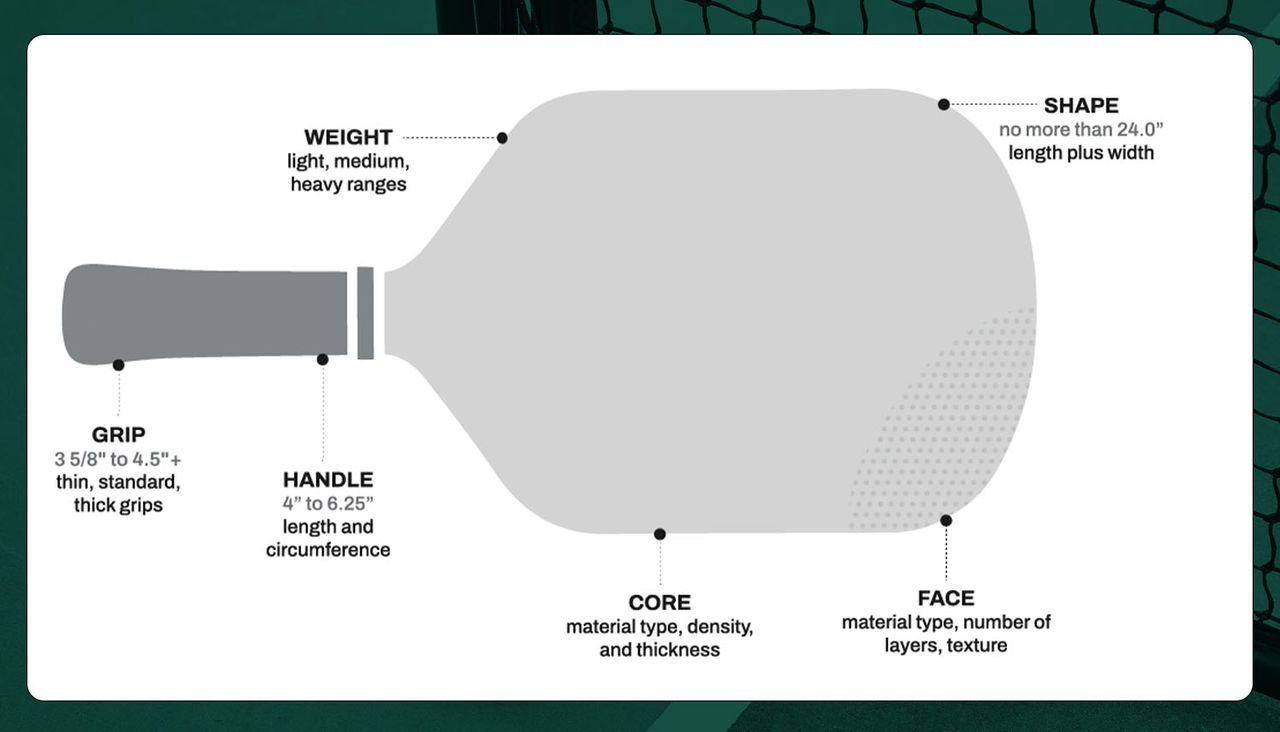
Shape affects reach, forgiveness, and sweet spot. These specs guide what to look for in a pickleball paddle.
Shapes:
- Standard shape: Wider face and larger sweet spot. Easier for most players.
- Elongated shape: More reach and power. Smaller sweet spot, better for singles and strong drivers.
Rules to know:
- Paddles must meet official size rules. Total length and width combined cannot exceed set limits. Most consumer models follow this, and approved paddles are listed by the sport’s governing body.
Core thickness:
- 13 mm: Thinner core for quick pop and speed.
- 16 mm: Thicker core for dwell time, control, and a softer feel.
- 20 mm and up: Very plush, great for resets and hands battles.
Edge design:
- Edge guard: Protects the face and adds durability.
- Edgeless: Clean feel and bigger usable area, but may chip if abused.

Grip Fit and Comfort
Grip size and handle length shape your control and health. This part is easy to miss when deciding what to look for in a pickleball paddle.
Grip size tips:
- Small hands: About 4.0 inches.
- Most adults: About 4.25 inches.
- Larger hands or two-handed backhand: About 4.5 inches or add an overgrip.
Fit test:
- Hold the paddle in an Eastern grip. You should slide your index finger between your fingers and palm. If there is extra space, size up. If it is tight, size down.
Handle length:
- Two-handed backhand users often prefer 5.5 inches or more.
- One-handed players can use shorter handles for more face area.
Comfort tweaks:
- Overgrips add tack, sweat control, and a touch of cushion.
- Replace grips often. Fresh grip equals better control and less strain.
Spin, Control, and Power: Find Your Balance
Spin helps you drop shots short and bend drives. Control helps you reset. Power helps you finish points. Balancing these is the heart of what to look for in a pickleball paddle.
What adds spin:
- Raw carbon faces increase friction. You will feel the ball grip the surface.
- Fresh surfaces spin more. Clean your face often.
What adds control:
- Thicker cores, foam perimeter fills, and head-light balance help with resets and dinks.
- A larger sweet spot cuts mishits and keeps the ball on target.
What adds power:
- Fiberglass faces, thinner cores, and head-heavy balance add ball speed.
- Added weight at 12 o’clock increases plow-through on drives and serves.
Rules note:
- Approved paddles must meet limits on surface texture and deflection. If spin or pop feels extreme, make sure the paddle is on the approved list.
Testing drill I love:
- Hit 10 soft drops, 10 blocks, 10 drives. If at least 7 of each feel clean, the paddle fits.

Noise, Rules, and Community Standards
Some neighborhoods and clubs limit loud paddles. Check local rules before you buy. This is an underrated part of what to look for in a pickleball paddle.
What to do:
- Look for the official approval logo. It means the paddle meets size, surface, and deflection rules.
- Ask your facility if they require “quiet” models. Some places keep a list.
- If you play at home courts near neighbors, a polymer core is your friend. It is softer on sound.
Budget, Value, and Durability
Price does not always equal performance. Knowing tiers helps when you weigh what to look for in a pickleball paddle.
Price ranges:
- Under 75 dollars: Entry level. Good for beginners and casual play.
- 75 to 150 dollars: Midrange. Better faces, better balance, and solid value.
- 150 to 250 dollars and up: Premium. Raw carbon, advanced cores, tighter quality control.
Durability checks:
- Watch for face peeling, core dead spots, and edge guard lift.
- Heat can warp faces. Do not leave paddles in a hot car.
- Good brands offer 6 to 12 month warranties. Register your paddle.
How to Test Paddles: A Simple Field Guide
A short, focused test tells you more than a long spec sheet. This makes the choice clear when you think about what to look for in a pickleball paddle.
Try this 10-minute court test:
- Warm up dinks: Aim for 20 in a row on each side.
- Resets from mid-court: Feel dwell time and stability on mis-hits.
- Volleys and counters: Check hand speed and twist on off-center hits.
- Serves and returns: Note depth, spin, and elbow comfort.
- Drives and thirds: Feel launch angle and control under pressure.
Quick red flags:
- Twist in the hand on blocks means balance or weight is off.
- Shots sail long with little feedback. The face may be too hot for your style.
- Elbow aches after 15 minutes. Reduce weight or switch to head-light.
Common Mistakes to Avoid
Avoid these traps. They are common for players learning what to look for in a pickleball paddle.
Mistakes I see often:
- Buying the heaviest paddle for power, then losing speed at the kitchen.
- Chasing the newest trend without testing fit and comfort.
- Ignoring grip size and causing wrist or elbow pain.
- Picking an elongated shape before mastering contact with a wider paddle.
- Skipping the approved list and getting turned away at leagues.
Care and Maintenance Tips
Good care keeps your paddle fresh and true. It also supports what to look for in a pickleball paddle over time.
Simple routine:
- Wipe the face with a damp microfiber cloth after play. For raw carbon, use water only.
- Do not use harsh cleaners, alcohol, or oil-based sprays.
- Store flat in a cool, dry spot. Heat can damage glue and core bonds.
- Rotate or replace overgrips often. Dry hands improve control and cut strain.
- Check edge guards and handle caps. Small fixes prevent big problems.
Frequently Asked Questions of what to look for in a pickleball paddle
What weight should I choose as a beginner?
Pick a midweight paddle around 7.8 to 8.2 ounces. It gives good control without tiring your arm.
Is raw carbon better than fiberglass?
Raw carbon gives more spin and touch. Fiberglass offers more pop and easy depth, which helps power players.
How do I know my grip size?
Most adults do well with 4.25 inches. If your finger cannot fit between your fingers and palm in a handshake grip, size down or use an overgrip.
Does paddle thickness matter?
Yes. Thicker 16 mm cores feel softer and help with control. Thinner 13 mm cores feel quicker and add pop.
Are elongated paddles harder to use?
They add reach and power but have a smaller sweet spot. If you miss the center often, start with a standard shape.
How long should a paddle last?
With regular play, many last 6 to 12 months before performance fades. Watch for dead spots and face wear.
Can I add lead tape to my paddle?
Yes, many players do. Add small amounts and test often to avoid arm strain.
Conclusion
Now you know what to look for in a pickleball paddle: match your style, choose the right weight and balance, pick a face and core that fit your goals, and make sure the grip fits your hand. Test with simple drills, listen to your body, and let your most common shots guide your choice.
Take one tip to the court this week. Try a midweight, 16 mm carbon paddle for control, or a fiberglass face for pop, and feel the difference. Ready to go deeper? Subscribe for more gear tests, ask a question, or share your paddle wins in the comments.