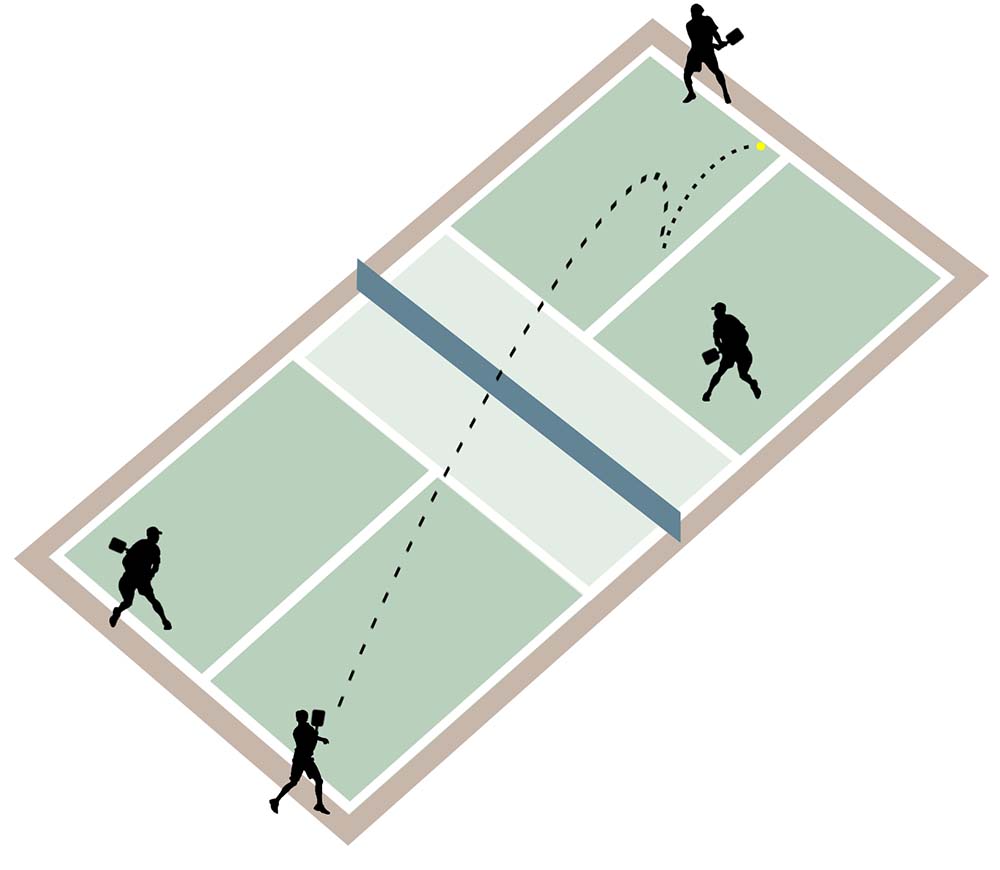
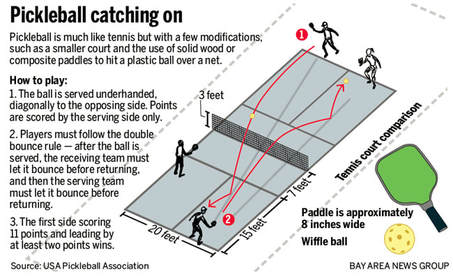
You serve from behind the baseline, diagonally into the opposite service box.
If you want fast wins and clean starts, you must know where do you serve in pickleball on every point. I coach new and league players each week, and this one rule trips people up more than spin, pace, or power. In this guide, I will show you exactly where do you serve in pickleball, how to stand, where to aim, and what to avoid. You will see clear steps, easy checks, and real match tips that work.
Court basics: service boxes and boundaries
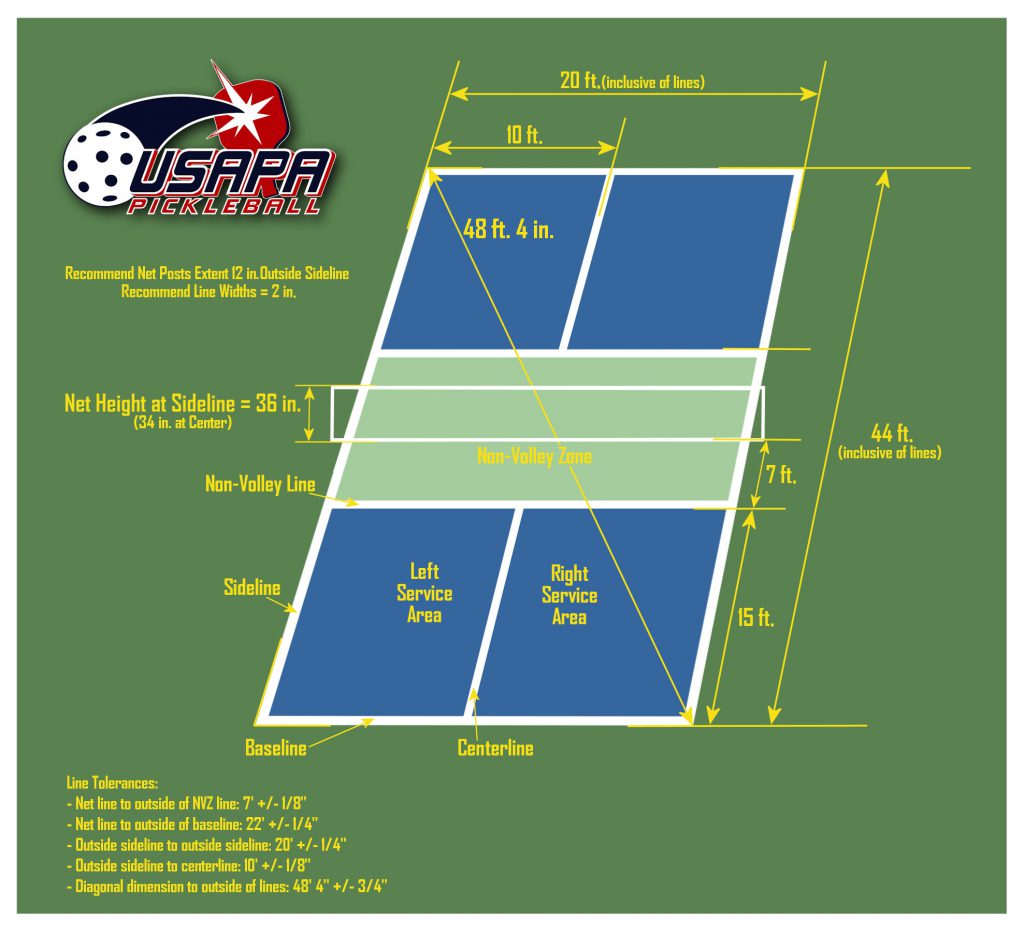
A pickleball court is 20 feet wide by 44 feet long. Each side has a 7-foot non-volley zone in front of the net. That is the kitchen. Behind the kitchen is the service court. It is 10 feet wide by 15 feet long on each half.
Here is the key for where do you serve in pickleball. Your serve must land in the opposite diagonal service court. It must clear the non-volley zone in the air. If the ball touches the kitchen line on the serve, it is a fault. The centerline, sideline, and baseline are in. The kitchen line is out on the serve.
Players often ask, where do you serve in pickleball if you stand near the center? You still must aim to the diagonal box. The lines and the diagonal do not change.
Where do you stand to serve?
Stand behind the baseline in the correct right or left half. Your feet must be behind the line at contact. Do not step on the baseline. Keep both feet behind the baseline until you strike the ball.
Face the opposite diagonal box. Stand between the sideline and the centerline extension. This is the simplest way to remember where do you serve in pickleball. If your score is even, start on the right. If your score is odd, start on the left. In doubles, that even-odd rule follows each player’s score spot.
One more foot rule. At contact, do not cross the sideline or centerline extensions. Keep a stable base. I tell my players to plant, serve, then step into the court after contact.
Serving rules that affect where you serve
The USA Pickleball rulebook sets how the serve works. These parts shape where do you serve in pickleball and how you stand.
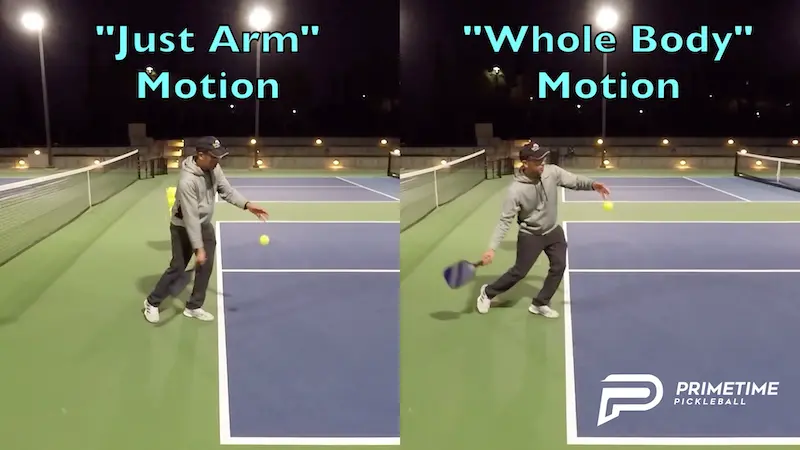
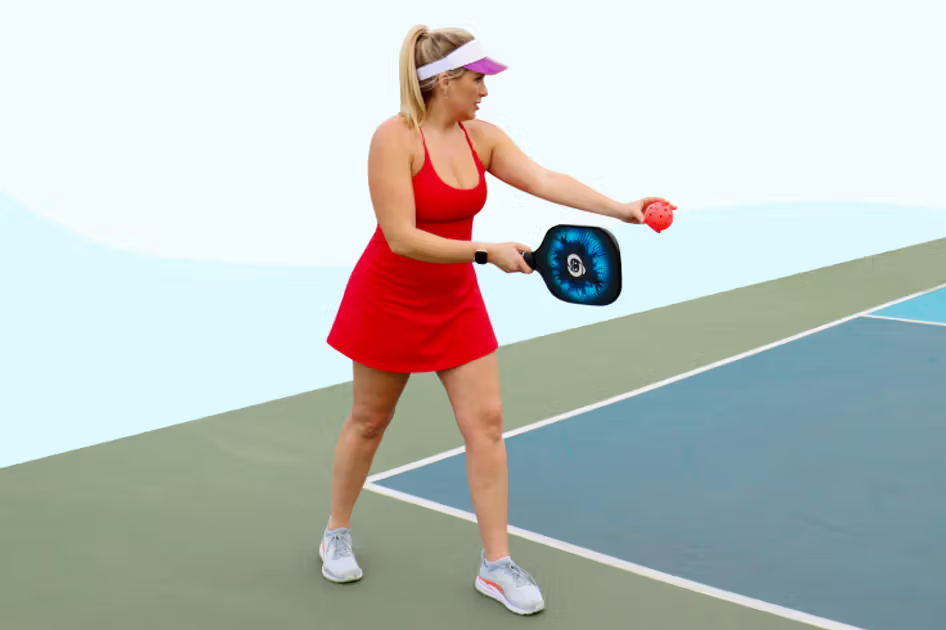
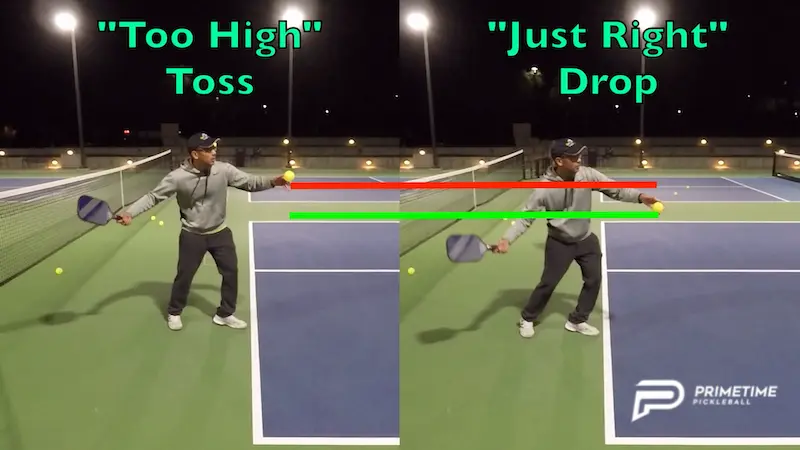
- Use an underhand motion. Hit the ball below your waist, which is the navel level.
- The highest part of the paddle head must be below your wrist at contact.
- Serve to the opposite diagonal service court. Land in that box, past the kitchen line.
- Net cords on serves are live. There are no lets. If it clips the net and lands in, play on.
- Follow the two-bounce rule. The return must bounce before you hit your next shot.
- Current rules limit spun serves. Do not add pre-spin with your fingers before contact.
These guardrails help you answer where do you serve in pickleball in real games. Stand behind the baseline. Aim at the diagonal box. Clear the kitchen. Keep it simple and legal.
Singles vs doubles: where do you serve in pickleball and when you switch
In singles, the rule is clean. If your score is even, serve from the right to their right box. If your score is odd, serve from the left to their left box. You switch sides after each point you win on serve.
In doubles, the start is special. The game begins at 0-0-2. That means only one server on that first team gets a turn. After that first side-out, each team has two servers each time they win the serve back. The server always serves diagonally from the correct side based on their team’s score. This is still the core answer to where do you serve in pickleball.
Keep track of your start spot with a simple trick. I tie a small band on my paddle throat. That is my even-side cue in every match.

Service order, score calling, and finding the right box
Before each serve, call the score. In doubles, that is server’s score, receiver’s score, and server number. For example, 5-3-1. If you are server one and your team score is even, you serve from the right box. If it is odd, you serve from the left box.
How do you know where do you serve in pickleball when you get lost? Use these checks.
- Check who started on the right at 0-0-2. That player should be on the right when your team score is even.
- Look at the last rally. If you won the point while serving, you switch sides. If you lost, your partner serves next without switching sides.
- Ask for a quick clarification before you serve. It is legal to confirm the correct server and receiver.
Wrong server or wrong receiver faults are common. Slow down. Confirm your box. Then serve.
Strategy: where to aim your serve
You know where do you serve in pickleball. Now let’s place the ball with intent. Depth is king. A deep serve pins the returner and gives you time to reach the kitchen.
High-percentage targets:
- Deep to the backhand. Most players have weaker backhands.
- Body serve. Aim at the hip on the backhand side to jam them.
- Middle seam in doubles. Create confusion. Force a late call.
- Corner fade. Land near the deep corner to pull them wide.
Mix your arcs and speeds. Use a heavy, deep serve early. Then drop in a slower, higher serve that still lands deep. In league play, I get two free errors a match by changing pace, not by hitting harder.

Common mistakes and easy fixes
New players often ask where do you serve in pickleball after they fault. These are the top errors I see and how to fix them fast.
- Foot fault on the baseline. Fix: Set your back foot one shoe length behind the line before you start.
- Short serve into the kitchen. Fix: Aim three feet past the baseline. Let it drop in, not up.
- Serving from the wrong side. Fix: Use the even-right, odd-left rule every time you call the score.
- Rushing the motion. Fix: Take a breath. Bounce the ball once. Then serve.
- Fishing for corners too soon. Fix: Win depth first. Paint corners only after you build rhythm.
Small habits beat big swings. Train the start. The rest gets easier.
Advanced positioning: stacking and partner placements
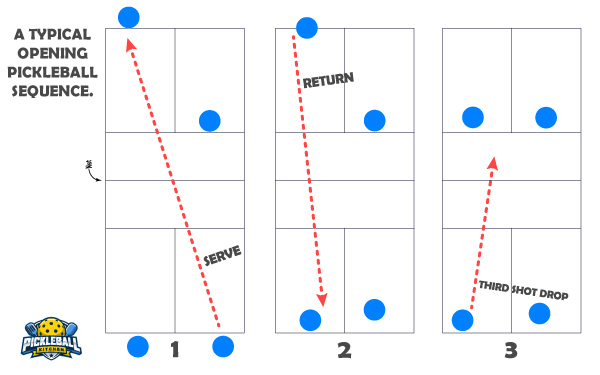
Stacking lets doubles teams keep a player on their strong side. It does not change where do you serve in pickleball. The server must still serve from the correct right or left half behind the baseline. The partner can stand anywhere on their side, even outside the court if it is safe.
Use stacking if one player has a stronger forehand in the middle. Serve from the legal box. After contact, both players move to their desired spots. Be loud with your plan. Call who takes the middle and who covers the line. This keeps service location legal while gaining a tactical edge.
Practice drills to nail where you serve
Drills lock in your aim and routine. These make where do you serve in pickleball feel automatic.
- Deep Box Ladder. Place three targets: near baseline center, near right corner, near left corner. Serve five balls to each. Do two sets.
- Backhand Bias. Serve 20 balls to the returner’s backhand corner. Keep 80 percent in deep.
- Pace and Pause. Alternate hard flat serves and high deep serves. Keep the same toss and stance.
- Score Walk. Call a random score, then move to the correct box fast and serve. This builds service order speed.
- Pressure Ten. You must make 10 deep serves in a row. If you miss, restart. Stay calm.
Make drills short and crisp. Quality beats volume.
Frequently Asked Questions of where do you serve in pickleball
Where do you serve in pickleball at the start of a game?
You serve from the right service court and call 0-0-2. Only one server on the starting team gets a turn before a side-out.
Where do you serve in pickleball if my score is odd?
Serve from the left service court to the opposite diagonal box. This rule holds in both singles and doubles.
Can my serve land on the kitchen line?
No. If the serve touches the non-volley zone line, it is a fault. The ball must clear the kitchen and land in the service box.
What happens if my serve hits the net and lands in?
Play continues. There are no lets. If it lands in the correct box, the point is live.
Can my partner stand anywhere while I serve?
Yes, your partner can stand anywhere on your side if it is safe. But you must still serve from the correct right or left half behind the baseline.
Where do you serve in pickleball during stacking?
You still serve from the legal right or left box behind the baseline. After contact, you and your partner move to your stacked spots.
Do I have to stay behind the baseline after I serve?
No. You can step in after contact. At contact, your feet must be behind the baseline and within the legal area.
Conclusion
You now know where do you serve in pickleball, how to stand, and where to aim. Stand behind the baseline in the correct half. Serve to the opposite diagonal box past the kitchen line. Build a simple routine, and use deep, smart targets.
Put this into play today. Run the Score Walk drill. Aim deep to the backhand. Track your service holds for one week. Ready for more tips? Subscribe for weekly court-tested guides, or drop a question in the comments so we can help you win more points.