

Lower the net, add clear pickleball lines, and place portable nets for play.
If you want a fast, low-cost way to grow your pickleball scene, you are in the right spot. I have helped schools, HOAs, and parks figure out how to turn a tennis court into a pickleball court, from quick tape jobs to full resurfacing. This guide breaks it all down in plain steps. Read on to learn how to turn a tennis court into a pickleball court that is safe, legal, and fun to use.

Know your space, rules, and must‑have specs
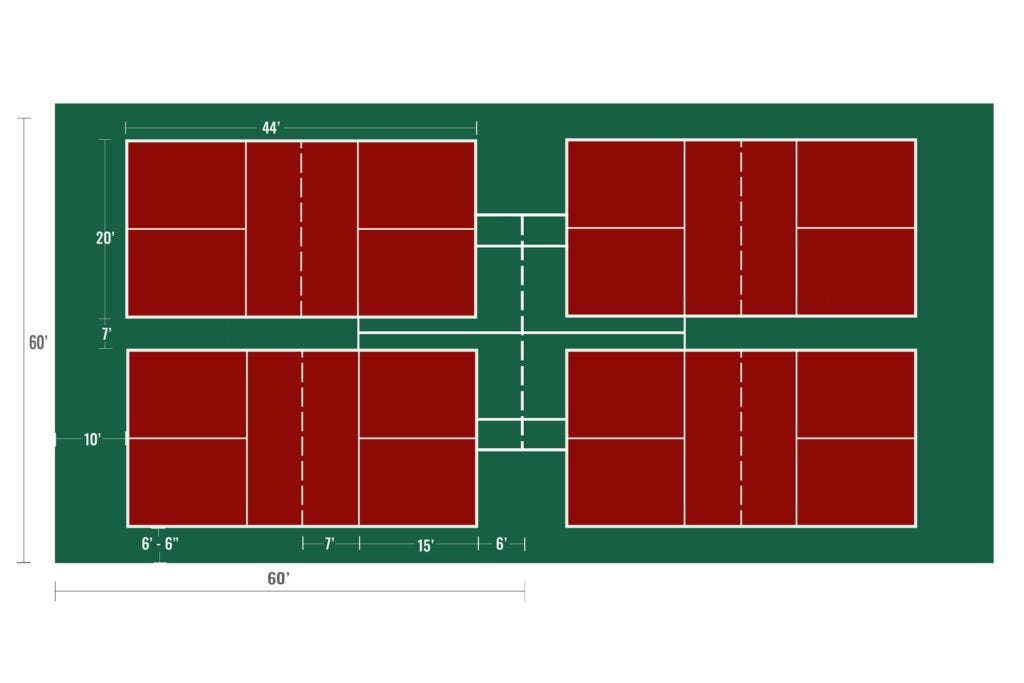
Before you plan how to turn a tennis court into a pickleball court, confirm the space. A pickleball court playing area is 20 by 44 feet. The ideal total area is 30 by 60 feet. The preferred total area is 34 by 64 feet for more runout.
Follow the standard rules. Lines should be 2 inches wide in a strong contrast color. Net height is 36 inches at the posts and 34 inches at the center. Use outdoor balls and paddles for best feel and less noise.
Most tennis courts are 60 by 120 feet, so you can fit two to four pickleball courts with safe buffers. Check local rules, insurance needs, and any HOA or city permits. This early step saves time and money.

Layout options that work on real courts
There are several ways to set up the space when learning how to turn a tennis court into a pickleball court. Pick the layout that fits play volume, budget, and neighbors.
Popular layouts:
- One tennis court to two pickleball courts. Place courts side by side across the width. Use portable nets set parallel to the tennis net.
- One tennis court to four pickleball courts. Fit four courts with trimmed buffers. Best for parks with high demand. Add divider nets to catch balls.
- One tennis court to one blended court. Paint pickleball lines over tennis lines. Lower the tennis net with a center strap for casual play.
Helpful layout tips:
- Keep at least 5 feet on sides and 8 to 10 feet behind baselines when you can.
- Align courts north to south to reduce sun in players’ eyes.
- Use a different line color for pickleball to avoid confusion with tennis.

Step‑by‑step: How to turn a tennis court into a pickleball court
Use this checklist to move from plan to play. It works for overlays and full builds.
- Inspect the surface. Fix cracks, low spots, and peeling paint first. Clean the court well.
- Measure and mark. Snap chalk lines or use a laser to place corners. Confirm 20 by 44 feet and square the layout using 3‑4‑5 triangle checks.
- Choose lines. Use temporary tape, removable paint, or permanent acrylic. Keep lines at 2 inches wide.
- Set up nets. Place portable pickleball nets at 22 feet wide. Check height: 36 inches at posts and 34 inches at the center.
- Add buffers and dividers. Place barrier nets or fences between courts to stop balls and add safety space.
- Add signs. Post rules, hours, and court names. Label pickleball lines with small text at baselines to cut confusion.
- Test and tune. Play a few games. Adjust net height, line contrast, and spacing if needed.
I have seen groups skip the measuring step and end up with crooked courts. Take your time here. It makes the whole court feel pro.
Lines, paint, and color coding that players love
Lines drive play. Good lines are clear, non‑slip, and easy to tell apart from tennis.
Line options:
- Removable tape. Fast and cheap. Pick textured outdoor tape. Test for residue.
- Temporary paint. Good for events and seasons. It lasts longer than tape.
- Permanent acrylic. Best for high use. Needs dry, warm weather and a clean surface.
Color tips:
- Use a bright color that is not the same as tennis lines.
- Keep line width at 2 inches for standard play.
- For blended courts, make pickleball lines a different color than tennis lines.
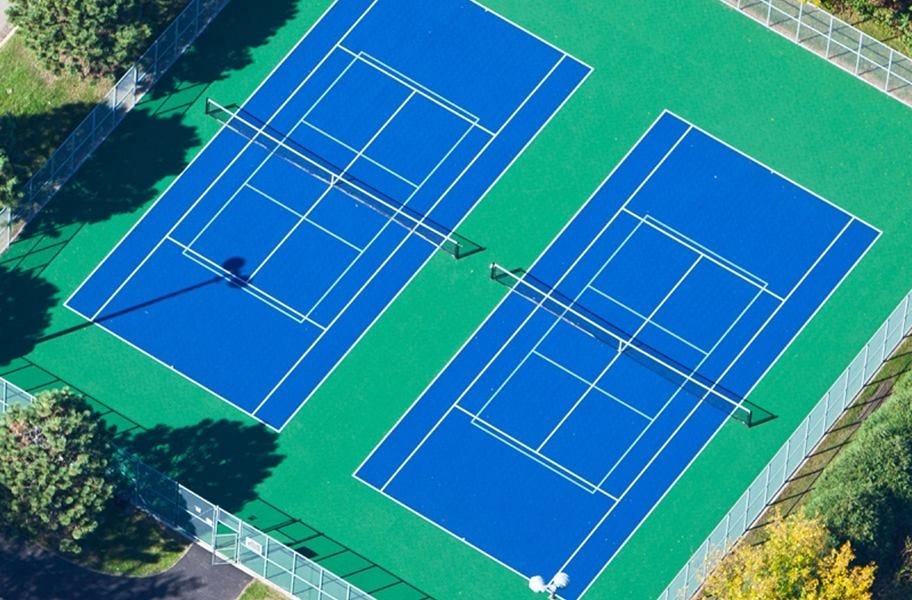
If you want to know how to turn a tennis court into a pickleball court that looks pro, use color zones. A light blue non‑volley zone and a green court body make the kitchen easy to see.

Net systems and post solutions
You have choices for nets when you plan how to turn a tennis court into a pickleball court.
Good options:
- Portable nets. 22 feet wide. Easy to set up and store. Choose a sturdy frame for wind.
- Rolling bases. Heavier and more stable. Good for shared courts with daily set up.
- Permanent posts. Best for full conversion. Set sleeves in concrete and use a center strap.
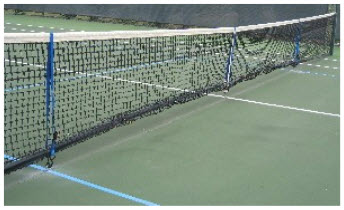
If you must use the tennis net for casual play, lower it to 34 inches at the center with a strap. This works for a quick hit, but a dedicated 22‑foot pickleball net feels better and plays fair.
Taming sound for happy neighbors
Pickleball has a sharp pop. Plan sound control early in the process of how to turn a tennis court into a pickleball court.
Smart ways to cut noise:
- Add acoustic windscreens or sound panels to fences.
- Use quieter balls and paddles rated for reduced noise.
- Set play hours and rotate high‑use times.
- Plant hedges or install barriers on the neighbor side.
I have seen a simple windscreen drop sound a lot. It also makes play nicer on breezy days.

Budget, timeline, and permits
Money and time matter when you decide how to turn a tennis court into a pickleball court.
Typical costs per tennis court:
- Temporary overlay with tape and two portable nets. About 300 to 1,500 dollars.
- Semi‑permanent with temporary paint, divider nets, and heavier systems. About 1,500 to 6,000 dollars.
- Full conversion with resurfacing, posts, new lines, and gates. About 10,000 to 35,000 dollars or more.
Typical timelines:
- Temporary overlay. One day to a weekend.
- Semi‑permanent. One to two weeks.
- Full conversion. Two to six weeks, plus curing time if you resurface.
Check with your city, school district, or HOA. New lines or posts can need approval. Insurance carriers may ask for signage and safe buffers.
Maintenance and multi‑use strategies
After you learn how to turn a tennis court into a pickleball court, keep it in top shape.
Simple habits:
- Sweep or blow the court weekly. Wash it each month to reduce grit.
- Check tape edges, paint wear, and net height often.
- Store portable nets indoors to extend life.
Multi‑use tips:
- Use blended lines with clear colors so tennis still works.
- Add divider nets to protect tennis players from stray balls.
- Create a court schedule. Share hours between tennis and pickleball.

Safety and accessibility
A safe court brings players back. This is key in any plan on how to turn a tennis court into a pickleball court.
Safety checks:
- Fix cracks and trip spots. Use a textured topcoat for grip.
- Keep clear runout zones. Remove benches and bins from baselines.
- Use bright lines and good lighting for night play.
Access tips:
- Ensure wide gates and smooth paths for wheelchairs.
- Place benches off the play area on firm pads.
- Add clear signs with large fonts and high contrast.
Common mistakes and pro tips
You can avoid the most common pain points. I have made some of these mistakes so you do not have to.
Avoid these mistakes:
- Lines that match tennis color. Players get confused.
- No sound plan. Neighbors complain and usage drops.
- Tight spacing. Players collide and chase balls.
Pro tips:
- Do a chalk mock‑up first. Test play before you paint.
- Label each court on the baseline. It helps with leagues and bookings.
- Buy one extra portable net. It saves rain days and parts swaps.
Frequently Asked Questions of how to turn a tennis court into a pickleball court
How many pickleball courts fit on one tennis court?
Most sites fit two pickleball courts with safe spacing. Some sites can fit four, but space will be tighter and needs careful dividers.
What are the official pickleball court dimensions?
The playing area is 20 by 44 feet. The ideal total area is 30 by 60 feet, with 34 by 64 feet preferred.
Can I use the tennis net for pickleball?
Yes for casual play if you lower the center to 34 inches. For best play, use a 22‑foot portable pickleball net.
What is the cheapest way to convert a court?
Use tape for lines and portable nets. You can set up two courts in a day at a low cost.
Do I need a permit to add pickleball lines?
Many cities and HOAs require approval for new lines or posts. Check local rules and insurance needs before you start.
Conclusion
You now know how to turn a tennis court into a pickleball court that plays well and keeps neighbors happy. Measure well, set clear lines, choose the right nets, and plan for sound and safety. A solid plan today means smooth games for years.
Ready to get started? Pick your layout, gather your gear, and set your first court this weekend. Want more tips like this? Subscribe, share your progress, or ask a question in the comments.